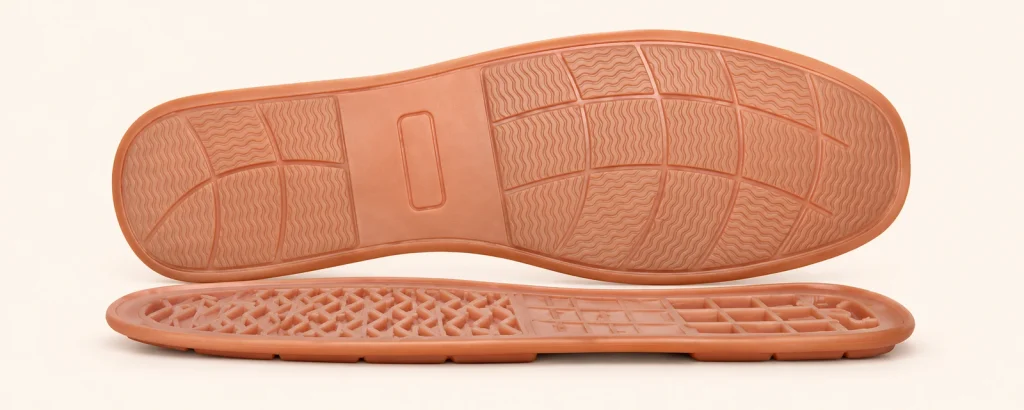
TPR stands for thermoplastic rubber. A TPR sole is made from a rubber-like material that can be shaped using heat, and in footwear the term often refers to the outsole—the part that touches the ground. If you are considering it for a shoe design, the useful questions go beyond the material name: how does the sole bend, where will it be worn, and what does the finished shoe need to do?
What Is a TPR Sole?
TPR belongs to the broader family of thermoplastic elastomers, materials that combine rubber-like flexibility with thermoplastic processing. Many footwear TPR compounds use styrene-butadiene-styrene, or SBS, as a base, together with other ingredients that adjust the finished material’s properties. TPR is therefore a material category, not one fixed recipe.
During molding, the compound softens with heat so it can take the shape of a sole mold, then sets as it cools. This gives shoe designers options for tread patterns, surface details, colors, and, with suitable grades, transparent effects. Those choices still need to work with the intended material and construction; changing a color formulation can also affect properties such as hardness.
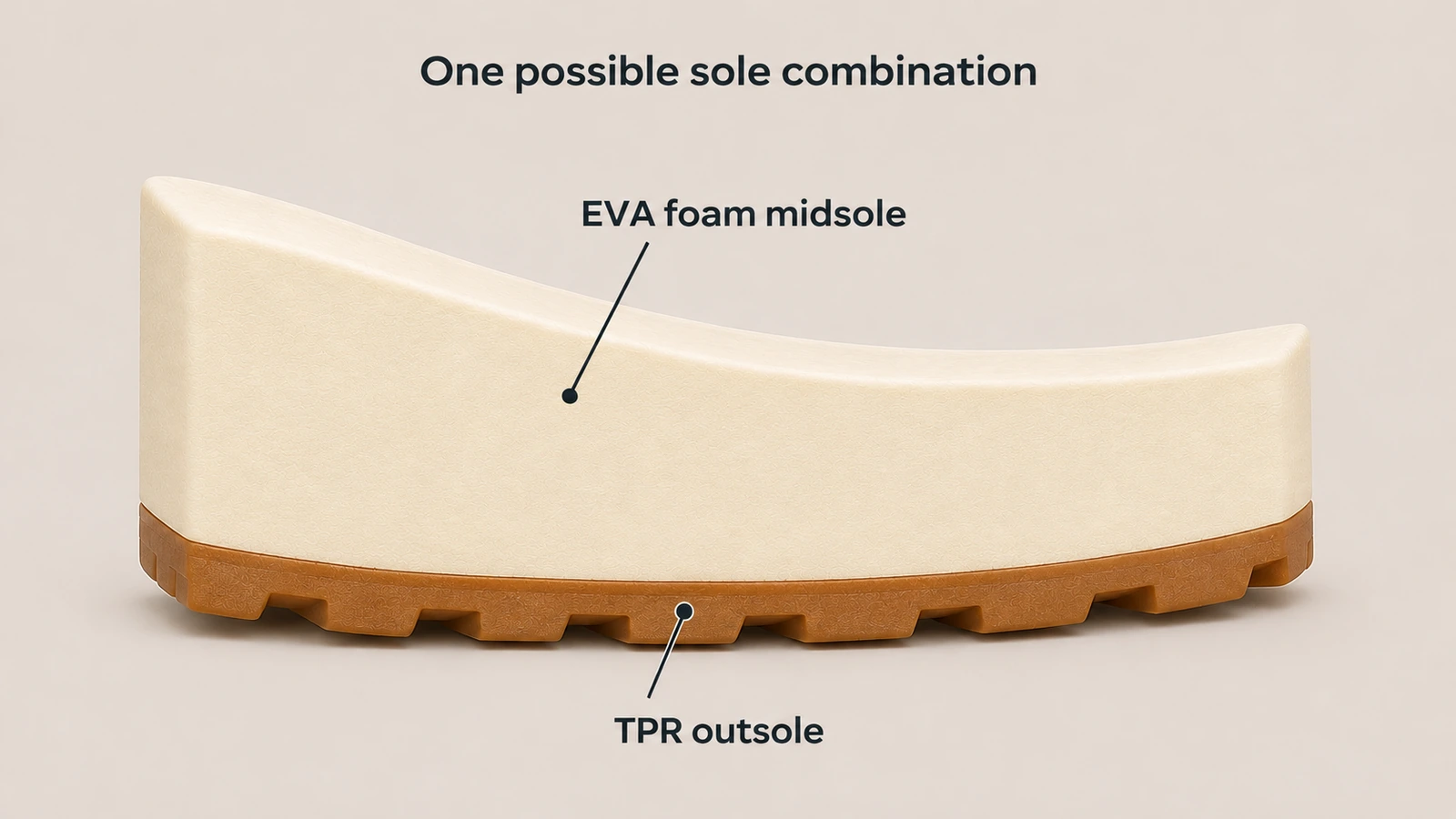
It also helps to identify exactly where the TPR is used. An outsole provides the ground-contact surface, while a separate midsole may supply much of the shoe’s cushioning. A description such as “TPR sole” does not tell you whether the shoe uses a single sole unit or combines several materials. Ask for the component specification when that distinction matters.
TPR Sole Properties: Benefits and Limitations
Flexibility, Hardness, and Weight
TPR compounds can be selected for different hardness levels, giving you scope to adjust how a sole feels. However, material hardness and the ease of bending a finished sole are different things. Thickness and geometry also influence how the shoe flexes.
A soft surface is not proof of good cushioning. Underfoot comfort also involves the midsole, insole, fit, and overall construction. Likewise, compare weight using the same shoe size and clearly defined sole designs. The TPR label alone cannot tell you whether one option will be lighter than another.
Abrasion Resistance and Durability
Abrasion resistance describes how a material withstands surface wear. It matters for an outsole that repeatedly contacts pavement or flooring, but it is only one part of durability.
A sole may resist wear yet develop a problem elsewhere, such as cracking during repeated flexing or separating at a bonded joint. When reviewing samples, distinguish surface wear, flex performance, and attachment strength. A claim that a sole is “durable” should explain which of these has been assessed. There is no single service life you can assign to every TPR sole.
Grip on Different Surfaces
Grip comes from the interaction between the outsole and the surface beneath it. Compound, tread, and conditions all matter, so TPR is not automatically a non-slip material.
If wet tile is part of the intended use, dry-floor results leave an important question unanswered. Look for an assessment of the actual sole design under relevant surface and contamination conditions. Tread appearance alone does not establish slip resistance.
Heat and Chemical Exposure
Because TPR is thermoplastic, heat exposure needs to stay within the limits of the selected grade. Confirm suitability for the temperatures and substances the sole will encounter, including any intended cleaning products.
Keep chemical resistance separate from traction. Resistance to oil-related swelling or damage does not show that a sole will grip an oily floor. These are different requirements, and evidence for one does not answer the other.
What Are TPR Soles Used For?
TPR is used in casual footwear, where a moldable, flexible outsole can support everyday shoe designs. In walking shoes and casual sneakers, TPR can serve as the outsole, with options for tread design and appearance.
For running, consider the complete sole system. The outsole handles ground contact, while a foam midsole may provide cushioning. Specifying TPR does not establish whether a shoe has the cushioning, flex behavior, traction, or fit needed for its intended running use. Assess those requirements together rather than accepting or rejecting the shoe based on one material label.
Outdoor use also needs a more specific description than “suitable outside.” Pavement, wet flooring, snow, and ice present different demands. For cold-weather footwear, check low-temperature performance and traction under the expected conditions; ordinary walking performance cannot establish suitability for winter surfaces.
For wet conditions, consider waterproofing as well as traction. A TPR outsole does not make the whole shoe waterproof. The upper, seams, and connections between components also affect whether water can enter.
TPR vs. Other Sole Materials
Before comparing materials, make sure you are comparing the same part of the shoe. A solid outsole and a cushioning foam have different jobs, even when both are described as “sole materials.”
| Material being compared | Component or material distinction | What to compare with TPR |
|---|---|---|
| Rubber outsole compound | May use natural or synthetic rubber. | Outsole grip, wear, flex, and weight. |
| EVA foam | Often used for cushioning in midsoles and insoles. | Component role; suitability for direct ground contact if used as the outsole. |
| PU sole system | Used in insoles, midsoles, and outsoles; identify the specified component. | Specified construction, cushioning, and durability requirements. |
| PVC soling compound | A different thermoplastic soling material. | Exact grade, intended component, and required performance. |
| TPU | Used in solid components and foam forms. | Material form and role before comparing performance. |
For TPR versus rubber, one useful distinction is processing. Conventional vulcanized rubber is chemically cured, while common SBS-based TPR compounds can be heat-molded without that curing step. Rubber compounds may use natural or synthetic polymers. Compare the proposed outsole designs for grip, wear, and flex.
For TPR versus EVA, first ask whether the choice is actually either/or. A shoe can combine a TPR outsole with an EVA foam cushioning layer. If the proposal uses EVA at the ground-contact surface, assess that specific foam and construction. Across all five comparisons, the useful decision is which option meets your shoe’s requirements, supported by sample specifications and relevant performance evidence.
What to Consider When Choosing a TPR Sole
Turn a general request for a TPR sole into a short sample brief:
- Identify the component and grade: Is TPR used for the full outsole or only part of it?
- Describe the use: Include the activity, ground surfaces, and expected weather or exposure.
- Define the feel: Discuss target weight, bending behavior, and cushioning in the finished shoe.
- Agree on evaluation needs: Specify the wear, grip, flex, and bonding requirements relevant to the design.
Appearance and hand feel can help you describe a reference sample, but they do not reliably identify its material. Start with the material specification and supplier confirmation. This gives the development discussion a clearer basis than matching a sole by color or softness alone.
FAQ
Are TPR Soles Non-Marking?
Not automatically. Confirm non-marking performance for the specific outsole and intended flooring, especially for indoor use. Floor marking and slip resistance are separate properties: evidence that a sole grips a surface does not show that it will leave that surface unmarked. If non-marking performance is part of your product claim, include it in the sample requirements instead of assuming it follows from the TPR label.
Do TPR Soles Make Noise?
A TPR sole is not a guarantee of either noisy or quiet footwear. Noise can involve contact with the floor, but it can also come from movement or friction between components inside the shoe. Note when the sound occurs, on which surface, and whether it happens as the shoe bends. Those observations help narrow the investigation; the material name alone does not establish the cause.
Are TPR Soles Recyclable?
Suitable TPR production scrap can potentially be reprocessed under controlled conditions. That does not mean a worn shoe can go into ordinary household recycling. A finished shoe combines materials and attachments, and its recovery requires an appropriate collection and processing route. The ability to reprocess TPR does not establish a sole’s recycled content; that claim needs supporting information for the specific sole.
Conclusion
TPR soles offer rubber-like flexibility and molding options for footwear, including everyday casual designs. Their value comes from matching the compound and construction to the job: ground contact, movement, wear, and the conditions of use. If you are developing a shoe with HEVA, share a reference design, the intended use, and your sole requirements. These details provide a practical starting point for discussing material choices and sample development.