Clay Court Tennis Shoes Manufacturer
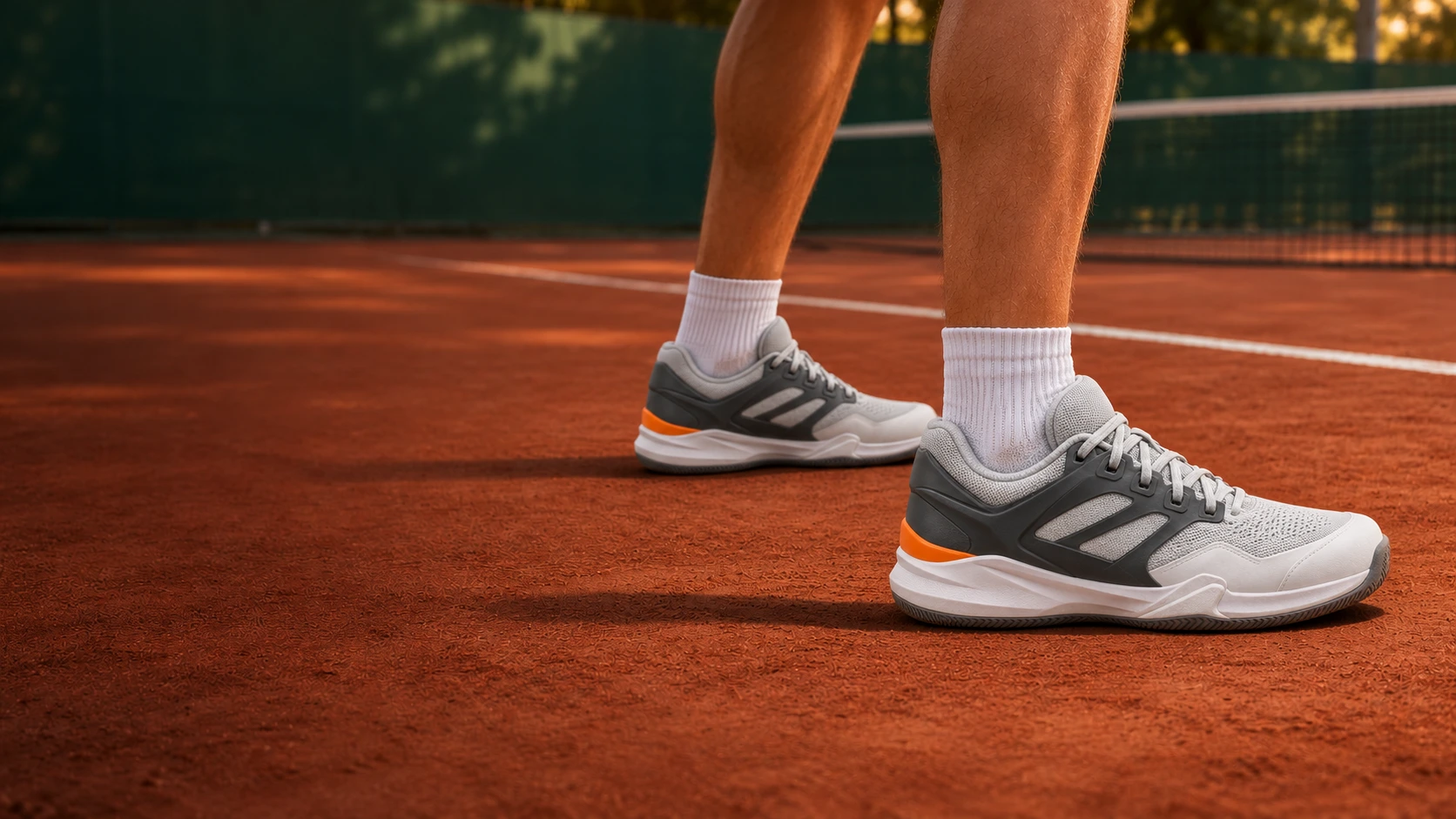
On red clay, loose surface particles affect how your shoes grip, slide, and regain traction. Clay court tennis shoes combine a surface-specific outsole with a secure fit and reinforcement suited to sliding contact. For a clay-court shoe project, HEVA can review the construction requirements with you.
Clay-Court Shoe Design Options
Compare the upper construction, fit direction, and reinforcement layout of these three designs.
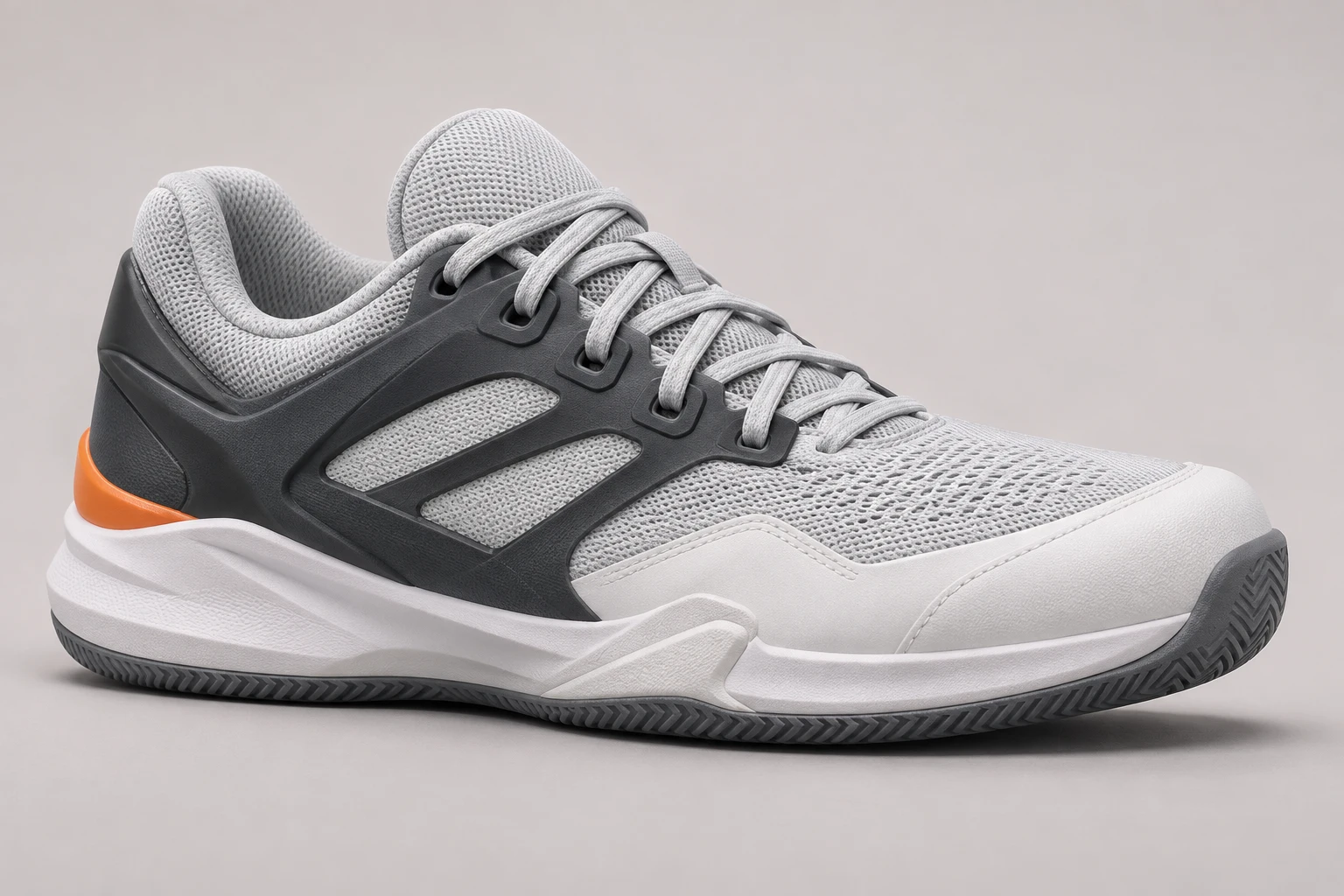
Structured Support
An external midfoot cage connects the lace area to the heel wrap. A broad forefoot overlay adds coverage around the toe. Review cage placement, heel hold, and pressure points during sampling.
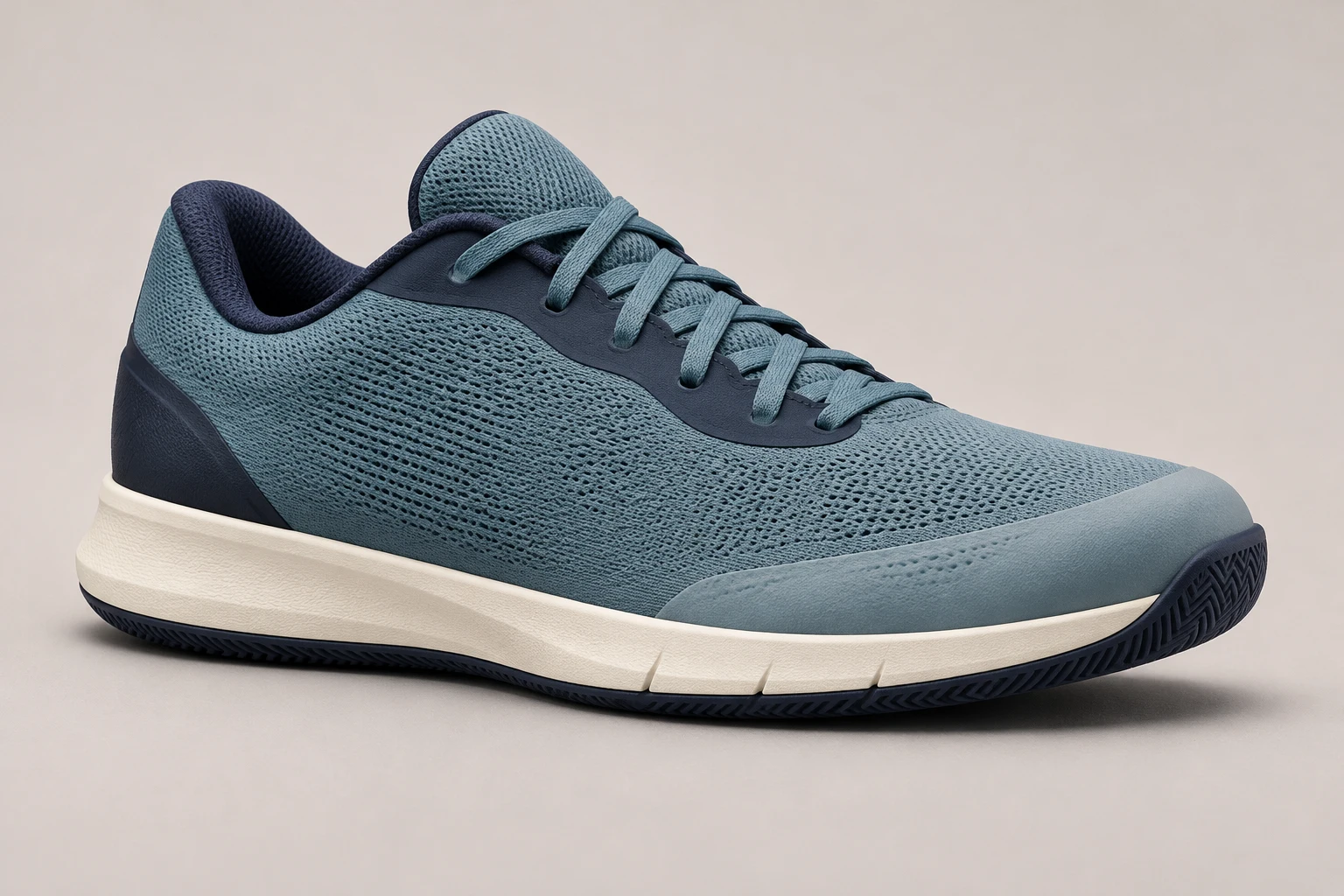
Streamlined Upper
A mesh-led upper uses localized toe and heel overlays, with less external cage coverage. Review forefoot flex, lace tension, and foot movement inside the shoe during lateral steps.
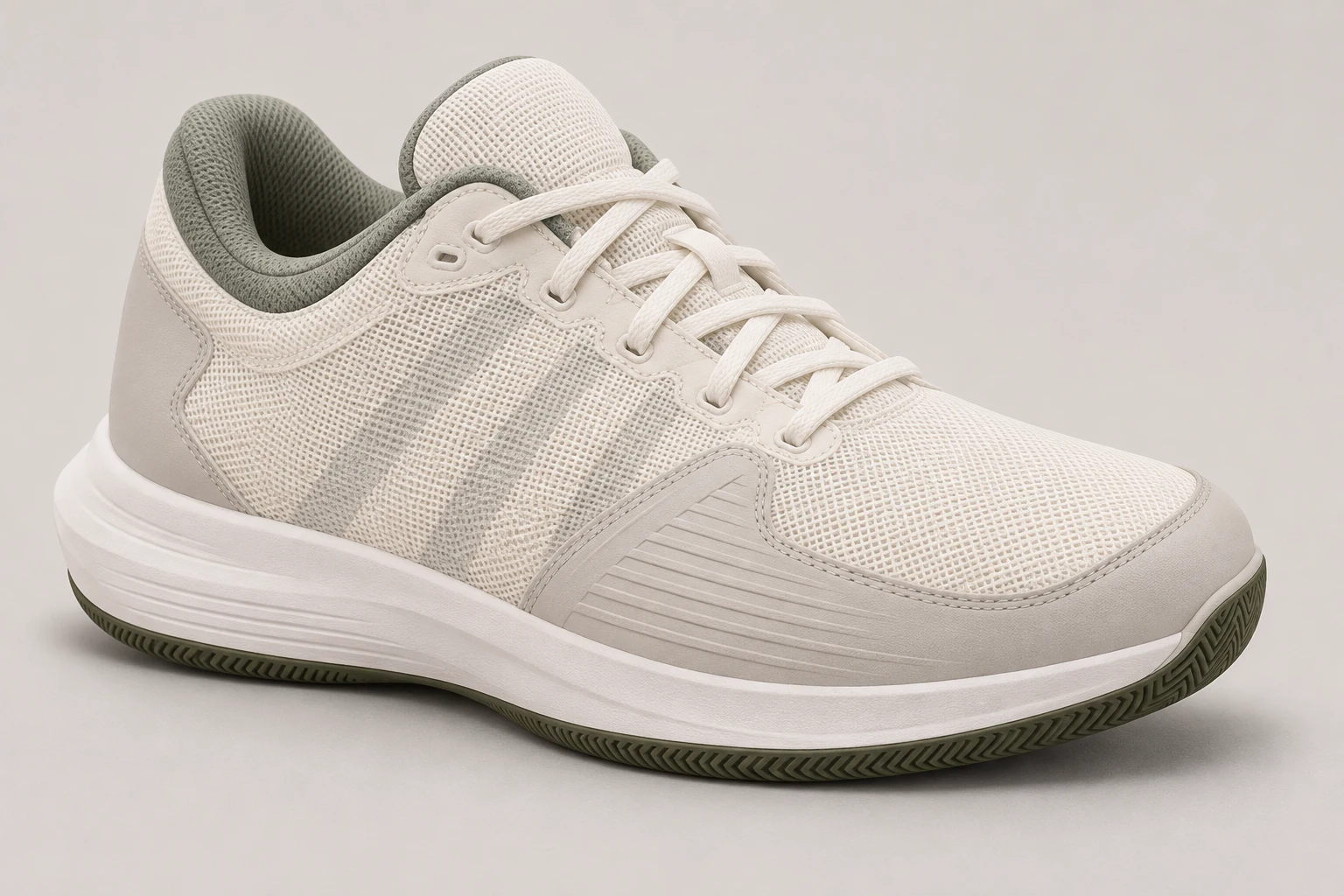
Roomier Forefoot
A rounded forefoot, padded collar, and extended medial overlay define this design. Confirm the last width, toe room, and reinforcement coverage against your intended fit.
What Clay Courts Demand from Your Shoes
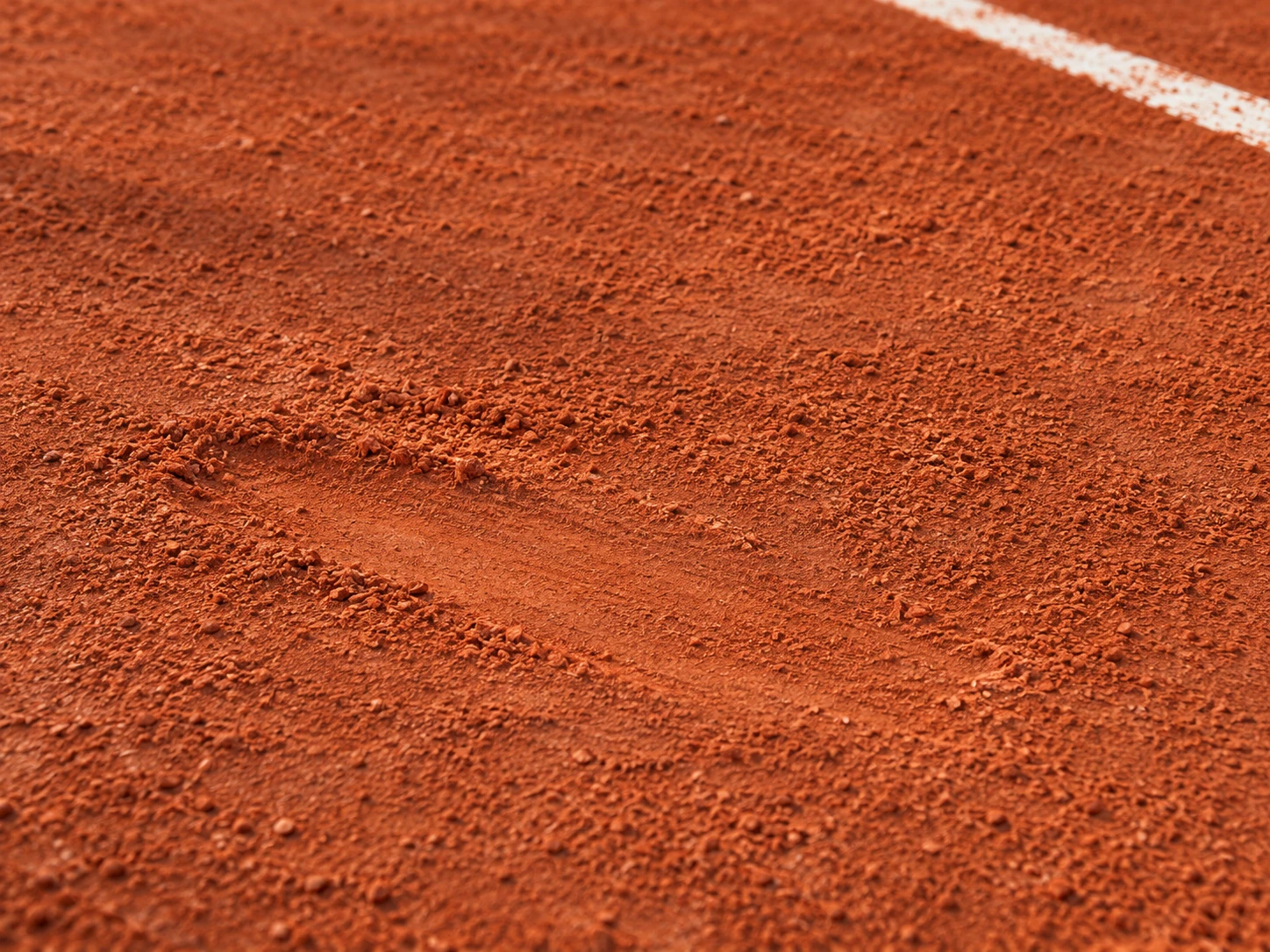
The loose layer on a clay court sits between your outsole and the surface beneath it. Those particles influence friction, so the way a shoe moves across the court depends partly on the surface itself. Even within clay courts, differences in particle size can change sliding behavior.
Your shoes need to support several movements in succession: pushing off, slowing down, moving into a slide, and setting up for the next step. That makes traction and sliding control closely connected. When you compare tennis shoes for clay courts, consider how the outsole interacts with loose material and how securely the upper holds your foot during those movements.
Outsoles for Grip and Controlled Sliding
Herringbone Tread and Clay Buildup
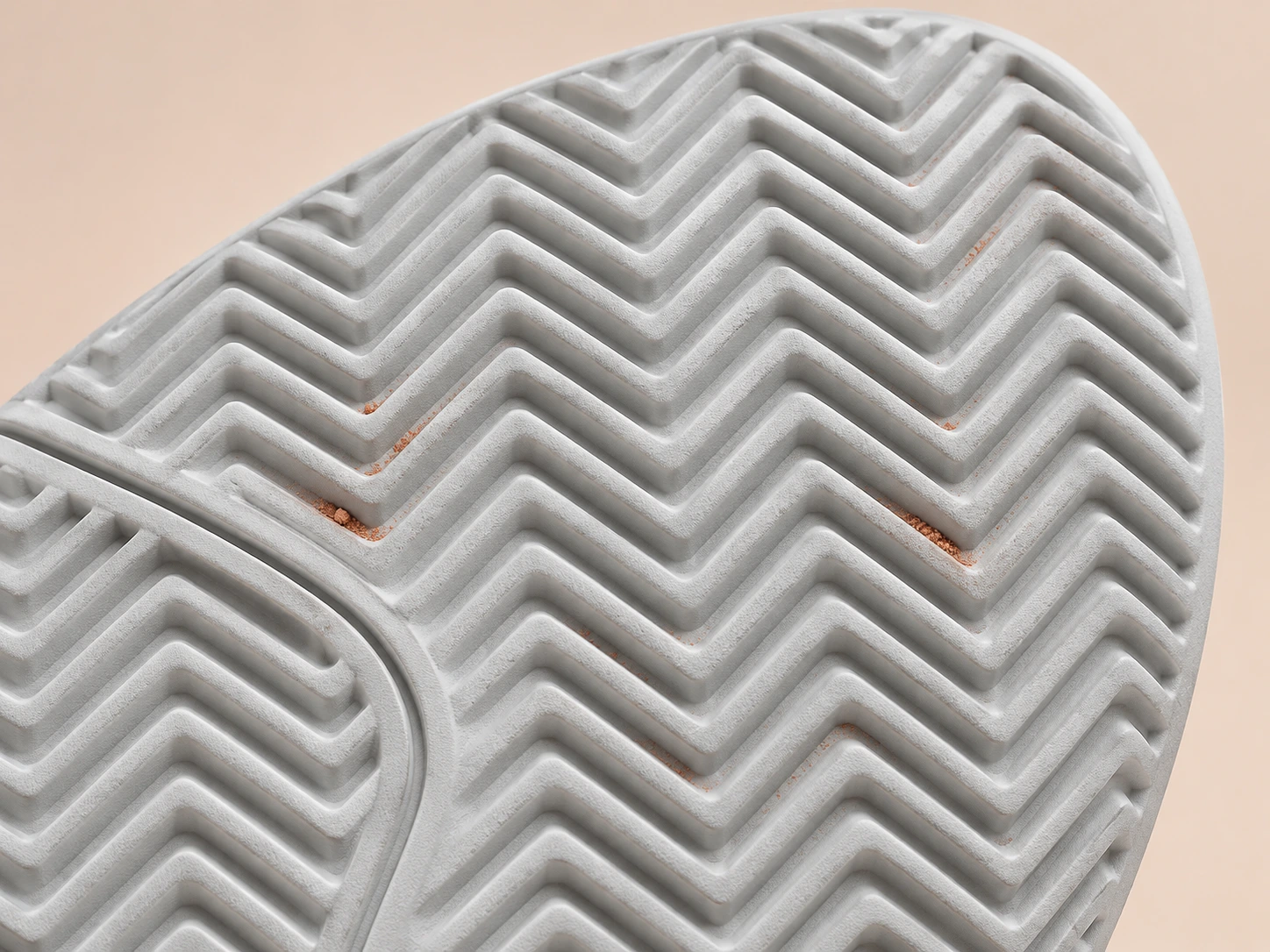
Herringbone tread is common on clay-specific outsoles. Its grooves give loose particles somewhere to go, allowing the tread to interact more with the surface beneath the loose layer. Clay-shoe designs also use groove width and spacing to help limit clay accumulation during play.
Some clay-specific outsoles are designed to release clay as the shoe flexes. When comparing samples, check how readily the grooves shed clay after movement on the intended court. Herringbone also appears on some multi-court shoes, so check the model’s stated surface use.
Grip for Starting, Stopping, and Sliding
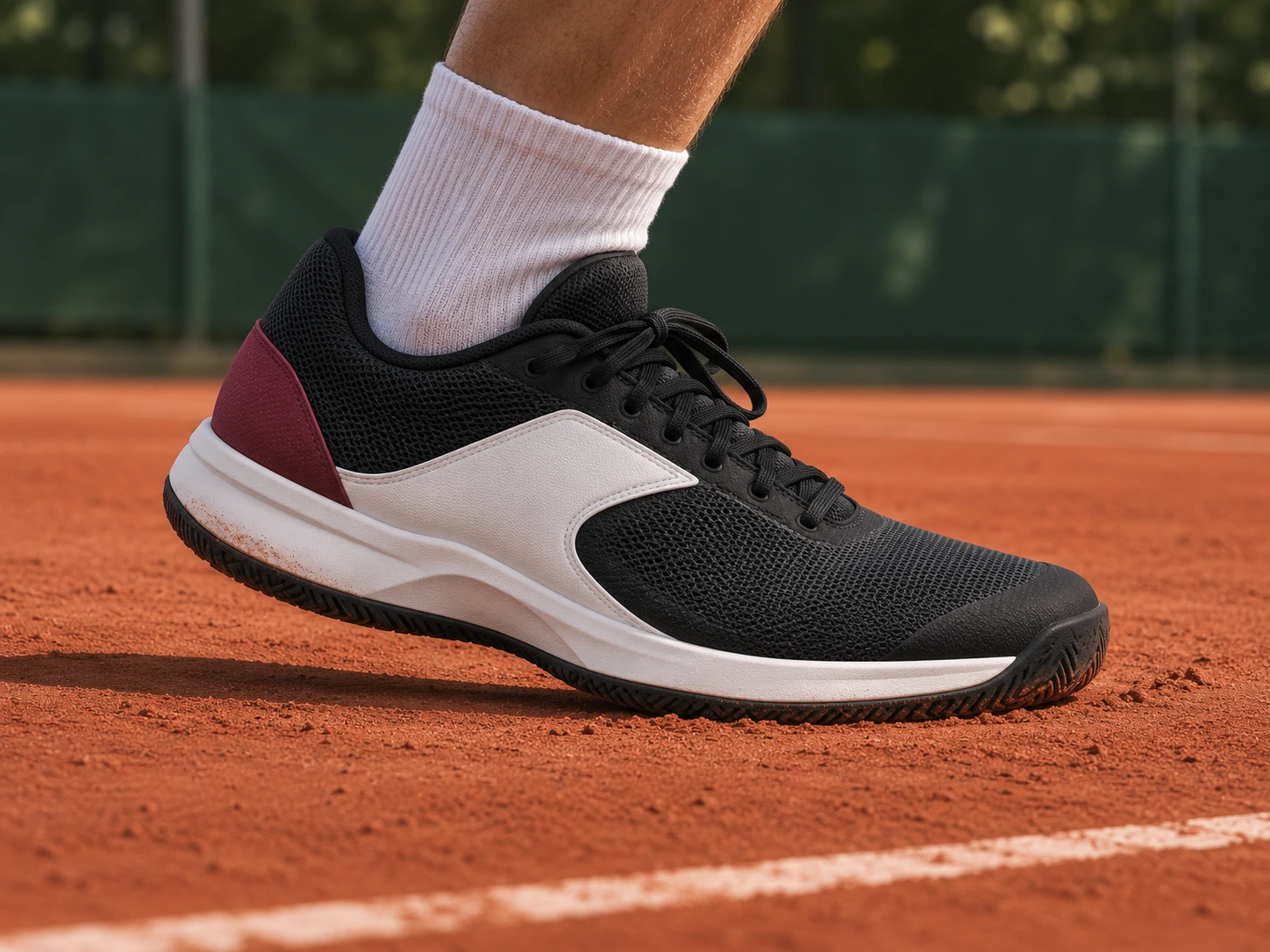
A clay outsole needs to provide traction for acceleration and braking while allowing the sliding movement used on this surface. Tread layout and grip placement are ways shoe designs address those demands.
When comparing samples, consider the full sequence: the initial push-off, the slide, and the transition into the next step. An outsole image can help you examine its construction, but an on-court assessment is needed to understand its behavior. The player’s technique and the court conditions also influence the result.
Secure Fit and Reinforcement for Clay-Court Movement
Midfoot and Heel Hold
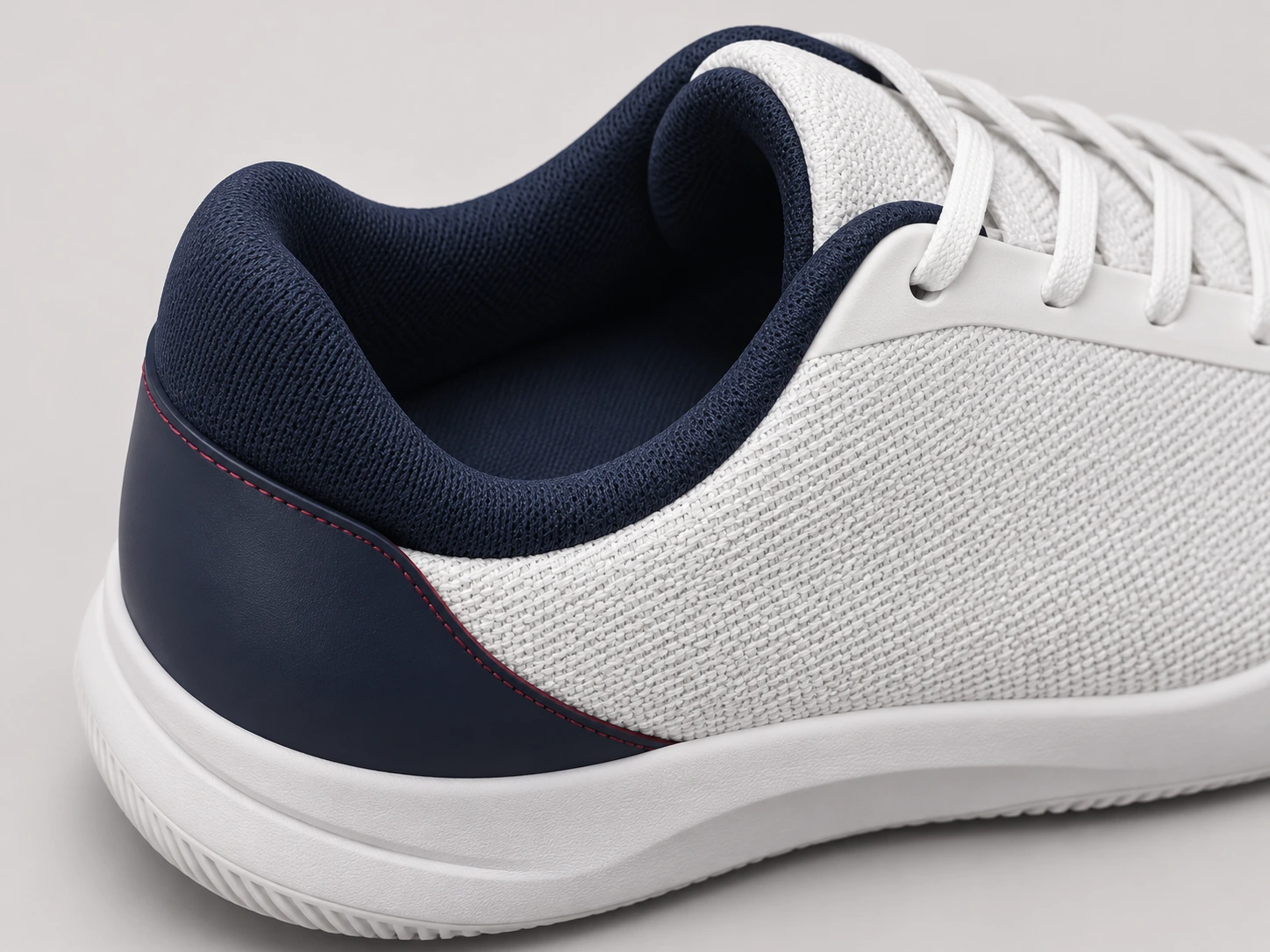
As you move sideways and change direction, the upper and lacing need to hold your foot securely within the shoe. Pay attention to midfoot fit, heel hold, and lateral support when assessing a clay-court design.
Check the fit while standing and moving. Notice whether your heel lifts or your foot shifts inside the shoe, and whether tightening the laces creates pressure. Consider these observations alongside cushioning, flexibility, and ventilation.
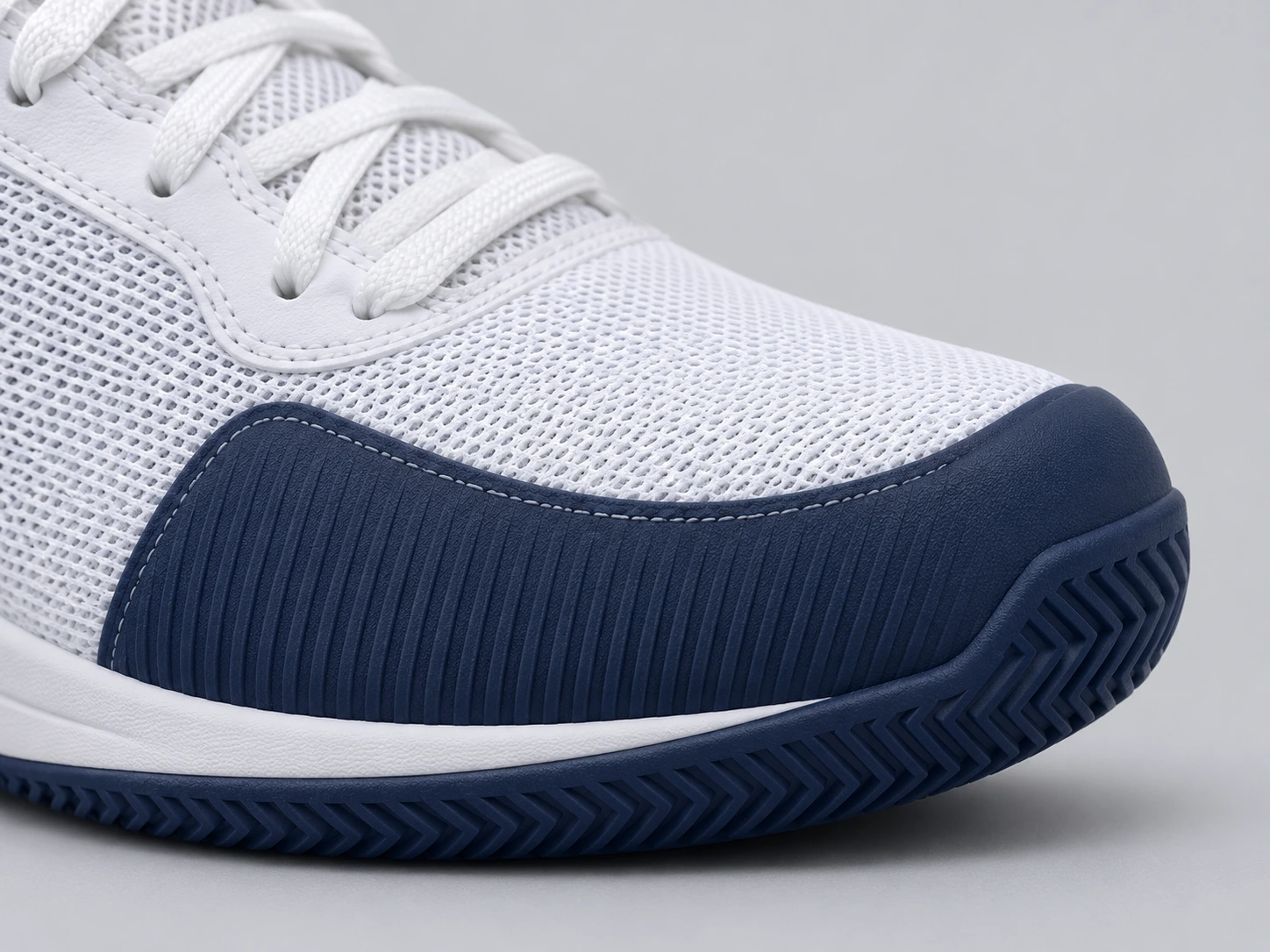
Reinforcement Where Sliding Creates Contact
Sliding can bring parts of the upper into contact with the court. Clay models may use protective overlays or rubber reinforcement around the toe and other contact areas.
The placement matters. Examine where the shoe touches the surface during the intended movements, then consider whether the coverage suits those areas. Toe protection and midfoot reinforcement can serve different contact points; their relevance depends on the shoe’s construction and how it is used.
Choosing Shoes for Your Clay Court
Start with the court and the intended use. A useful comparison of clay court shoes covers four points:
Surface: Confirm the model’s recommended court type and the conditions in which it will be used.
Outsole: Examine the tread layout and consider how it manages loose clay during movement.
Fit: Check midfoot and heel hold, room for the foot, and comfort during lateral movement.
Contact areas: Review reinforcement where sliding exposes the shoe to abrasion.
In your product brief, include how often the shoes will be used and the intended size range. A clay label or familiar tread pattern is only a starting point; the complete shoe needs to suit the way you plan to use it.
Clay Court Tennis Shoes: FAQs
Can You Wear Clay Court Tennis Shoes on Hard Courts?
Check whether the manufacturer recommends the specific model for hard courts. A clay outsole is designed around loose particles and sliding; hard-court use also calls for suitable outsole wear resistance. If you regularly play on both, look for a model explicitly intended for both surfaces.
Do You Need Clay-Specific Shoes if You Already Have All-Court Shoes?
Some multi-court models explicitly include clay among their intended surfaces. Check your model’s guidance, then assess its grip, sliding behavior, and fit on your usual court. A clay-specific model is worth considering when you want a design focused on that surface; the all-court label alone doesn’t settle the choice. If you’re considering a hard-court model for clay, check whether clay is included in its recommended uses.
Why Do Clay Court Tennis Shoes Use Herringbone Tread?
Herringbone grooves give loose clay particles somewhere to go as the outsole meets the court. When comparing designs, look at groove spacing and how readily the tread sheds clay after movement. The pattern alone does not confirm clay suitability; check the model’s intended surface and assess the complete shoe on court.
What Fit and Reinforcement Should You Look for on Clay?
Look for a secure midfoot and heel fit, with enough toe room for movement. During lateral steps, check whether your heel lifts or your foot shifts inside the shoe. Review protective overlays around the toe and other areas that contact the clay during sliding, and confirm their placement during sampling.
Can You Customize Clay Court Tennis Shoes with HEVA?
Share your reference design and requirements with HEVA for an OEM/ODM review. We can discuss material and reinforcement options and the next steps for sampling. The available construction, pricing, MOQ, timing, and inspection arrangements are confirmed for your project.
What Should You Include in a Clay-Court Shoe Development Brief?
Include your target clay surface, reference shoe or design, intended size range, expected use, and fit requirements. Highlight priorities such as outsole clay release, heel hold, and reinforcement at sliding contact areas. These details help guide the feasibility review, sample revisions, and specifications for approval.
Discuss Your Clay Court Shoe Requirements with HEVA
Share your target court surface, reference shoe or design, intended size range, and product requirements. We’ll review the construction with you, discuss material and reinforcement options, and confirm the next steps for sampling within an OEM/ODM project.
We’ll agree on pricing, MOQ, timing, production coordination, and inspection arrangements with you for your project. Your approved sample and specifications provide the reference for production follow-up and quality checks.