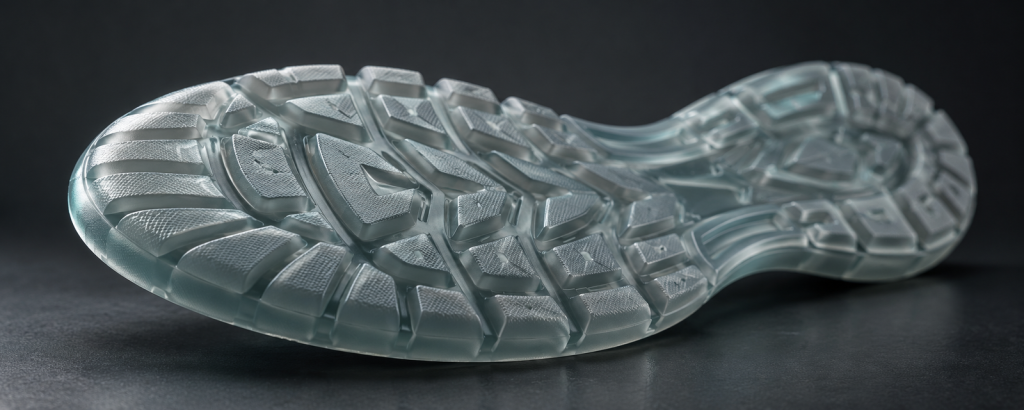
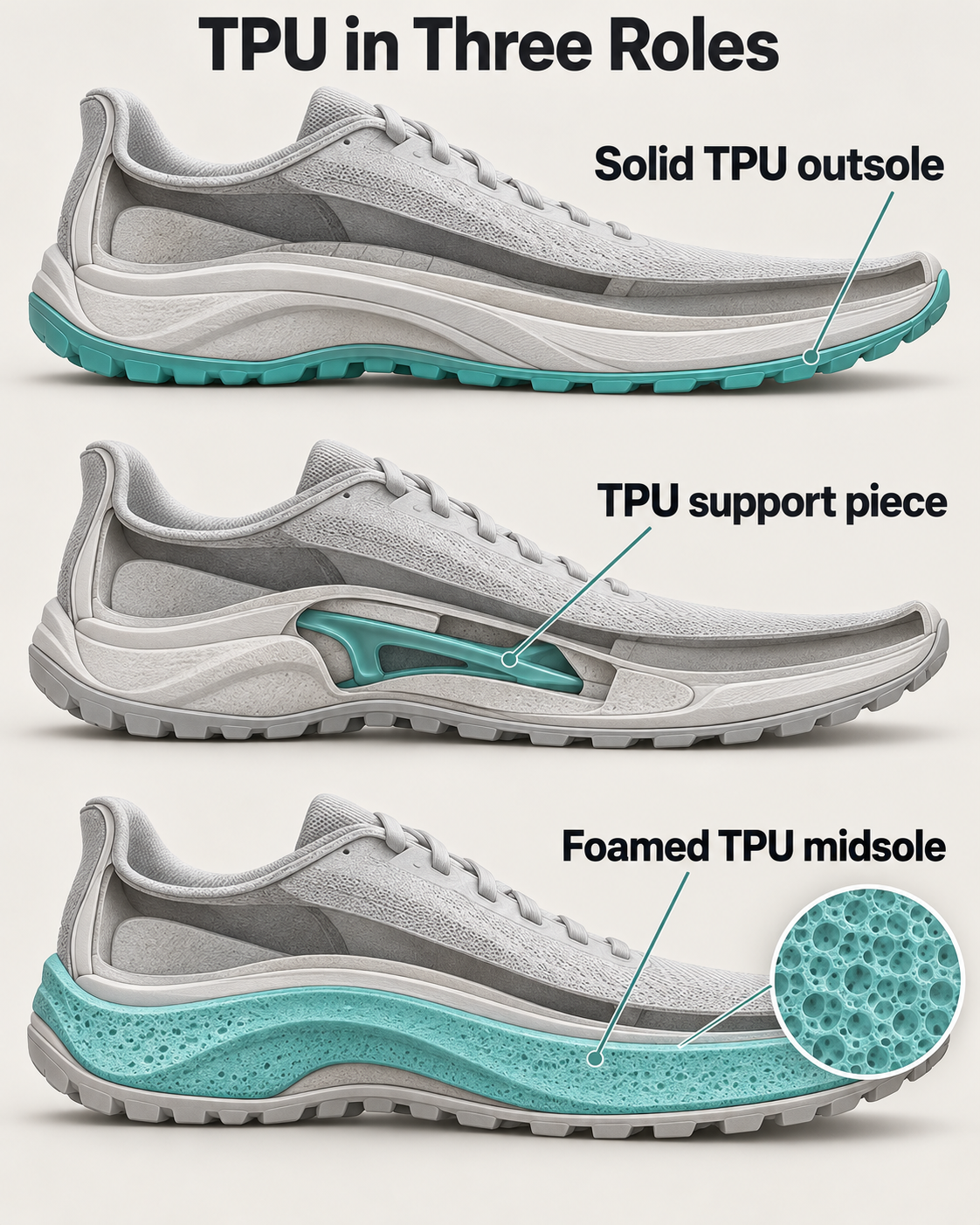
A TPU sole uses thermoplastic polyurethane, a material valued for its elasticity, strength, and resistance to wear. In footwear, TPU can form a solid outsole, a support component, or a foamed midsole. Each version serves a different purpose.
To understand what a TPU sole will do for your shoe, start with its location and form. Then consider the properties that matter for the activity, from underfoot cushioning to grip on the ground.
What Is a TPU Sole?
TPU is a member of the polyurethane family. “Thermoplastic” means it can soften when heated for processing and solidify as it cools. This allows manufacturers to shape it through processes such as injection molding. Its rubber-like elasticity does not make it the same material as conventional vulcanized rubber.
The word “sole” can describe the shoe’s overall bottom construction. The outsole is specifically the surface that contacts the ground; the midsole sits above it and commonly provides cushioning. A product described as having a TPU sole may use TPU in only one of these areas.
That distinction matters when you read a material specification. “TPU outsole” tells you more than “TPU sole,” but you still need the grade and construction details to understand how the finished shoe will perform.
Where Is TPU Used in a Shoe Sole?
TPU appears in sports shoes and casual sneakers in several forms. The main roles are easier to understand when you separate ground contact, structural support, and cushioning.
| Component | Main role | What it does not establish |
|---|---|---|
| Solid TPU outsole | Forms a wear-resistant ground-contact layer. | The cushioning or comfort of the whole shoe. |
| TPU support component | Adds stiffness or helps maintain the intended structure. | That the outsole or midsole is also TPU. |
| Foamed TPU midsole | Provides cushioning and resilience beneath the foot. | The grip of the ground-contact surface. |
A shank, for example, is a stiffening component within the sole construction. Reinforced TPU can be used for this role, where stiffness is part of the design goal.
Foamed TPU is different from a solid outsole. Expanded TPU, or E-TPU, is one foam option; TPU midsoles can also be made through other foaming processes. A claim about the cushioning of a particular foam does not describe a thin, solid TPU outsole.
If a specification says “PU/TPU” or “EVA/TPU,” ask which material is used in each component. The order of the abbreviations alone should not be treated as a construction drawing or proof that the materials are blended together.
TPU Sole Properties: Benefits and Limitations
TPU offers useful options for footwear, but the advantages and disadvantages change with the grade and the job it is doing. These five areas help you assess it.
Abrasion Resistance and Wear
Resistance to abrasion is an important reason to use TPU in an outsole. It helps the ground-contact material withstand repeated rubbing during wear. Abrasion resistance and resistance to cracking under repeated bending are different properties. A shoe’s bonds and other components also affect its durability. Abrasion results cannot tell you exactly how many years a shoe will last.
Flexibility and Support
TPU comes in a range of hardnesses, allowing it to serve flexible and supportive roles. Material hardness is different from the flexibility of a complete shoe—how easily it bends or twists. When assessing comfort, consider the cushioning layers and fit alongside the outsole. Simply choosing a softer TPU grade does not resolve every comfort requirement.
Grip on Different Surfaces
Grip depends on the compound, tread, and surface conditions. Performance on a dry indoor floor cannot stand in for performance on a wet surface. Some TPU grades are developed specifically to improve traction. For your application, look for relevant test conditions and sample results instead of treating “TPU” as a universal slip-resistance rating.
Hydrolysis Resistance
Resistance to moisture-related chemical degradation varies among TPU formulations. Polyether- and polyester-based grades are available, with properties that need to be checked for the intended conditions. If shoes will be exposed to heat and humidity, discuss the specific grade’s suitability. Neither “TPU” nor “PU” alone is enough to rank hydrolysis resistance; compare the specific formulations under relevant conditions. Accelerated aging results should not be translated directly into a guaranteed service life.
Molding and Design Options
TPU can be injection-molded into detailed outsole shapes, and suitable grades allow transparent, translucent, or colored designs. Thin structures are also possible. These options can help you achieve a particular appearance, but the proposed thickness and geometry still need to suit the component’s function. A striking transparent outsole, for example, still needs an appropriate wear and grip profile.
TPU vs. Rubber, EVA, and PU
The useful comparison starts with the component you are choosing. Solid TPU and rubber compounds can both be considered for outsoles. EVA foam and TPU foam are more relevant when discussing midsole cushioning.
| Material being compared | Common role | What to check |
|---|---|---|
| Solid TPU | Outsole or structural component | Grade, flexibility, tread, and performance in the intended environment. |
| Rubber outsole compound | Ground-contact outsole | Compound and tread suitability for the target surface and activity. |
| EVA foam | Lightweight cushioning in midsoles or insoles | Foam construction, cushioning behavior, and durability. |
| Reactive PU foam system | Midsole, outsole, insole, or complete bottom unit | The specified system, density, hardness, and component requirements. |
“TPU vs. PU” needs an extra clarification: TPU is itself a type of polyurethane. In this table, PU refers to reactive footwear systems in which liquid components react to form foam. These systems can be tailored for different parts of a shoe.
For a meaningful TPU-versus-EVA midsole comparison, compare the actual foams in relevant constructions and under comparable evaluation conditions. A solid outsole and a cushioning foam have different jobs. Material names alone cannot tell you which finished shoe will be lighter, more comfortable, or more durable.
What to Check When Choosing a TPU Sole
Before you approve a material proposal, turn “we want a TPU sole” into four practical questions:
- Which component uses TPU? Identify the outsole, support piece, or foam midsole.
- Which type or grade is proposed? Ask the development team to explain why it suits that component.
- What activity and surface is the shoe designed for? Running, court use, and everyday wear place different demands on the construction.
- What should the sample demonstrate? Agree on the relevant wear, grip, flexibility, or cushioning requirements and how to assess them.
These answers give you a clearer basis for reviewing a sample and discussing changes than a material label on its own.
FAQ
Are TPU soles non-marking?
Some may be, but TPU is not automatically non-marking. The relevant question is whether the actual outsole material leaves marks on flooring. Its name or color is not enough to establish that. If non-marking performance matters for your shoe, specify the requirement and confirm it through an appropriate floor-marking assessment.
Do TPU soles squeak?
They can. Noise is a recognized consideration in TPU outsole development, and certain grades have been designed to reduce it. That does not make every TPU outsole noisy or guarantee that every formulation will be quiet. Assess the proposed shoe on the intended surfaces, and evaluate noise separately from grip.
Does a TPU sole make a shoe waterproof?
No. A TPU sole label does not establish the water resistance of the complete shoe. Whether water enters the footwear during use can be assessed with a whole-shoe water-penetration test. If waterproof performance is required, ask for evidence for the finished construction, rather than relying on the sole material description.
Conclusion
TPU can serve several useful roles in a shoe: a durable outsole, a structural support component, or a cushioning foam midsole. Understanding which role it plays makes its benefits and limitations much easier to judge.
For your next sneaker project, define the intended activity and the performance you need before settling on a sole construction. HEVA’s OEM/ODM development process provides a way to discuss those requirements and review them through sampling.