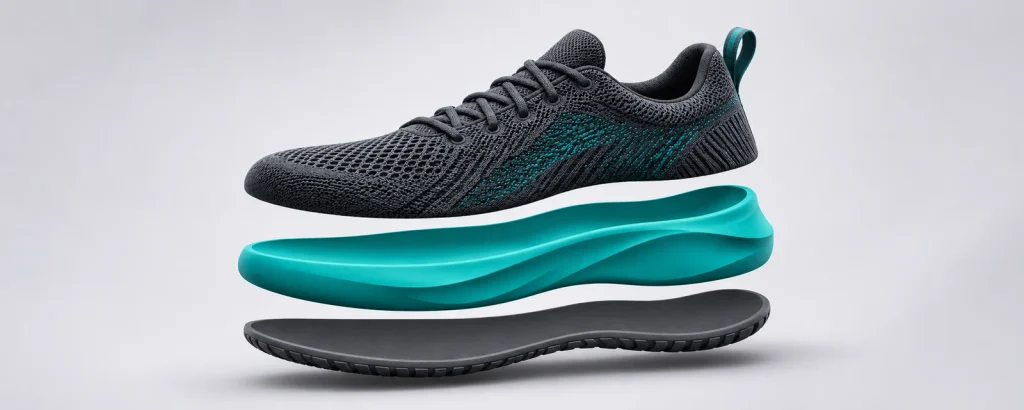
A PU sole is a shoe sole made from polyurethane, a synthetic polymer used in several forms in footwear. It can provide cushioning, flexibility, and wear resistance, but the label alone tells you little about how a particular shoe will feel. To understand a PU sole, look at where the material sits, how it is structured, and what the shoe is designed to do.
What Is a PU Sole?
PU stands for polyurethane. It belongs to the broad family of plastics, although that does not mean a PU sole must feel hard or rigid. Footwear formulations can produce anything from soft foam components to denser, firmer sole parts.
The component name matters as much as the material name:
- Outsole: the ground-contacting part of the shoe, where wear and traction matter.
- Midsole: a layer between the upper and outsole that can provide cushioning.
- Footbed or cushioning insole: the component beneath your foot inside the shoe. This is different from the structural insole used in shoe assembly.
A shoe described as having a “PU sole” might use PU in its outsole, its midsole, or more than one layer. It does not necessarily have an entirely polyurethane bottom. PU synthetic leather on an upper is also a separate application; it tells you nothing about the sole construction.
How PU Soles Are Structured and Made
Solid and Foamed PU
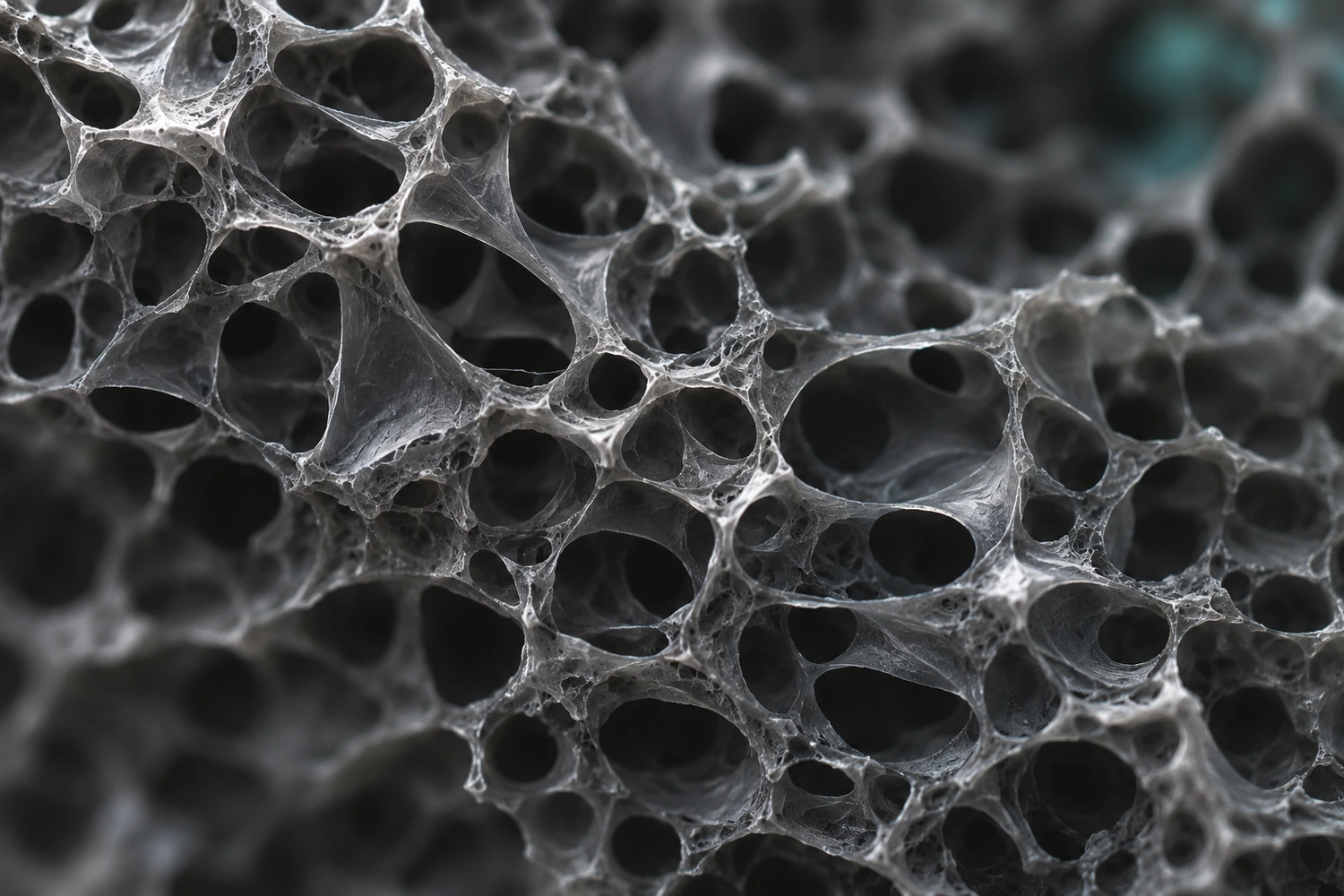
Solid PU has a more compact structure, while foamed PU contains cells within the material. Those cells allow a lower-density component, which can help reduce weight for a given volume. The foam structure and formulation also affect how the component compresses and feels underfoot.
“Foamed” is a description of the material’s internal structure, not a guarantee of softness or a particular service life. Two PU foams can feel quite different.
Single- and Dual-Density Soles
A single-density PU sole uses one density specification for its PU sole body. A dual-density PU/PU construction combines two PU layers with different densities. For example, a denser outer layer can handle ground contact while a lower-density middle layer provides cushioning.
Density and hardness are different properties, so density alone does not tell you how firm a sole will feel. Two colors do not prove that a sole has two densities, either. A PU midsole paired with rubber is a different material combination from PU/PU.
For reactive PU systems, manufacturers mix liquid components that react and form the molded material. They can make a separate sole unit for later assembly or form the bottom directly onto the upper through direct soling. The words “PU sole” do not identify which route was used, and not every PU process involves melting plastic pellets.
Properties, Benefits, and Limitations
PU’s usefulness comes from the range of properties a formulation can offer. You can adjust density, hardness, and elasticity to suit a component’s job. That flexibility explains why a cushioned footbed and a firmer outsole may both be described as PU.
Property | What it can contribute | What affects the result |
|---|---|---|
Weight | Foamed PU can support a lighter sole design. | Density, component volume, and the complete construction determine weight. |
Cushioning | A PU foam layer can compress under load to provide cushioning. | Formulation and component structure affect the underfoot feel. |
Flexibility and feel | PU systems can offer different levels of firmness and elasticity. | The formulation and sole design matter more than the PU label. |
Wear resistance | Suitable PU systems can serve in components exposed to abrasion. | Wear resistance depends on the specific material and application. |
One limitation deserves separate attention: abrasion resistance is not the same as resistance to aging. Hydrolysis is chemical breakdown involving moisture. Susceptible PU systems can lose mechanical strength, particularly under warm, humid conditions, even when the tread has not worn away.
Material chemistry matters here. Polyether-based PU generally resists hydrolysis better than polyester-based PU, although the specific formulation still matters. Greater hydrolysis resistance does not make a sole immune to aging. There is no single shelf life or service life that applies to every PU sole.
Grip is another separate question. PU is not automatically slippery, but its name does not establish slip resistance. You need to consider the actual outsole, the floor or ground surface, and conditions such as water or oil. A general PU specification cannot establish performance on wet tiles or snow.
Where PU Soles Are Used
PU appears across several footwear categories, with its role changing from one construction to another.
Casual and everyday shoes: PU can be used in sole units where cushioning, flexibility, and wear resistance need to work together. The particular balance depends on the shoe’s design.
Work and safety footwear: PU/PU constructions and PU midsoles paired with other outsole materials are established examples. The material choice alone does not make the finished shoe certified safety footwear or establish its protective performance.
Sandals and slippers: PU can form sole or footbed components that contribute to underfoot support and cushioning. Here, “PU” may describe only part of the bottom assembly.
Sports shoes: Specialized PU systems can be used in midsoles and other cushioning components. That does not make every PU-soled shoe suitable for running. If you are evaluating a running shoe, consider the complete construction and intended use rather than treating the material label as a performance recommendation.
PU, EVA, Rubber, and TPU: A Brief Comparison
These names often appear side by side on footwear specifications, but they are not completely separate chemical categories. TPU means thermoplastic polyurethane, so it belongs to the polyurethane family. In footwear descriptions, “PU” often refers to reactive polyurethane systems, while “TPU” identifies the thermoplastic material more specifically.
The useful comparison is what each material does in the shoe:
Material label | Form / component examples | How to interpret it |
|---|---|---|
PU | Foamed or denser components used in midsoles and outsoles. | Ask which layer and formulation the specification describes. |
EVA foam | Cushioning midsoles and insoles, including modified formulations. | The label covers different formulations, not one fixed performance level. |
Rubber | Ground-contacting outsole layers, including combinations with PU midsoles. | Its role can complement a cushioning layer made from another material. |
TPU | Outsole components and expanded foam forms. | It is not limited to hard, compact parts. |
Expanded TPU, or E-TPU, is one example of TPU in a foam form; it is not simply another name for conventional reactive PU foam. None of these labels identifies a universal winner for weight, durability, softness, or cost. A single shoe can combine materials to give different layers different jobs.
FAQ
Does a PU sole make a shoe waterproof?
No. A PU sole by itself does not establish that the whole shoe is waterproof. Water can enter through the upper, seams, or the junction between the upper and sole. For rainy conditions, look at the finished shoe’s construction and its stated water-resistance performance. Resistance to hydrolysis is a different property: it concerns material degradation, not whether water gets inside the shoe.
Are PU soles non-marking?
Do not assume so from the material name or sole color. Floor marking is a separate property of the particular soling material. If you need shoes for an indoor surface, check for a non-marking claim that applies to the actual sole. That claim also does not establish slip resistance; leaving a mark and providing traction are different questions.
Conclusion
PU soles offer several ways to combine cushioning, flexibility, and wear resistance, but polyurethane is a material family rather than a single performance grade. The most useful description connects the material to its component, construction, and purpose.
When discussing a sports shoe project with HEVA, identify where you want to use PU, how the shoe will be used, and which characteristics matter most. Those details give the development conversation a clearer starting point than “a good PU sole.”