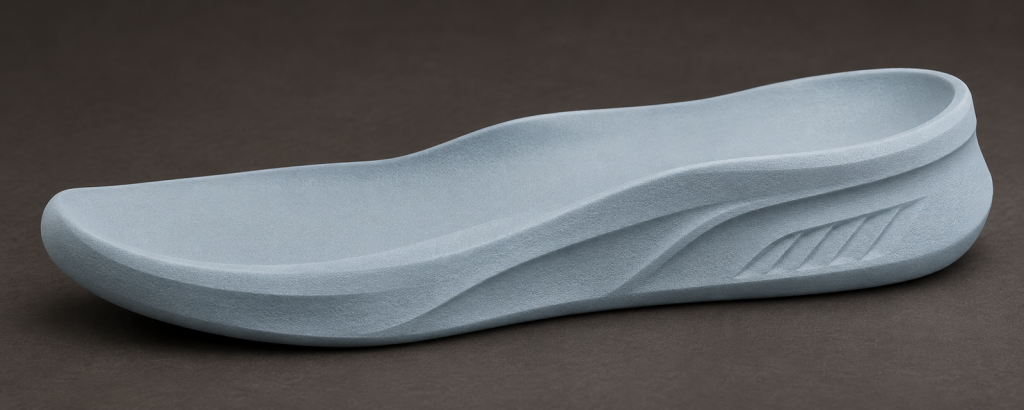
EVA soles are shoe soles or sole components made with ethylene-vinyl acetate, usually in foam form. EVA is widely used for lightweight cushioning, but the label alone does not tell you how a shoe is built or how it will perform. To understand what you’re choosing, it helps to know where the EVA sits, what it does, and which qualities depend on the rest of the shoe.
What Does EVA Mean in Shoe Soles?
EVA is a copolymer: a material made by combining ethylene and vinyl acetate. It belongs to the plastics family, though EVA foam can feel soft and rubberlike. It is not simply another name for rubber.
In footwear, the material is commonly expanded into foam and shaped into a component. That foam structure helps explain its low weight and compressibility. The formulation and manufacturing process influence the finished material, so two soles described as EVA can feel quite different.
In crosslinked EVA foam, chemical bonds link polymer chains together. You should not assume the finished foam can be melted and reshaped like the EVA resin used to make it.
How EVA Is Used in Shoe Soles
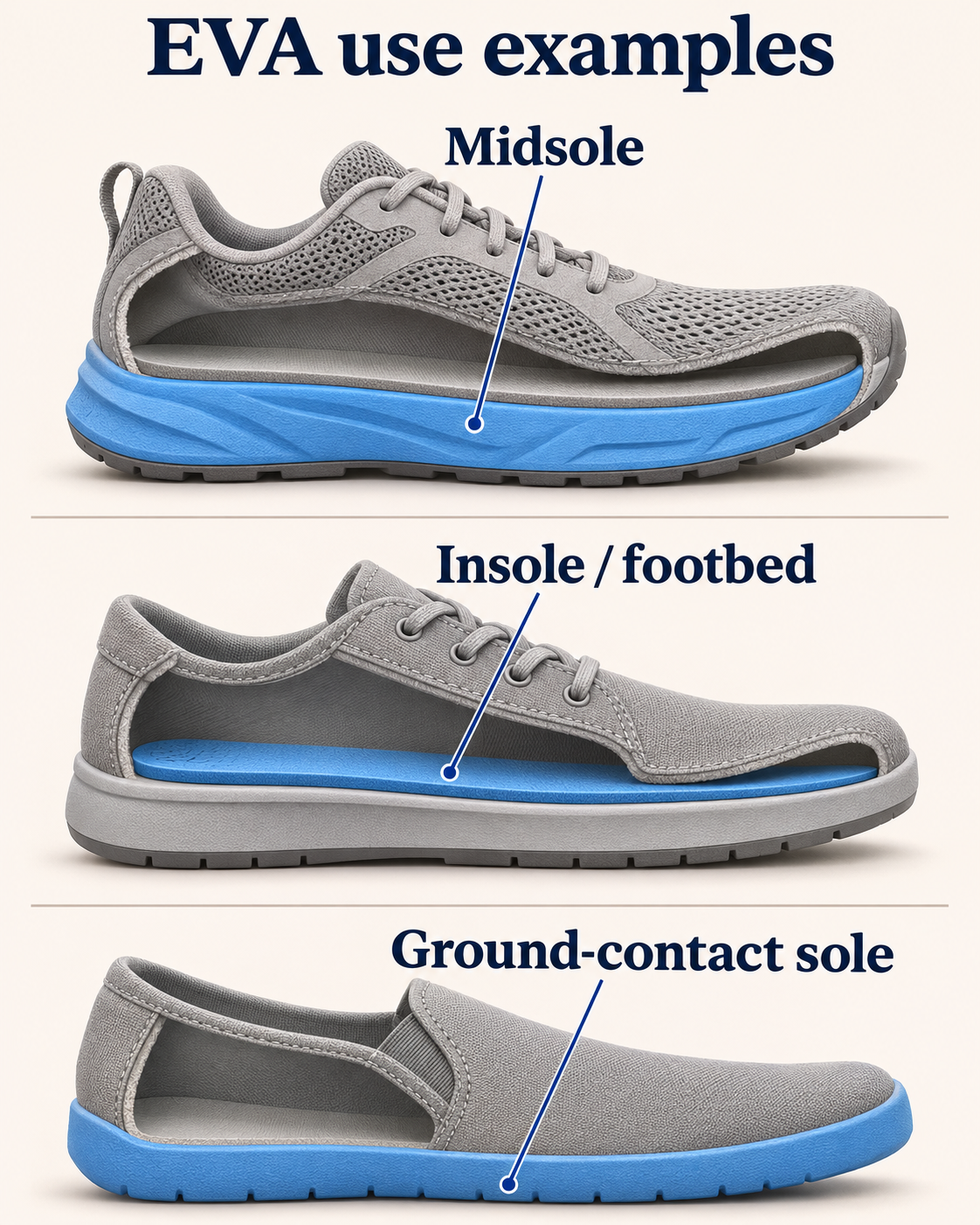
An EVA sole is not always the part touching the ground. In an athletic shoe, EVA may form the midsole between your foot and the outsole. In another construction, it may be used in a footbed or in the ground-contact layer itself.
These positions give the material different jobs:
| Where EVA is used | Its role | What to check |
|---|---|---|
| Midsole | Provides cushioning within the sole structure. | Which material contacts the ground? |
| Insole or footbed cushioning | Provides cushioning close to the foot. | Which layers contain EVA, and how are they supported? |
| Ground-contact sole layer | Forms part or all of the surface contacting the ground. | How does that particular sole handle wear and traction? |
For example, a shoe can have an EVA midsole with rubber beneath it. The EVA and rubber descriptions refer to different parts of the same construction. You need the component details to understand the specification.
EVA appears in running shoes, walking shoes, casual footwear, and sandals. Whether a particular shoe suits your activity depends on the complete design and the conditions it will encounter.
Why EVA Is Used in Shoe Soles
Lightweight Construction
EVA foam can provide cushioning without adding much weight. This makes it useful when you want a lighter sole structure, particularly in athletic and everyday footwear. The finished shoe’s weight still depends on the amount and density of the EVA and on the other components.
Cushioning and Rebound
EVA foam compresses under load, which is part of how it provides cushioning. Cushioning describes how a sole responds to impact; rebound concerns how it returns energy as the load is released. These qualities are related to the same material behavior, but they are not interchangeable. Strong rebound does not automatically mean better shock absorption, and a soft feel does not establish either one.
Flexibility and Feel
EVA formulations can produce different degrees of flexibility and firmness. The finished component’s thickness and shape also affect how it bends and feels. This gives you room to develop different sole designs, rather than one standard “EVA feel.” Compare the actual samples: the softer option is not automatically the better match for your shoe.
Limitations of EVA Soles
Compression and Surface Wear
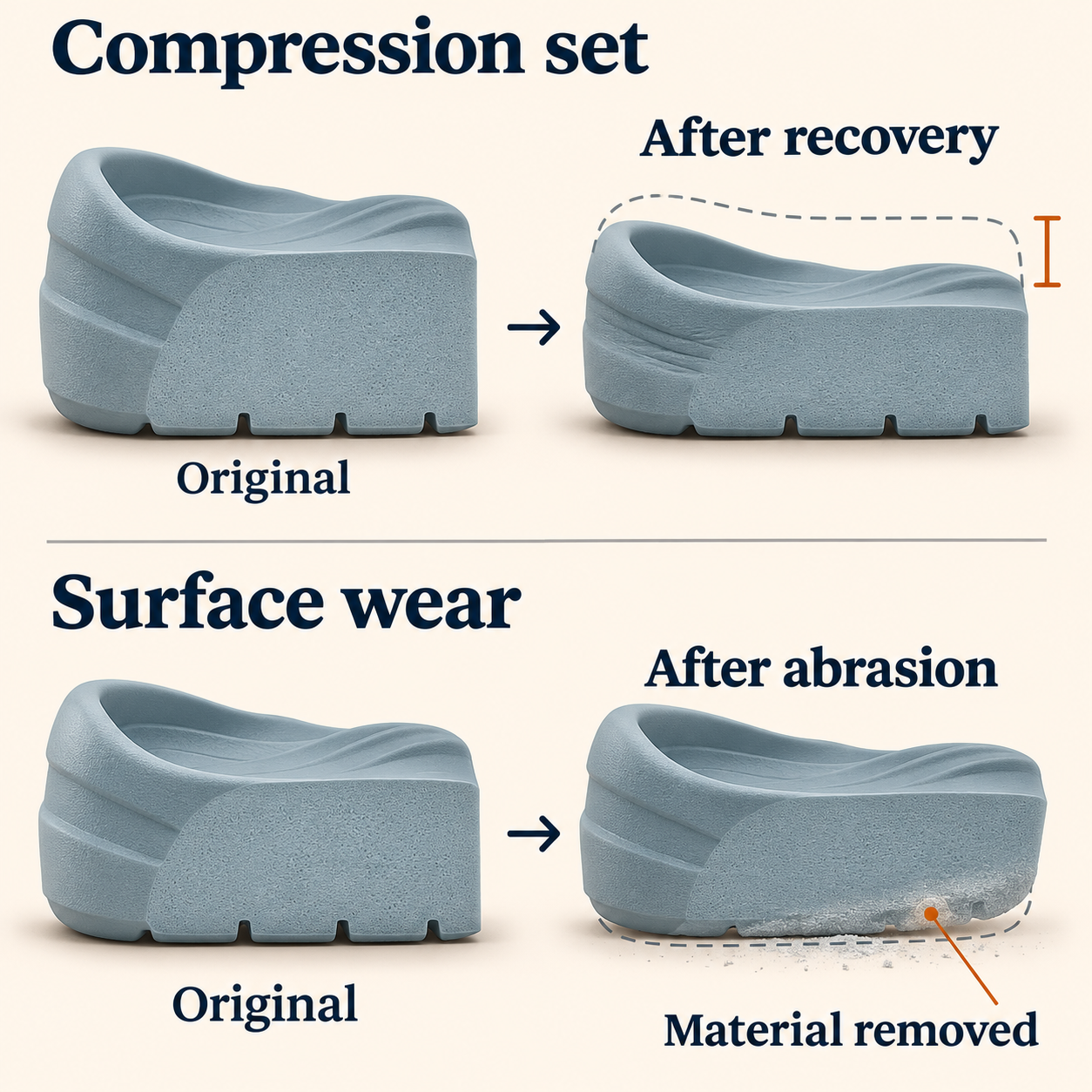
Repeated loading can change a foam’s thickness and cushioning response. Compression set is the loss of thickness that remains after compression and a specified recovery period. A fresh sample’s feel therefore tells you only part of the story.
Surface wear is a separate issue. A ground-contact layer may lose material through abrasion even if you are mainly focused on cushioning. Conversely, a sole can show changes from repeated compression without looking heavily worn underneath. There is no single lifespan in months or miles that applies to all EVA soles; the formulation, construction, and use conditions matter.
Traction Depends on the Surface
EVA is not automatically slip resistant. Grip depends on the ground-contact compound, tread, surface, and conditions such as water or other contaminants. A sole that feels secure on a clean, dry floor may behave differently on a wet one. Assess traction for the intended environment instead of treating the material name as a safety rating.
Low Water Absorption Does Not Make a Shoe Waterproof
Some closed-cell EVA foams absorb little water under specified test conditions. That describes the foam, not the complete shoe. Water may still enter through the upper, seams, openings, or connections between components. If water protection matters to your design, distinguish material absorption data from evidence about water entering the finished footwear.
Heat Exposure and Care
Heat can affect the dimensions or condition of EVA components, depending on the material and exposure. Follow the product’s care instructions, and avoid unnecessary contact with concentrated heat sources or prolonged high-temperature exposure, such as storage in a hot car. There is no universal temperature limit you can safely assign to every EVA sole.
What to Check Beyond the EVA Label
When you review a specification or sample, use four questions to make the discussion more useful:
- What will the shoe be used for? Define the activity and likely surfaces, including wet conditions where relevant.
- Where is the EVA? Identify its position and the material that actually contacts the ground.
- Do the sample’s feel and specifications fit the design? Compare thickness, flexibility, and initial feel. When reviewing the specifications, distinguish density (mass per unit volume) from hardness (resistance to indentation). “High density” alone is not a complete quality specification.
- How was performance assessed? Ask what conditions were used to evaluate relevant qualities, such as cushioning, changes after repeated compression, or traction.
Pressing a sample with your thumb can help you compare initial feel, but it does not establish dynamic cushioning performance. Keep that first impression separate from test results, and check that any results describe the material or construction you are considering.
FAQ
Is Phylon the Same as EVA?
The terms can overlap, but they describe different things. EVA names the polymer; Phylon is used in footwear for EVA-based foam materials or molded components. Seeing Phylon on a specification does not establish one universal formulation, manufacturing process, or performance level. If the distinction matters to your design, ask what material and process the supplier means, then compare the actual components.
Can EVA Soles Be Repaired or Replaced?
Sometimes, but the material name is not enough to decide. A shoe with a replaceable EVA outsole layer presents a different repair question from a molded, one-piece construction. The damage, attachment method, availability of replacement parts, and repair service all matter. Check the specific model with the brand or a qualified repairer before assuming that a worn or damaged EVA sole can be replaced.
Conclusion
EVA is a useful option when you want lightweight cushioning, with flexibility and feel that can be adjusted through the material and design. Choosing a specific sole still means looking at its construction, intended use, and performance beyond the first squeeze. If you are developing footwear with HEVA, bring your shoe concept or reference sample, expected use conditions, and preferred feel to the discussion. Those details provide a practical starting point for considering materials and sole structure.