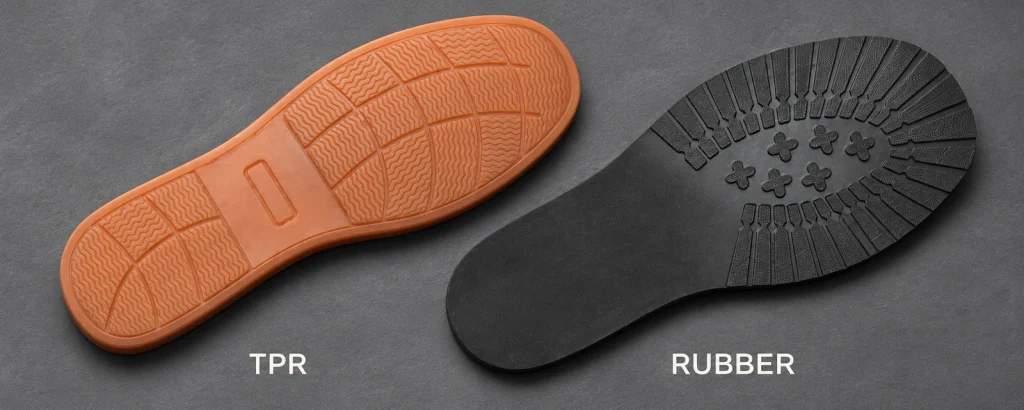
Start by checking whether both the TPR and rubber outsole designs meet your shoe’s performance requirements. If they do, compare their weight, feel, and finished cost. If only one meets an essential requirement, that requirement takes priority.
The useful comparison is between two actual sole designs. Look at where they will be worn, how they bend and wear, and what each finished option costs. Here is how to work through those differences before approving a sample.
What’s the Difference Between TPR and Rubber Soles?
TPR stands for thermoplastic rubber. It is a type of thermoplastic elastomer that combines rubberlike behavior with heat processing. Footwear compounds often use styrene-butadiene-styrene, or SBS. During molding, the material is heated, formed, and cooled to set its shape.
In this comparison, “rubber” means conventional vulcanized rubber. These outsole compounds can contain natural rubber, synthetic rubber, or a blend. Vulcanization creates chemical links between polymer chains. The cured material does not simply melt and reset like a thermoplastic.
Both names cover a range of formulations. TPR can also be solid or expanded, so two TPR soles can differ substantially in weight and feel. The same need to check the actual compound applies to rubber.
Keep the comparison at the outsole level: the part that contacts the ground. The midsole, footbed, and other shoe components contribute to the experience underfoot. A material name alone tells you little about that complete construction.
How TPR and Rubber Soles Compare
Use these five areas to compare candidate soles. Each needs evidence tied to the design you are considering.
| Factor | TPR option | Rubber option | What to compare |
|---|---|---|---|
| Grip | Compound and tread performance | Compound and tread performance | Results on relevant surfaces and contaminants |
| Durability | Wear and flex damage; attachment in the shoe | Wear and flex damage; attachment in the shoe | Separate abrasion, flexing, and bond assessments |
| Comfort | Hardness and flexibility in the finished design | Hardness and flexibility in the finished design | Whole-shoe feel, cushioning, and fit |
| Weight | Density, expansion, and material volume | Density, construction, and material volume | Actual sole and shoe weights in the same size |
| Cost | Compound, processing, and finishing costs | Compound, processing, and finishing costs | Per-pair quotes covering the same requirements |
Grip on the Surfaces You Expect
Ask what “slip resistant” means for the proposed outsole. A result on dry flooring does not tell you how the outsole performs on wet flooring. Water, oil, and loose outdoor surfaces also present different conditions.
Both the sole compound and tread design influence grip. Review the test surface, contaminant, method, and condition of the sample before comparing results. A claim that rubber always grips better than TPR skips those details.
Walking tests also have a defined scope. For shoes used during rapid stops or changes of direction, discuss whether the assessment reflects the intended activity.
Wear, Flexing, and Bond Durability
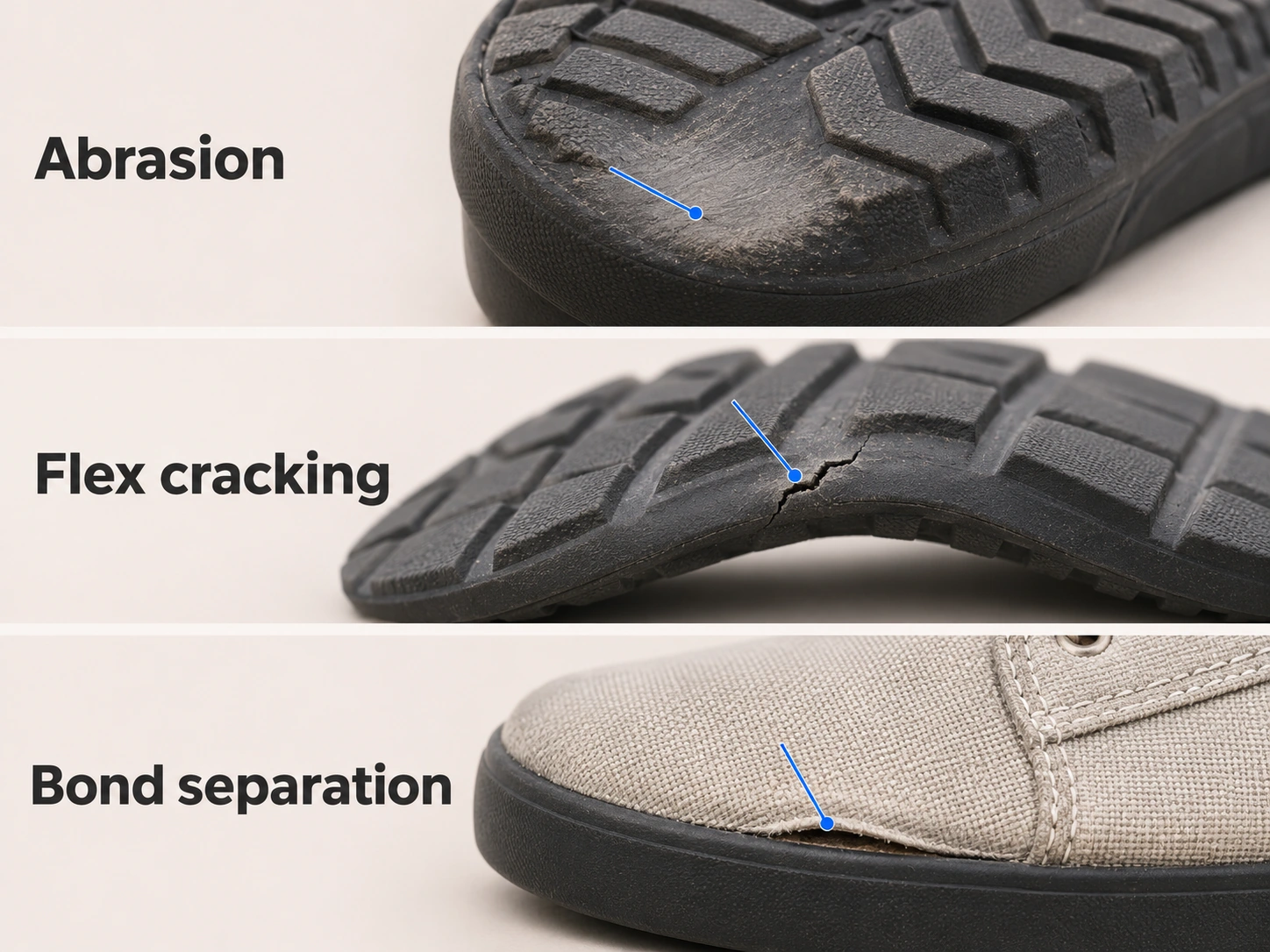
“Durable” can describe several different things. Abrasion testing examines wear. Repeated flexing assesses damage such as crack growth. Bond testing examines the attachment between the sole and upper or between bonded sole layers.
A favorable result in one area leaves the others to be checked. A sole that resists surface wear may still develop flex cracks, and a sound outsole material still needs a reliable attachment in the completed shoe.
Compare equivalent methods and sample conditions. Ask which compound and construction the report covers. Avoid converting a laboratory result into a universal promise about how many years the shoes will last.
Weight, Comfort, and Cost
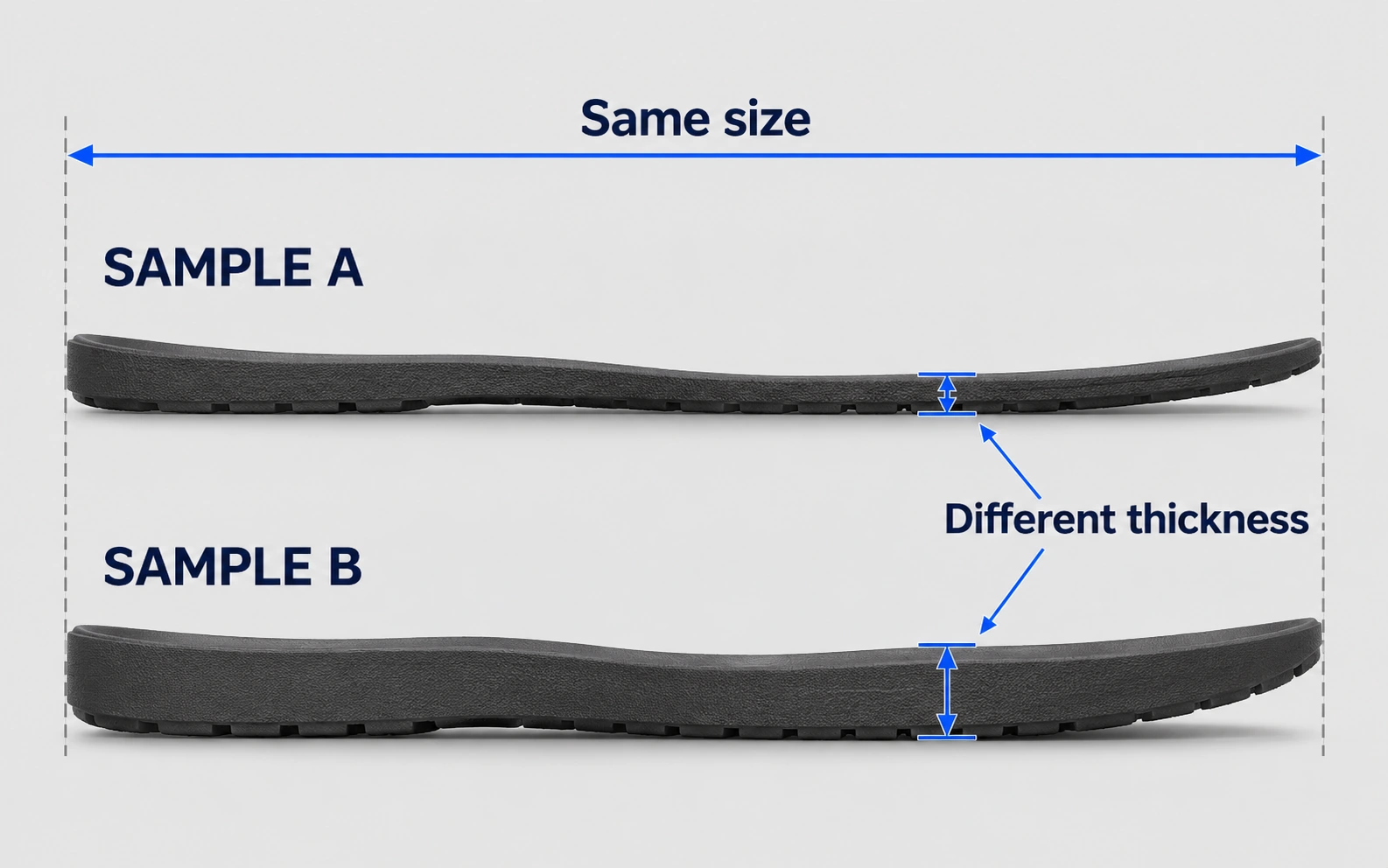
Weigh the samples in the same size. Density and the amount of material used both affect part weight, so a thick TPR sole and a thin rubber outsole reveal differences between designs as well as materials.
For comfort, evaluate the complete shoe. A soft outsole does not tell you how the midsole cushions, how the shoe fits, or how much support its construction provides. Hardness describes resistance to indentation; it does not directly measure how easily the finished sole bends. Compare the shoe’s bending and twisting behavior as well as its underfoot feel.
Then compare finished costs. A raw material price per kilogram leaves out how much material each pair uses, processing, and finishing. Ask for quotes with the same order scope and clarify any separate tooling or testing charges. That gives you a usable cost difference for your project.
Which Sole Fits Your Shoe’s Intended Use?
Start with the conditions the shoe must handle. They determine which results matter most when you choose between the two options.
Everyday and Casual Shoes
For daily walking, define the expected floors and outdoor surfaces, then compare walking comfort, flexibility, weight, and cost. Include wet conditions if they are part of normal use.
Suppose both samples meet your agreed grip, wear, flexing, and bond requirements for a casual shoe. If the TPR design costs less per pair and its weight and feel suit the shoe, you have a clear reason to choose it. If a TPR sample misses an essential requirement, its lower price does not resolve that gap; the same rule applies to rubber.
Running and Training Shoes
Separate running from training activities that involve frequent stops and lateral movement. The demands on grip and stability can differ. Assess cushioning in the complete shoe.
Evaluate the outsole together with the midsole and upper. A rubber option is worth choosing when comparable results show an advantage in a requirement that matters to your shoe, and you accept the associated weight or cost. Give a TPR option the same scrutiny before deciding whether it fits the intended activity.
Outdoor Shoes and Boots
Specify the terrain, expected wear, wet conditions, and temperature range. Smooth wet surfaces, loose ground, and cold conditions raise different questions for the proposed design.
For cold-weather use, ask for relevant flexing evidence. If heat exposure matters, ask for evidence at the expected temperature and exposure time. A TPR compound’s molding temperature does not establish its service limit, and vulcanized rubber can also degrade under excessive heat. For a hiking shoe, clarify the surfaces on which grip was assessed. Choose the option supported under your conditions; a general “outdoor” description leaves too much undefined. This approach also helps distinguish a useful performance improvement from a feature your shoe does not need.
What to Compare in Two Sole Samples
Agree on the comparison before the samples arrive. Use five checks to keep the review focused:
- Purpose. Decide whether you are trying to isolate the effect of material or choose between two complete designs. For a material comparison, keep geometry and other relevant variables as consistent as practical.
- Identity and construction. Record the compound grade, solid or expanded form, size, thickness, and tread. Different processes may need different tooling; document the resulting differences.
- Weight and wear feedback. Record outsole and whole-shoe weights separately. Review fit and underfoot feel in the completed shoe, keeping the other components in mind.
- Performance evidence. Check that reports correspond to the proposed materials and construction. Review methods and conditions for abrasion, flexing, bonding, and slip resistance.
- Quote scope. Compare the same quantity, size assortment, and finished specification. Confirm what the price includes and which charges are separate.
If one sample is lighter because its outsole is thinner, record that design difference. It may still be the better choice, but the result applies to that sole configuration. Keeping the comparison clear makes it easier to approve the right sample and explain the decision.
FAQ
Can You Tell TPR and Rubber Soles Apart by Appearance?
Appearance and touch are unreliable ways to confirm the material. Similar colors, textures, and flexibility can occur across different compounds. Ask for the material specification and compound identification associated with the sample. If the stated material is important to approval, agree on how its identity will be verified. A glossy finish, rubberlike feel, or particular smell is not sufficient evidence.
Are TPR and Rubber Soles Non-Marking?
Confirm this for the specific outsole. Neither the TPR nor rubber label establishes whether it will leave marks on flooring. Ask for an explicit non-marking specification and supporting assessment relevant to the intended floor. Neither sole color nor slip resistance confirms that an outsole is non-marking.
Does a TPR Sole Make a Shoe Recyclable?
A thermoplastic material’s ability to be reprocessed is only part of the question. Recycling a finished shoe also requires a workable route for separating and accepting its materials. Even production scrap needs controls appropriate to the compound and its condition. Confirm the actual recovery route before making a recyclability claim. The material distinction alone also does not establish that vulcanized rubber has no recovery options.
Conclusion
Choose between TPR and rubber soles by matching a specific design to your shoe’s requirements. Once both options meet the essentials, compare the differences that matter to your project, whether that is weight, feel, cost, or performance under demanding conditions.
If the evidence is incomplete, make the next sample round answer the missing question. Bring your intended use, target surfaces, and performance priorities into the development discussion so you can approve a sole with a clear reason for choosing it.