A footwear report marked “SATRA TM144” tells you which test method was used. To understand what the result means for your shoe, you also need to know what was tested and under which conditions. A material sample tested on a dry surface answers a different question from a finished shoe tested on a wet one. Understanding that distinction helps you use slip resistance data when comparing soles, discussing samples, or deciding what evidence a footwear project needs.
What Is SATRA TM144?
SATRA TM144 is a test method for measuring friction between footwear and test floors under conditions intended to simulate parts of a typical walking step when slipping is likely.
During the test, the footwear item and surface are brought together under a specified vertical force. After a short period of contact, one moves horizontally relative to the other. The measured friction is used to calculate a dynamic coefficient of friction, or COF, for those test conditions. It expresses the horizontal friction force relative to the vertical force pressing the specimen against the surface.
“Dynamic” matters: the measurement concerns friction during sliding. In SATRA’s explanation, traction concerns static grip, while slip resistance concerns what happens once sliding begins. A TM144 result therefore provides evidence about sliding behavior. It does not summarize every aspect of grip or guarantee that a wearer will never slip.
What Can Be Tested?
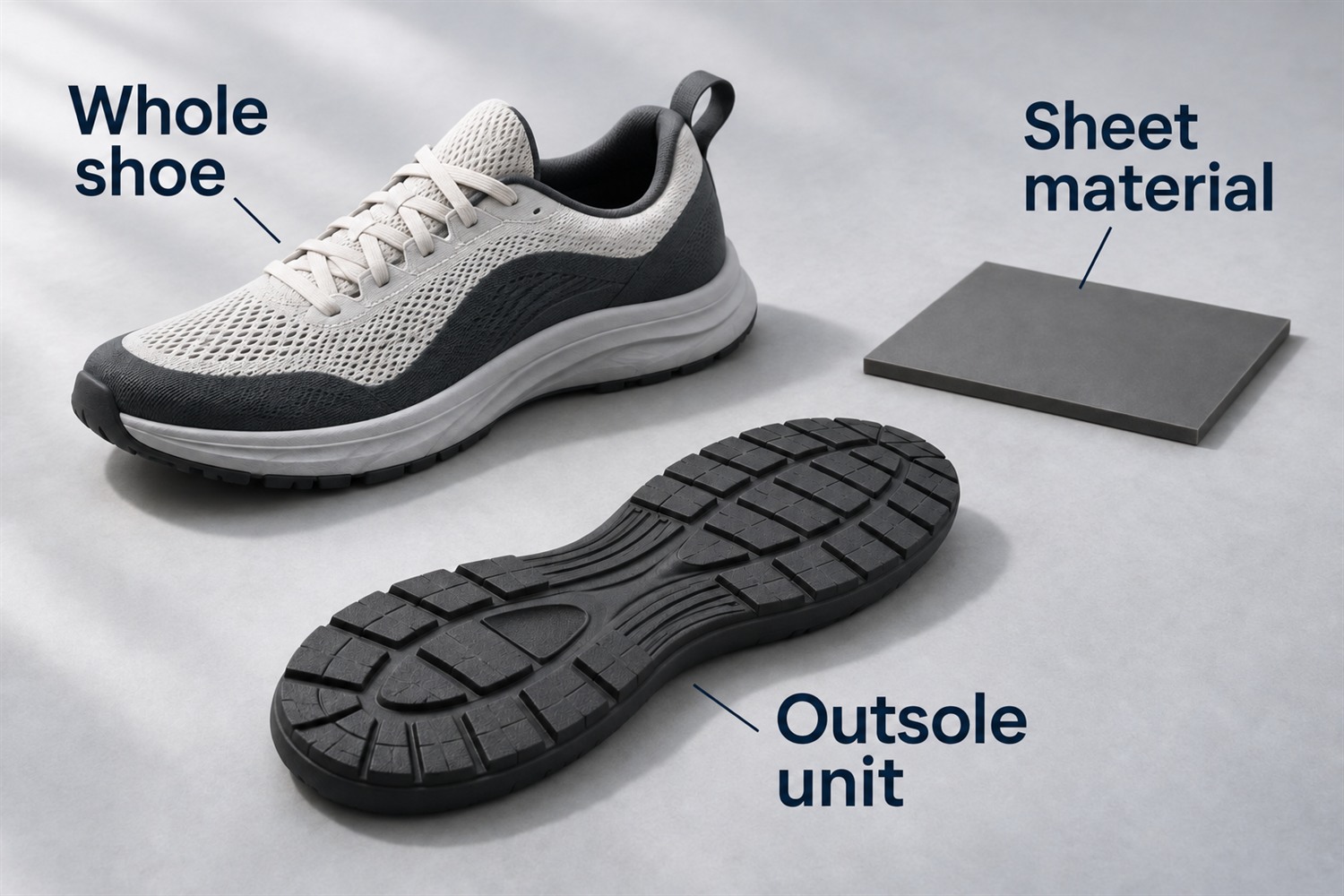
The published scope covers footwear other than pram shoes, as well as outsole units, heel top-pieces, and sheet soling materials. It also accommodates different test surfaces. The result describes the specimen tested against a particular surface, rather than the material name alone.
Material testing can be useful early in development, when you are narrowing down candidate compounds. SATRA’s 2021 update notes that finished whole shoes are preferred, while testing materials before production remains useful.
Keep those results attached to the samples they describe. A report for sheet material is evidence about that material specimen; it should not be presented as a test of a finished shoe. When moving from material selection to a shoe sample, confirm with the laboratory which specimen best answers your development question.
Why Test Conditions Matter
A COF value is most useful when you can identify the conditions behind it. Two reports that both cite TM144 may examine different surfaces, contaminants, or contact modes.
Before comparing results, establish whether the tests address the same question:
- Surface: What floor or ground material was used?
- Contamination: Was the surface dry, wet, or exposed to oil or another contaminant?
- Contact: Which part of the footwear contacted the surface, and in what test mode?
- Specimen: Was the test performed on finished footwear, a sole unit, or a material sample, and what sample condition was recorded?
A dry-surface result does not establish performance on an oily surface. Likewise, changing the tested specimen makes a direct comparison harder to interpret. These differences do not make either report useless; they limit the conclusions you can draw by comparing them.
Start with the intended environment, then agree on suitable test conditions. That gives the resulting number a practical purpose beyond ranking samples from highest to lowest.
Which Version of SATRA TM144 Is Being Used?
You may encounter references to both SATRA TM144:2011 and TM144:2021. SATRA’s public method page identifies the latter as the March 2021 revision; the explanatory Bulletin article appeared in April 2021.
The update retained the fundamentals of the method while adding annexes for mud and leather soles, consolidating guidance on ice, and clarifying technical details. It should not be described as an entirely new test.
Record the edition used rather than assuming that every reference to “TM144” means the same document. An older date alone does not tell you whether a report is acceptable for your project. Check the specified requirements and discuss any differences with the laboratory before relying on it.
SATRA TM144 vs. ASTM F2913 and ISO 13287
These methods belong in the same discussion, but their names should not be used interchangeably. SATRA explains that ASTM F2913 was derived from TM144 and remains closely aligned with it. ISO 13287 addresses slip resistance testing for personal protective equipment (PPE) footwear.
| Method | Main focus | What to confirm |
|---|---|---|
| SATRA TM144 | Friction between footwear or soling specimens and test surfaces | Edition, specimen, surface, contamination, and contact mode |
| ASTM F2913 | Footwear and test-surface friction measured using a whole-shoe tester | The specified edition and whether the report meets the project’s requirements |
| ISO 13287 | Slip resistance of PPE footwear; its scope excludes special-purpose footwear with spikes or metal studs | Product applicability and the required test conditions |
Similar test principles do not, by themselves, establish that one report will be accepted in place of another. If a specification names a method, confirm acceptance before substituting evidence.
Also distinguish a test method from performance requirements. ASTM F3445 specifies performance requirements using ASTM F2913 testing. Its limits should not be treated as a universal TM144 pass value. Similarly, “tested to SATRA TM144” describes a testing claim; that phrase alone is neither independent certification nor proof that a particular performance requirement has been met.
What Can the Results Tell You About Sports Footwear?
TM144 can help you assess sliding behavior under selected conditions. Its walking-based purpose, however, matters when interpreting results for sports footwear.
Rapid changes of direction, abrupt stops, and contact with different playing surfaces raise questions beyond a typical walking slip. A result from one test configuration cannot establish performance across all those movements.
SATRA also advises caution where footwear or surfaces induce an atypical gait. For shoes with spikes or similar fittings, the method does not fully account for tripping caused by footwear interlocking with the ground. Strong grip alone does not establish that a shoe is suitable for every sporting activity.
For your project, describe the intended movements and surfaces to the laboratory. Ask which evaluations address those conditions and how TM144 data fits into that assessment. This keeps useful friction evidence in context without dismissing the method or asking it to answer questions outside its scope.
FAQ
What Is the Difference Between SATRA TM63 and TM144?
SATRA TM63 evaluates changes in the volume of sole-material specimens after immersion in oil. TM144 measures friction between a footwear specimen and a test surface, which may include an oily condition. They address different properties. Evidence that a material resists oil-related swelling does not establish its slip resistance on an oily floor, and a friction result does not establish resistance to swelling. Match each claim to the relevant evidence.
Where Can You Get the SATRA TM144 Test Method?
Consult SATRA’s official method listing and contact SATRA about obtaining the formal document and confirming the required edition. Its public scope and principle sections help explain the method but do not provide the complete procedure. If you find a SATRA TM144 PDF through a third-party search result, do not assume it is complete, current, or authorized. Confirm the document through the official source before using it for testing.
Conclusion
SATRA TM144 helps turn a broad slip resistance claim into evidence about a particular footwear-and-surface combination. To use that evidence well, connect the result to the tested specimen, method edition, surface, contamination, and intended use. Before approving a sample or comparing supply options, agree on the conditions and evidence your project needs. That conversation makes testing more useful for development decisions and keeps a single result from becoming a promise about every surface or activity.