You may see ASTM F3445 on a shoe label, in a supplier’s specification, or alongside a laboratory result. Before you carry that wording into your own product brief, check what it refers to: the version of the standard, the footwear tested, and the conditions behind the result. Those details help you assess a slip-resistance claim and decide what information you still need for your project.
What Is ASTM F3445?
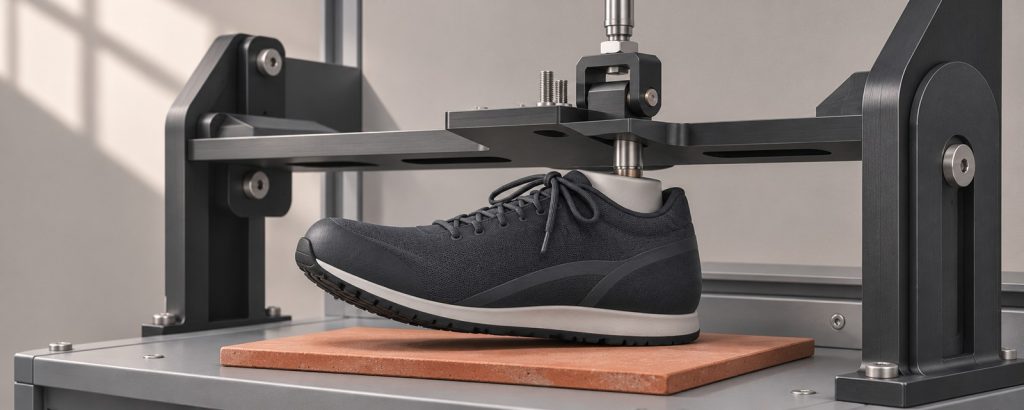
ASTM F3445 is a performance specification that sets minimum slip-resistance requirements for completed footwear evaluated using the ASTM F2913 whole shoe test method. It provides a defined basis for assessing performance under specified laboratory conditions.
The focus on completed footwear matters when you review information from a sole supplier. A result for a material sample or separate outsole does not, by itself, demonstrate that your finished shoe meets the specification. Start by identifying exactly what was tested.
For a development project, use the standard to clarify the performance you want to evaluate. A request for a “slip-resistant rubber sole” leaves questions open about the finished shoe, the test conditions, and the evidence needed to support the eventual claim.
ASTM F3445 and F2913: How They Work Together
ASTM F2913 describes a laboratory method for measuring the dynamic coefficient of friction, or COF, between footwear and a test surface. COF expresses friction relative to the force pressing the surfaces together. The result reflects the combination of footwear, surface, and conditions used in the test.
| Standard | Role | What to Look For |
|---|---|---|
| ASTM F2913 | Measures slip performance using a defined test method | Tested sample, surface, contaminant, and measured results |
| ASTM F3445 | Sets footwear slip-resistance performance requirements | Applicable version, requirements, and assessment of the results |
F2913 can also be used with outsole units and certain soling materials. That broader testing scope does not change F3445’s focus on completed footwear.
If a document says only “tested to ASTM F2913,” ask for the results and the criteria used to assess them. The method reference tells you how the data was obtained; you still need to establish what the data supports.
ASTM F3445-21 and F3445-24: Understanding SR and SRO
What Changed in the 2024 Revision?
ASTM F3445-21 introduced slip-resistance performance requirements for protective footwear. You may still encounter that version on labels and in product documentation. In that context, SR identifies the slip-resistance designation associated with the specified dry and wet conditions.
The 2024 revision broadened the scope beyond protective footwear. It retained SR and added SRO for oily-wet environments. When discussing a new project, write down the version you intend to use rather than relying on the number F3445 alone.
What SR and SRO Mean
The following summarizes the principal conditions and minimum COF values described in SATRA’s explanation of the 2024 update.
| Designation | Test Conditions | Minimum COF |
|---|---|---|
| SR | Quarry tile, dry and wet | 0.40 in both conditions |
| SRO | The dry and wet conditions above, plus oily-wet clay quarry tile | 0.40 dry and wet; 0.33 oily-wet |
The evaluation includes heel and forepart test modes. Read each value with its test condition. The oily-wet requirement is additional: an SRO claim still includes the dry and wet requirements. Comparing 0.33 with 0.40 without that context gives an incomplete picture.
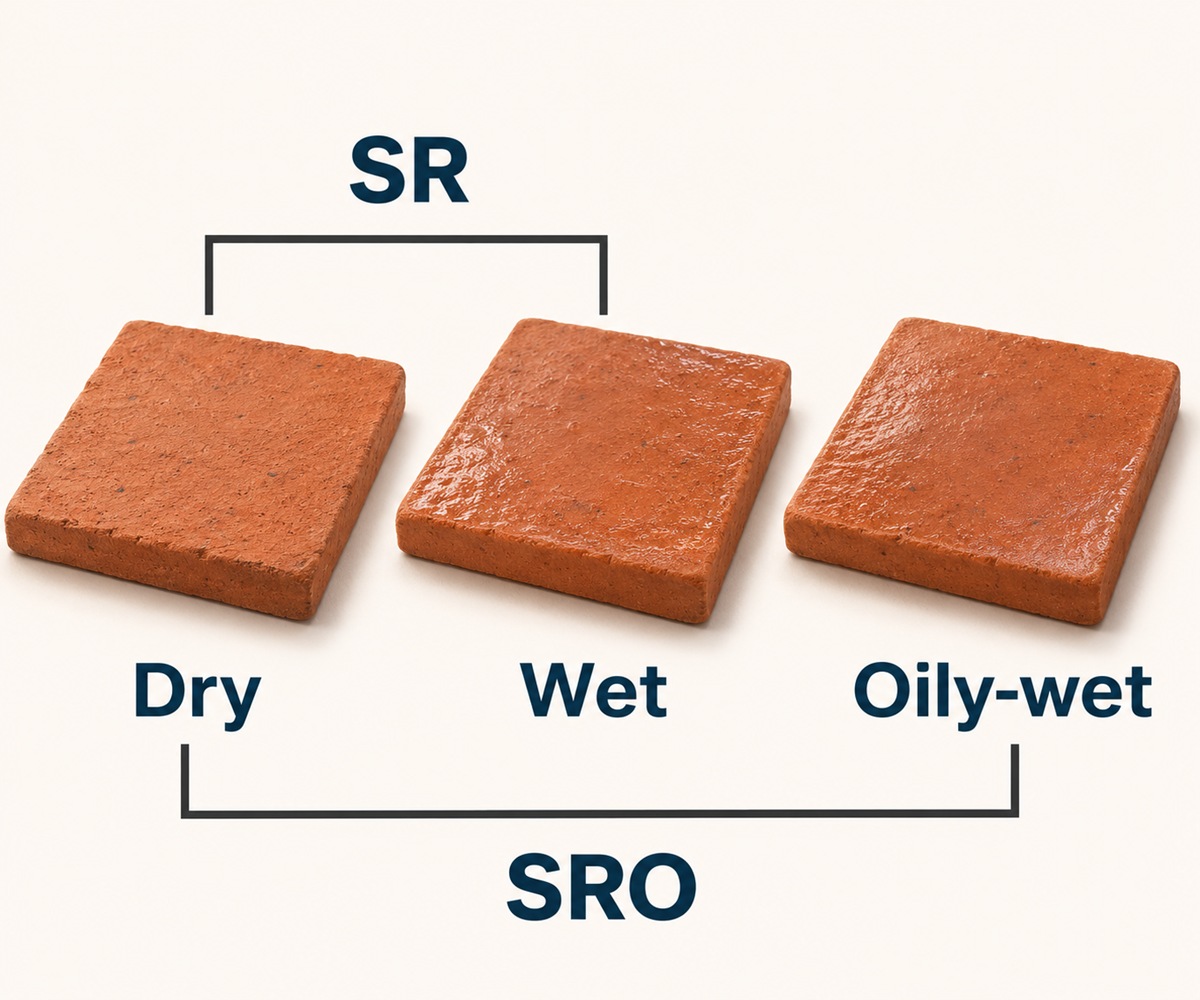
An SR designation alone does not establish SRO performance. It also does not tell you whether the manufacturer has commissioned other testing. Request the relevant evidence if oily-wet conditions matter to your project. Similarly, an older version number calls for clarification about the applicable requirements; it is not enough on its own to decide whether a product is suitable.
How to Interpret a Slip-Resistance Claim
Start with the environment the footwear will encounter. A result on a specified laboratory surface cannot establish performance in every situation. If your intended setting has different flooring or contaminants, discuss whether additional testing would help evaluate those conditions. F3445’s scope expressly allows consideration of such alternatives through F2913.
Then separate the properties described in the product information. Oil resistance concerns the sole material’s resistance to damage from oil. It does not establish grip on an oily surface. Likewise, an F3445 slip-resistance claim alone does not demonstrate protective toe, electrical hazard, conductive, or puncture-resistant performance.
Related standards address different protective features. ASTM F2413 concerns protective toe-cap footwear, while ASTM F2892 concerns soft-toe protective footwear. Review the particular attributes claimed for the shoe; a reference to one of these standards should not be read as a promise of every protective feature.
Also check the basis for words such as “tested,” “compliant,” and “certified.” Ask who issued the supporting document, which standard and version it covers, and which product it identifies. Certification requirements depend on the applicable specification: F2892-24, for example, expressly requires independent third-party laboratory certification for footwear bearing its ASTM marking. Avoid turning that requirement into a blanket statement about every ASTM standard, or treating a standard number as evidence that ASTM itself approved the shoe.
What to Confirm for Your Footwear Project
A useful development brief connects your intended use with a specific shoe and a clear evidence request. Before sampling or reviewing a supplier’s report, work through these points:
- Describe the environment. Identify the main floor surfaces, likely contaminants, and intended activities. Include conditions that a generic description such as “indoor use” would leave unclear.
- Specify the requirement. Record the editions of ASTM F3445 and ASTM F2913 referenced in the test documentation, along with the slip-resistance claim you want to evaluate. Confirm the applicable requirements with the laboratory.
- Match the sample. Check the shoe or sample identifier and sole configuration against the design under development.
- Read the results with the conditions. Look for the tested surface, contaminant, relevant results, and assessment against the stated requirements.
- Check the document details. Identify the issuing laboratory, report date, and connection between the report and the product information you received.
Use this as a practical review checklist. Resolve unclear sample references or missing conditions before relying on a report for a product claim. A pass statement is most useful when you can trace it to the footwear and requirements in your brief.
FAQ
Can Slip Resistance Change as Shoes Wear?
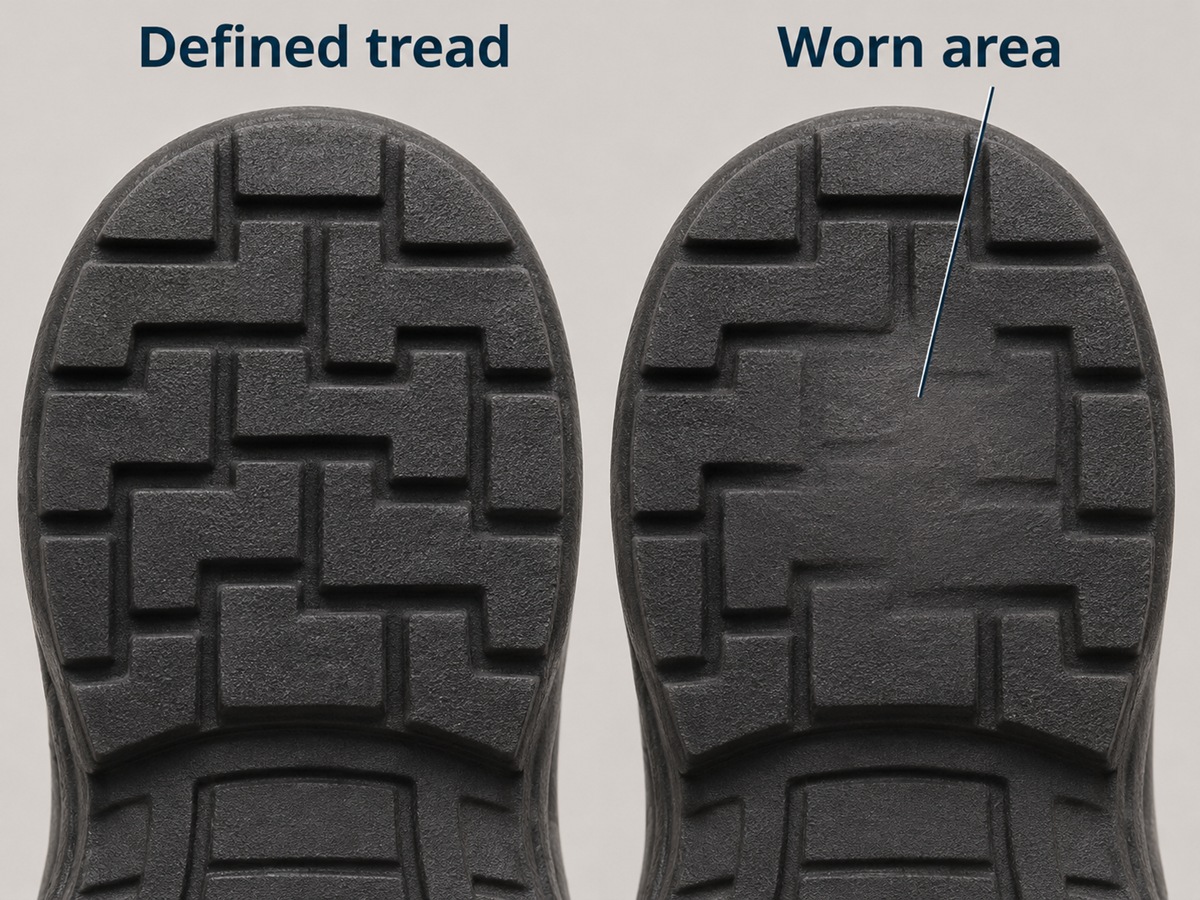
Yes. Wear can change the outsole, and debris can clog the tread. Initial test results therefore do not show that slip resistance will remain the same throughout the shoe’s life. Consider outsole condition and maintenance information alongside feedback from actual use. A standard designation alone cannot tell you when every pair should be replaced; avoid assigning a universal replacement interval without evidence for the product and its use.
Should You Review Test Evidence After Changing the Sole or Construction?
Yes. Record what changed and ask the laboratory whether the existing evidence still applies to the revised shoe. Changes may affect how representative the tested sample is. Do not assume that a similar appearance preserves the result, or that every change requires the same retesting. For protective footwear, also check the specific component-change provisions of any other standards being claimed.
Does ASTM F3445 Establish Grip for Running or Court Sports?
An F3445 result alone does not establish performance for running, rapid direction changes, or a particular court surface. Those uses introduce questions beyond the specified slip-test conditions. Describe the intended activity and playing surface separately in your brief, then discuss suitable evaluation with the laboratory. Keep any sport-specific performance claim tied to evidence that actually addresses that use.
Conclusion
To interpret ASTM F3445, connect the standard version and designation with the tested footwear, conditions, and supporting results. That gives you a clearer basis for discussing requirements and identifying gaps before development decisions are made. If you are preparing a footwear project, share your target market, intended environment, and testing requirements with HEVA so we can review them as part of your development brief.