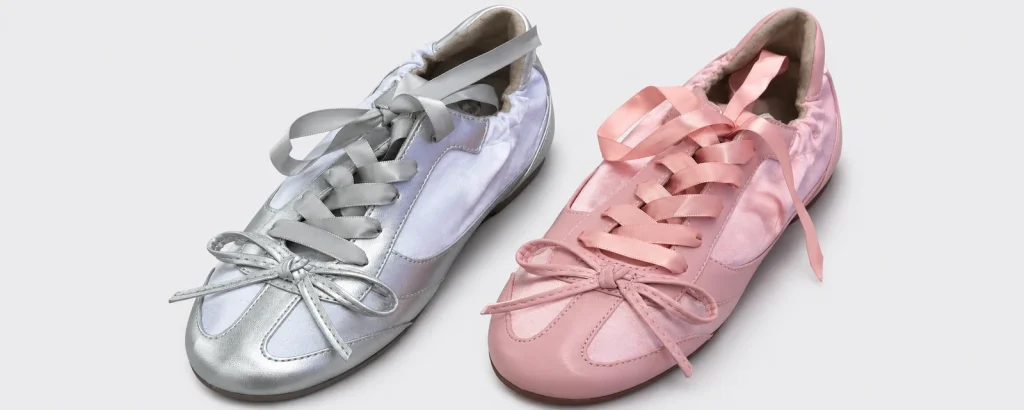
Two shoes can look almost identical yet fall under different tariff classifications. A textile upper, a visible plastic coating, or a change in the outsole can affect where you start. Construction details can then determine which subheading you need to examine.
If you’re looking for a footwear HS code for the United States, work from the product’s materials and construction toward the applicable U.S. HTS provision. This guide explains that process and the information you’ll need to verify a code for your particular shoe.
Footwear HS Codes and the U.S. HTS
How HS and U.S. HTS Codes Differ
The Harmonized System (HS) provides international product categories, including four-digit headings and six-digit subheadings. The U.S. Harmonized Tariff Schedule (HTS) adds further detail: eight-digit provisions establish U.S. tariff rate lines, and two additional digits create ten-digit statistical reporting numbers.
Start with the applicable heading, then compare the descriptions beneath it. Read each description together with its parent provisions and relevant notes. An entry labeled “Other” only makes sense within that hierarchy.
A six-digit HS code is therefore a starting point for U.S. classification, not a complete U.S. reporting number. Confirming the ordinary tariff line also does not establish every duty that may apply to a shipment.
A Quick Guide to Chapter 64
Chapter 64 covers footwear and certain related articles. Use this overview to orient your search, then check the full heading text and notes.
| Heading | Main Material or Scope | Important Boundary |
|---|---|---|
| 6401 | Waterproof footwear with rubber or plastic uppers and outer soles | Must also meet the heading’s assembly conditions. |
| 6402 | Other footwear with rubber or plastic uppers and outer soles | A shoe’s athletic appearance does not determine its heading. |
| 6403 | Leather uppers; outer soles of rubber, plastic, leather, or composition leather | “Synthetic leather” is not automatically leather. |
| 6404 | Textile uppers; outer soles of rubber, plastic, leather, or composition leather | The outsole material also affects the subheading. |
| 6405 | Other footwear | A residual heading, not a fallback for an uncertain classification. |
| 6406 | Specified footwear parts and related articles | Not every accessory belongs here; shoelaces, for example, are excluded. |
Chapter notes also exclude certain articles, including worn footwear qualifying for heading 6309 and orthopedic footwear of heading 9021. Those descriptions have their own requirements. The fact that a shoe is used, or has a comfort-related product name, does not by itself settle its classification.
Start with the Upper and Outsole Materials
Identify the Upper Material
The upper is the part of the shoe above the sole. Under Chapter 64’s material rule, its constituent material is the one with the greatest external surface area, disregarding specified accessories and reinforcements.
This is an area comparison, not a comparison of total shoe weight. “Greatest” also does not mean a universal requirement to exceed 50%. When several materials are present, identify the largest share under the applicable rules.
Be precise about what the measurement includes. Certain narrower provisions expressly count accessories or reinforcements when applying their own percentage tests. A measurement prepared for the initial upper-material decision may not answer those later questions.
Check Coatings and Composite Materials
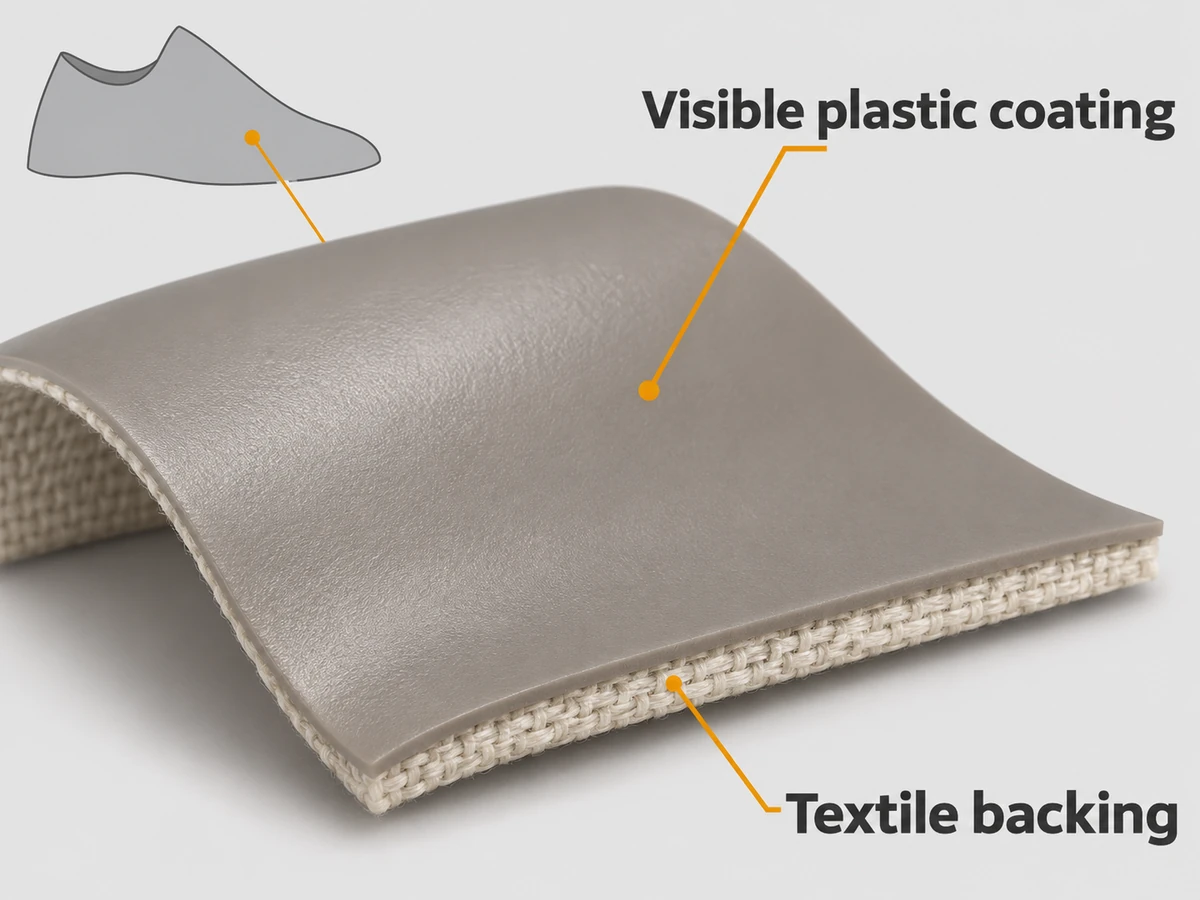
A supplier’s description such as “synthetic leather” or “coated fabric” needs more detail. Ask what forms the exposed surface, what lies beneath it, and how much of the upper it covers.
Chapter 64’s definitions of rubber and plastic include textile products with an external layer of the corresponding material visible to the naked eye. A color change alone does not meet that visibility test. A fabric backing therefore does not necessarily make the upper textile for classification purposes.
The coating rule must still be considered alongside the upper’s surface-area assessment. Neither the word “PU” nor “synthetic” supplies a complete classification.
Identify the Material in Contact with the Ground
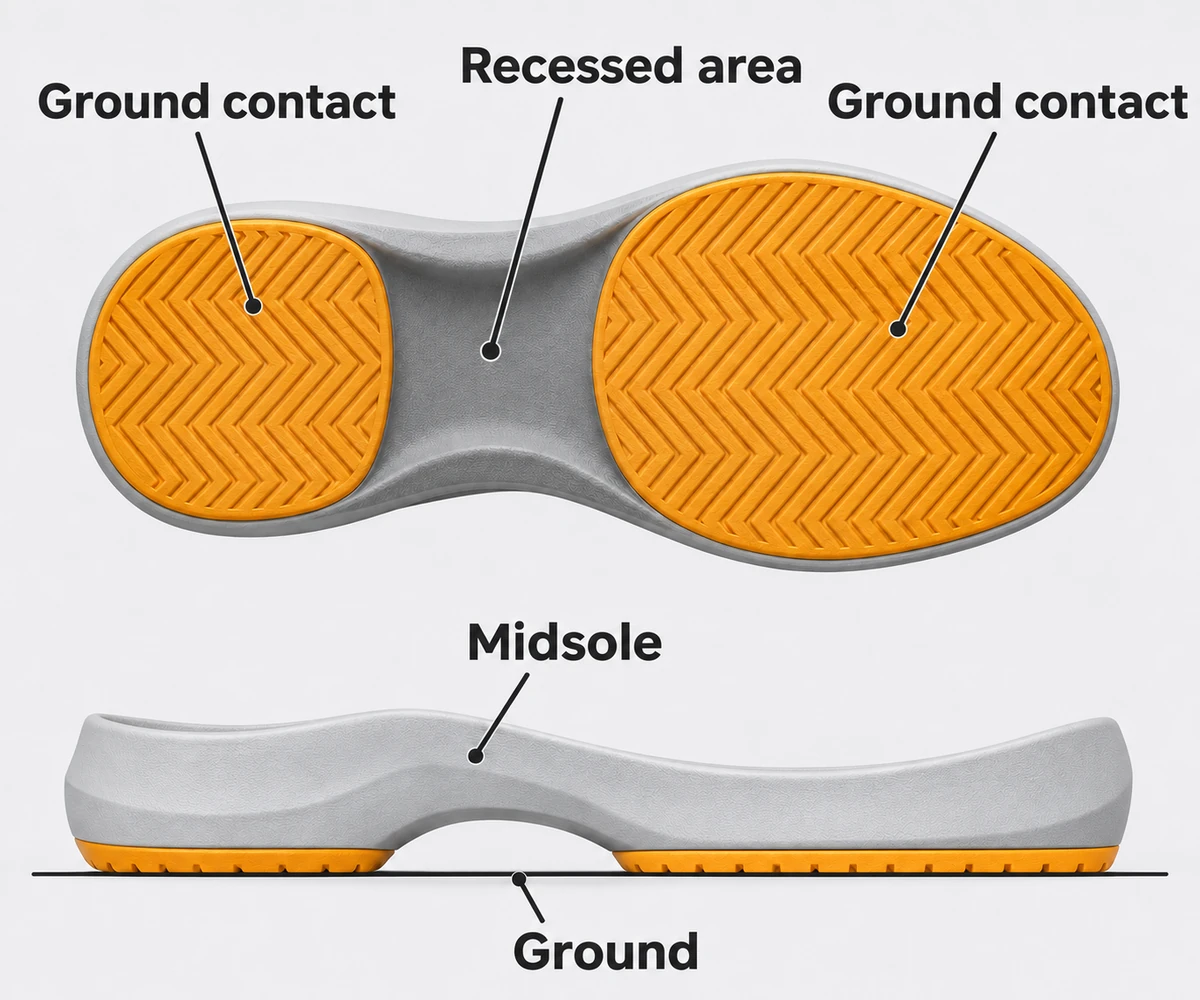
For the outsole, compare the surface area of materials in contact with the ground, subject to the chapter’s rules for accessories and reinforcements. The entire sole assembly, including cushioning above the outsole, is not the same as this contact surface.
Surface coverings need attention. Additional U.S. Note 5 disregards textile materials that lack characteristics normally required for outsole use, including durability and strength. You cannot assume that any visible fabric covering determines the outsole material.
Keep the covering details in your product record even if the textile layer is disregarded when identifying the outsole material. Some narrower provisions still distinguish footwear with that type of textile covering.
Some narrower provisions also have separate weight requirements.
Check Construction and Other Classification Details
Sports Footwear and Other Athletic Shoes
“Sports footwear” has a defined meaning in Chapter 64. It includes footwear designed for sporting activities that has features such as cleats or spikes, or allows them to be attached. It also includes specified categories such as cycling, boxing, and wrestling shoes.
But that is not the whole scope of 6404.11. This subheading also covers tennis shoes, basketball shoes, gym shoes, training shoes, and the like. Additional U.S. Note 2 addresses this athletic category whether or not the footwear is principally used for those activities.
Consequently, wearing an athletic shoe casually does not automatically move it into 6404.19. Equally, a sneaker-like appearance does not by itself establish 6404.11.
First confirm the material heading. Within 6404, the 6404.11/6404.19 comparison concerns footwear with rubber or plastic outer soles. Within that branch, 6404.19 covers the ‘Other’ footwear outside 6404.11. Subheading 6404.20 addresses outer soles of leather or composition leather. Leather-upper and plastic-upper athletic shoes require a different starting point.
Waterproof Construction
Heading 6401 requires more than water resistance. It specifies rubber or plastic uppers and outer soles, with uppers neither fixed to the sole nor assembled by stitching, riveting, nailing, screwing, plugging, or similar processes. The applicable waterproof definition must also be met.
A waterproof textile trail shoe can therefore follow another route. In its September 2024 ruling N342338, U.S. Customs and Border Protection (CBP) classified a waterproof textile-upper trail-running shoe under 6404.11. That historical example illustrates a particular combination of facts; it is not a code recommendation for every waterproof running shoe.
Other Details That Can Change the Subheading
Once the material heading is established, the relevant branch may ask about:
- Whether the shoe covers the ankle, has a protective metal toe cap, or has open toes or heels.
- How the upper and sole are joined, including applicable adhesive or welt construction conditions.
- A foxing or foxing-like band: broadly, a band or band-like sole feature around the upper–sole junction. Its precise treatment requires more than visual resemblance.
- The applicable value range and distinctions involving size or intended wearer.
Follow the conditions in the branch you are examining. Not every question applies to every shoe, and a retail price should not simply be substituted for the value used in a tariff provision.
Apply the Process to Common Shoe Examples
The following are hypothetical teaching examples, not classifications of actual HEVA products. Each assumes a new, complete shoe with no relevant chapter exclusion. The material descriptions mean that the chapter’s material-identification rules have already been applied.
| Example | Confirmed Material Facts | Branch to Examine | What Still Needs Checking |
|---|---|---|---|
| Textile athletic shoe | Textile upper; rubber or plastic outsole | 6404; examine 6404.11 if the athletic category fits | Athletic classification, construction, relevant material details, value, and wearer information. |
| Coated-upper shoe | Visible plastic coating on textile backing; upper classified as plastic; rubber or plastic outsole | Check 6401 conditions, then consider 6402 if they do not apply | Coating and area assessment, assembly, ankle coverage, and applicable narrower conditions. |
| Leather casual shoe | Upper classified as leather; rubber or plastic outsole | 6403 | Ankle coverage, construction, relevant special features, and value or wearer distinctions. |
Notice that a fabric-backed upper can lead away from 6404 when its visible outer layer and area assessment establish a different material classification. Conversely, an athletic design does not override a leather upper and move the shoe into the textile-upper heading.
The final column matters as much as the branch shown. If you know the upper material but lack the construction details needed by the next provision, stop there and obtain them. Borrowing a complete number from a similar-looking shoe leaves that gap unresolved.
Gather the Details Needed to Verify a U.S. HTS Code
Build a product record that matches the shoe you intend to make or ship. Organize the information into five groups:
- Product identification: style number, specification version, and clear photos; provide a representative sample when needed.
- Upper information: exposed materials, backing and coating construction, and surface-area information with the measurement basis identified.
- Outsole information: ground-contact materials and areas, with descriptions of coverings and attachments.
- Construction: upper-to-sole attachment, ankle coverage, protective features, waterproof construction, and other details relevant to the branch.
- Further distinctions: value information, sizes, and intended wearer details where the applicable provisions require them.
The footwear section of 19 CFR 141.89 specifies material-area and construction information for covered footwear. It permits the information to be supplied on CF 5523 or in another appropriate format. Photos and samples can help communicate the facts. Not every item in this practical checklist is mandatory for every shoe.
Use the current HTS text and notes to check the resulting classification. Historical rulings can help you understand how particular facts were treated, but their product descriptions must be compared carefully. Where uncertainty remains, seek appropriate classification assistance; informal guidance and a binding CBP ruling are different forms of advice.
FAQ
Can You Use the HS Code Supplied by Your Manufacturer?
Use it as a starting point for verification. Ask which country’s tariff system and edition it comes from, and confirm that it describes your actual product. A supplier’s export-country code may have different national digits from the U.S. HTS. If the materials or construction have changed since the code was selected, revisit the classification rather than carrying the number forward automatically.
Do Sample Shoes Automatically Use a Different HS Code?
No. Special sample treatment under Chapter 98 has specific requirements. For example, 9811.00.60 includes conditions concerning value or treatment of the sample and its use solely to solicit orders for foreign products. Calling a shoe a “sample,” providing it free of charge, or saying it will not be resold does not by itself establish eligibility. Verify the applicable conditions for the shipment.
Can One Footwear Code Cover Every Size in the Same Style?
Possibly, but the shared style name is not enough to establish that. Some provisions distinguish footwear by size or wearer category; retail labels such as men’s, women’s, or children’s do not by themselves establish the classification. Check those conditions against the size range and product facts. You do not necessarily need a different number for every size, but you should not assume one number covers the entire range.
Conclusion
Start with the upper and outsole materials, then follow the relevant construction and subheading conditions. When a detail is missing, obtain it before selecting a complete U.S. HTS number. A clear product record gives you the facts needed to verify the classification.
For a shoe development project with HEVA, share your upper, outsole, and construction details so we can discuss the specifications and sample requirements.