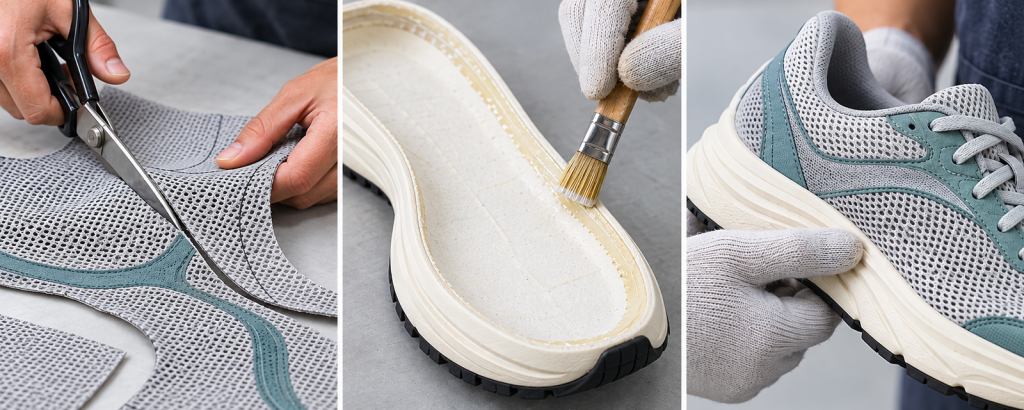
Running shoes are made by producing an upper and sole components, shaping them to the intended design, and joining them into a finished shoe. Fabric, foam, and rubber go through different processes before they come together.
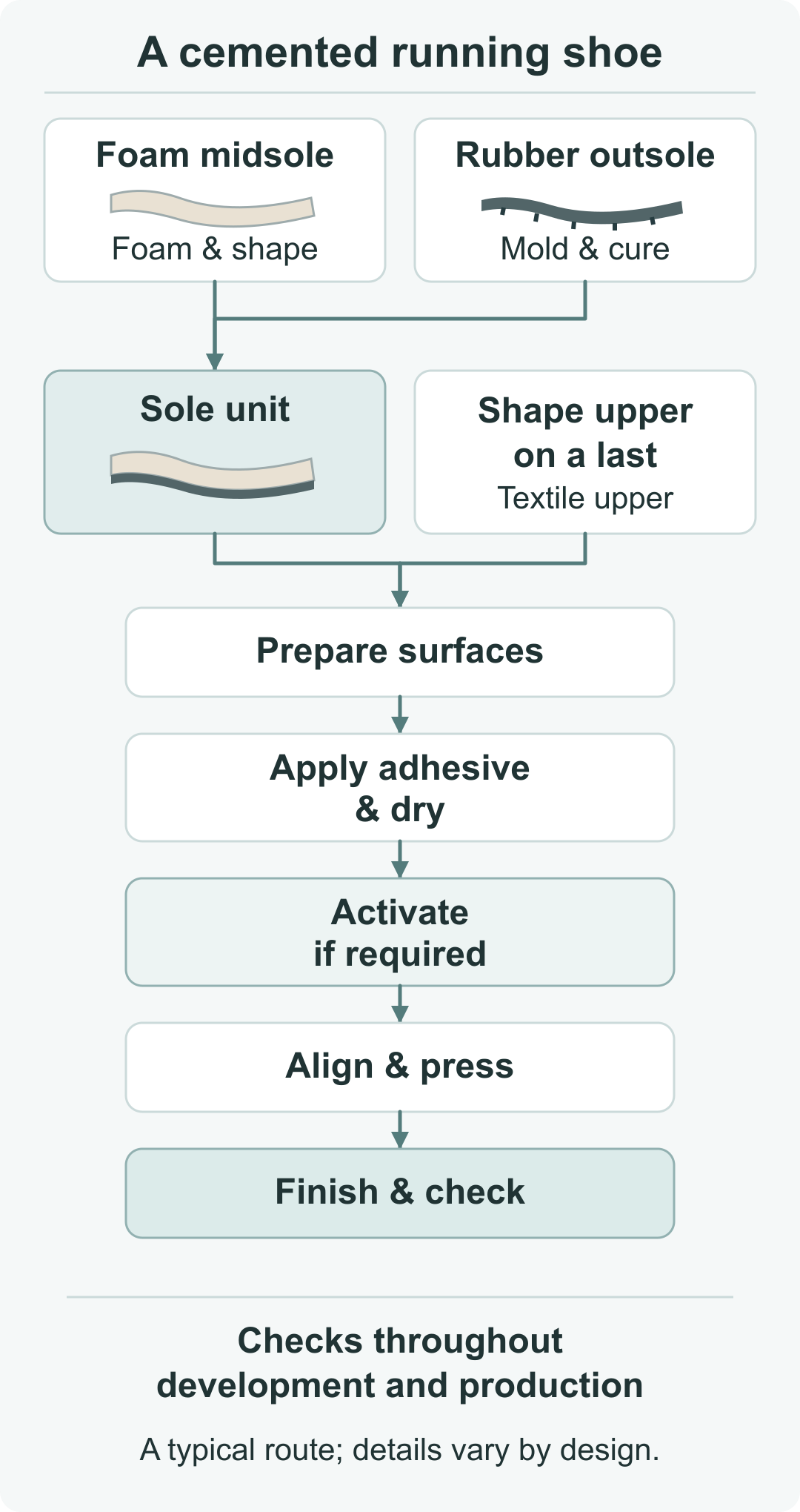
For an everyday road running shoe, a common construction uses adhesive to bond the upper to the sole unit. The design, fit, and material combination are evaluated through samples before production begins. Checks throughout development and production help assess the design and the consistency of the finished shoes.
The Main Parts of a Running Shoe
Look at a running shoe from the side and you can identify three main sections: the upper around your foot, the cushioning midsole, and the outsole underneath. Inside sits the sockliner, often called the insole. These parts have different jobs, so they also have different material and manufacturing requirements.
| Part | Main role | Material examples | How it takes shape |
|---|---|---|---|
| Upper | Holds and covers the foot | Synthetic textiles, with reinforcement where needed | Panels are joined, or an upper is knitted to shape |
| Midsole | Provides cushioning beneath the foot | EVA-based foam; TPU- or PEBA-based foam in some designs | Foaming and molding create the component |
| Outsole | Forms the ground-contact surface | Rubber compounds | Molding forms the tread and overall shape |
| Sockliner | Provides the surface directly underfoot | Foams such as polyurethane or EVA | Material is cut or molded to the required profile |
This is a map of the major parts, rather than a complete parts list. A particular shoe may also have a separate tongue, lining, laces, and reinforcement around selected areas. The materials in the table are examples; the final combination follows the design and intended use.
How the Upper Is Made
The upper starts with both a material choice and a textile structure. Polyester, for example, names a fiber material. Mesh describes an open structure, while knitting describes how yarn is formed into fabric. A knitted textile can have mesh areas, so “mesh” and “knit” do not always describe separate categories.
Cutting and Joining Upper Panels
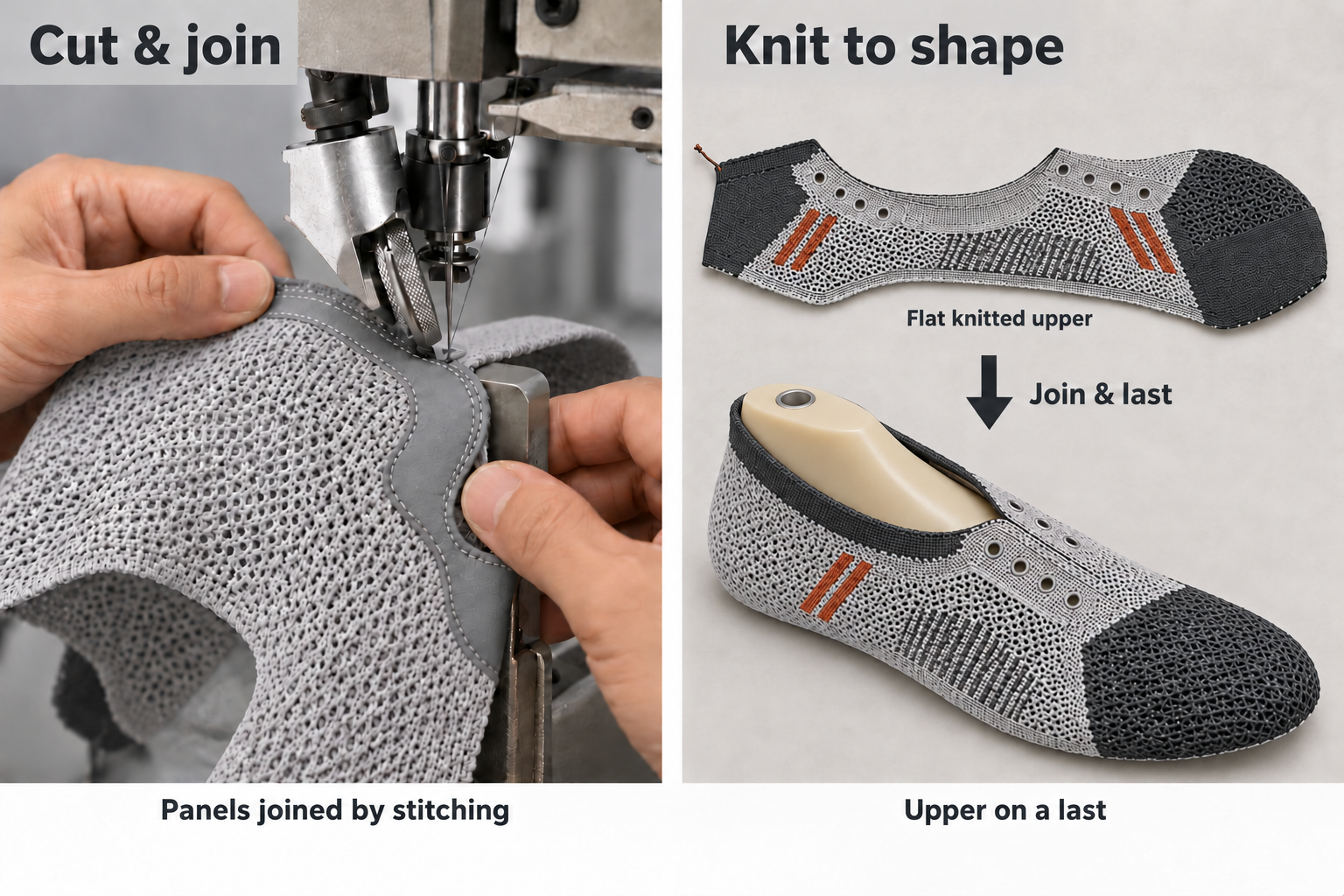
For a panel-based upper, fabric is cut into shapes defined by the pattern. Those pieces are joined to create the sections around the forefoot, sides, and heel. Stitching is one way to connect them; suitable materials can also be bonded or welded.
The design determines where lining, a tongue, or reinforcement is added. An overlay around the lacing area, for instance, can help support the material where the laces pull. These details need to work together: the shape of each panel and the way its edges are joined affect the assembled upper.
Knitting an Upper to Shape
A shaped knit upper starts with yarn knitted according to a programmed pattern. Different stitch patterns and yarn arrangements can create more open areas, zones with controlled stretch, or areas of reinforcement within the textile.
The knitted piece may still need joining, shaping, or additional components. Some constructions start with a relatively flat piece; others form a more three-dimensional upper. Heat-forming may be part of the route. The useful question is how the textile becomes the required shape and provides support where the design calls for it.
How the Midsole and Outsole Are Made
The cushioning layer and the ground-contact layer are made for different purposes. Understanding their production starts with separating the material itself from the process used to turn it into a component.
Forming the Foam Midsole
A foam contains gas-filled cells within its material. Creating that cellular structure and producing the midsole’s shape are related manufacturing tasks, although their order and the equipment used vary.
EVA, short for ethylene-vinyl acetate, is widely used in athletic footwear foams. In an EVA foam injection process, a formulated compound is processed with equipment designed to foam and shape it. The resulting cushioning component is cellular, rather than a solid piece of plastic.
Expanded TPU offers another route. TPU stands for thermoplastic polyurethane; in a particle foam such as BASF’s Infinergy, the individual beads are already foamed before they are molded into a larger component. Steam molding is one way to process those beads. This differs from starting with unfoamed resin and creating the foam during a later operation.
You may also encounter PEBA, or polyether block amide, in discussions of midsole materials. These polymer names identify material families. To understand a particular midsole, you also need its formulation, foam structure, and component design. A resin specification alone does not describe how the finished shoe will feel or perform.
Molding the Rubber Outsole
For a vulcanized rubber outsole, the starting point is a rubber compound prepared with ingredients selected for its intended use. The compound is formed in a mold that defines the outsole’s shape and tread. Curing, or vulcanization, develops the rubber’s crosslinked structure under controlled processing conditions.
The compound and tread design both matter. A visible pattern alone cannot establish grip or wear performance. Also, making a rubber outsole this way does not mean the whole shoe uses a vulcanized construction: the finished rubber component can subsequently be bonded to a foam midsole.
The sockliner follows its own route. Foam can be die-cut to the required outline or molded into a shaped insert, with layers or localized features where specified. This insert sits inside the shoe and has a different role from the midsole below it.
In the bonded construction described here, the midsole and rubber outsole pieces may first be combined into a sole unit. The sole unit is then ready to be joined to the upper.
How the Parts Become a Finished Shoe
A last is a foot-shaped form used to shape and position the upper during assembly, helping establish the shape of the finished shoe.
In a Strobel construction, the lower edge of the upper is stitched to a structural layer that closes its underside. The closed upper is then fitted over the last. This sewn-in layer is different from the sockliner you feel directly underfoot. A shoe can use both Strobel stitching to close the upper and adhesive to attach its sole.
The upper also needs to retain its shape after the last is removed. Where suitable for the materials, heat setting can help reduce the stresses introduced during shaping.
Before bonding, the surfaces need preparation suited to the materials and adhesive system. Depending on that combination, preparation may involve cleaning, roughing, or a primer. The aim is to create surfaces that can form a reliable bond; applying the same treatment to every material would overlook their differences.
Adhesive application, drying, and any required activation must work as a controlled sequence. The upper and sole are aligned, brought together, and pressed with suitable pressure distribution. This is why the adhesive choice cannot be considered separately from the preparation and pressing process.
Subsequent handling follows the requirements of the construction and bonding system. The last is removed at the appropriate stage, and finishing can include cleaning the shoe, trimming loose threads, and fitting the intended sockliner and laces. The precise order varies. By this point, the separate parts have become a complete shoe, but appearance alone cannot confirm that every connection or material will perform as intended.
What Is Checked Before the Shoe Is Ready
Checks begin before final assembly. During development, samples help evaluate the fit, material combination, and construction. During production, checks address whether the components and assembled shoes remain consistent with the agreed reference.
Visible details can reveal problems: uneven joining, misaligned parts, loose threads, or excessive adhesive deserve attention. Each pair should be correctly matched, with sizes and colors that meet the order requirements. These observations answer different questions from laboratory testing.
A sole-bond peel test measures the force needed to separate a prepared bonded specimen. Some methods require cutting samples from a completed shoe, so that testing is distinct from inspecting each pair intended for shipment. A compression-set test assesses how much deformation remains after material has been compressed under specified conditions. It does not, by itself, establish how many miles a runner will get from a shoe.
Wear feedback adds information about fit and the experience of running in the design. Together, these approaches support decisions about the shoe, with the test selection and sampling plan tailored to the project. When reviewing a sample, ask what has been checked and what each result demonstrates; a clean finish is only one part of that assessment.
FAQ
Are running shoes made entirely by machines?
The balance of machinery and manual work varies by factory and construction. Equipment can perform operations such as cutting, knitting, molding, stitching, and pressing, while people may handle parts, guide operations, and inspect the results. Some specialized processes automate more of an operation: On’s LightSpray technology, for example, forms a one-piece upper using a robot. That describes a particular upper-making route, not a universal process for producing every part of a running shoe.
Does one factory make every part of a running shoe?
Not necessarily. Material suppliers, component producers, and the factory assembling the shoe can have separate roles. A specialist may supply foam material or finished sockliners, for example. The division of work depends on the project and production setup. What matters for the finished shoe is that the supplied parts meet the agreed requirements and fit the chosen assembly process. For your project, confirm where each operation will take place.
Conclusion
Understanding how running shoes are made means following the materials through component production and into assembly. The textile structure, foam process, outsole construction, and bond preparation each contribute to the finished result. If you’re developing a running shoe, start with its intended use, fit requirements, and material goals. Discuss those priorities with HEVA to define the sample requirements, then use the sample to evaluate how the proposed parts work together.