What Is Strobel Construction?
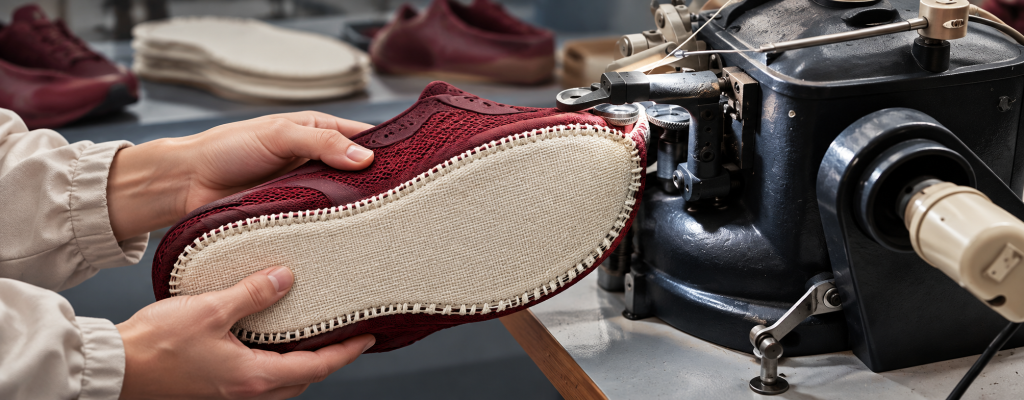
Strobel construction is a shoemaking method in which the lower edge of the upper is stitched to a bottom material, usually a textile or nonwoven. This closes the underside of the upper into a shape that can be fitted over a shoe last. The sole unit is attached in a later operation.
The defining feature is that stitched connection around the bottom of the upper. It helps explain how the shoe is assembled, but it does not tell you everything about the finished shoe. To understand a specification or compare samples, you also need to know what the bottom material is, how the sole is attached, and how the parts work together.
The Parts of a Strobel-Constructed Shoe
Several layers sit beneath your foot, and their names can cause confusion. Start with each part’s position and job.
| Part | Position and function |
|---|---|
| Upper | Surrounds the foot. Its lower edge joins the Strobel bottom. |
| Strobel bottom or board | Closes the underside of the upper and forms part of its sewn structure. |
| Sockliner or footbed | Provides the foot-facing surface inside the shoe. It may be removable or fixed. |
| Sole unit and outsole | Sit below the upper assembly. The outsole contacts the ground; the sole unit may also include a midsole or other components. |
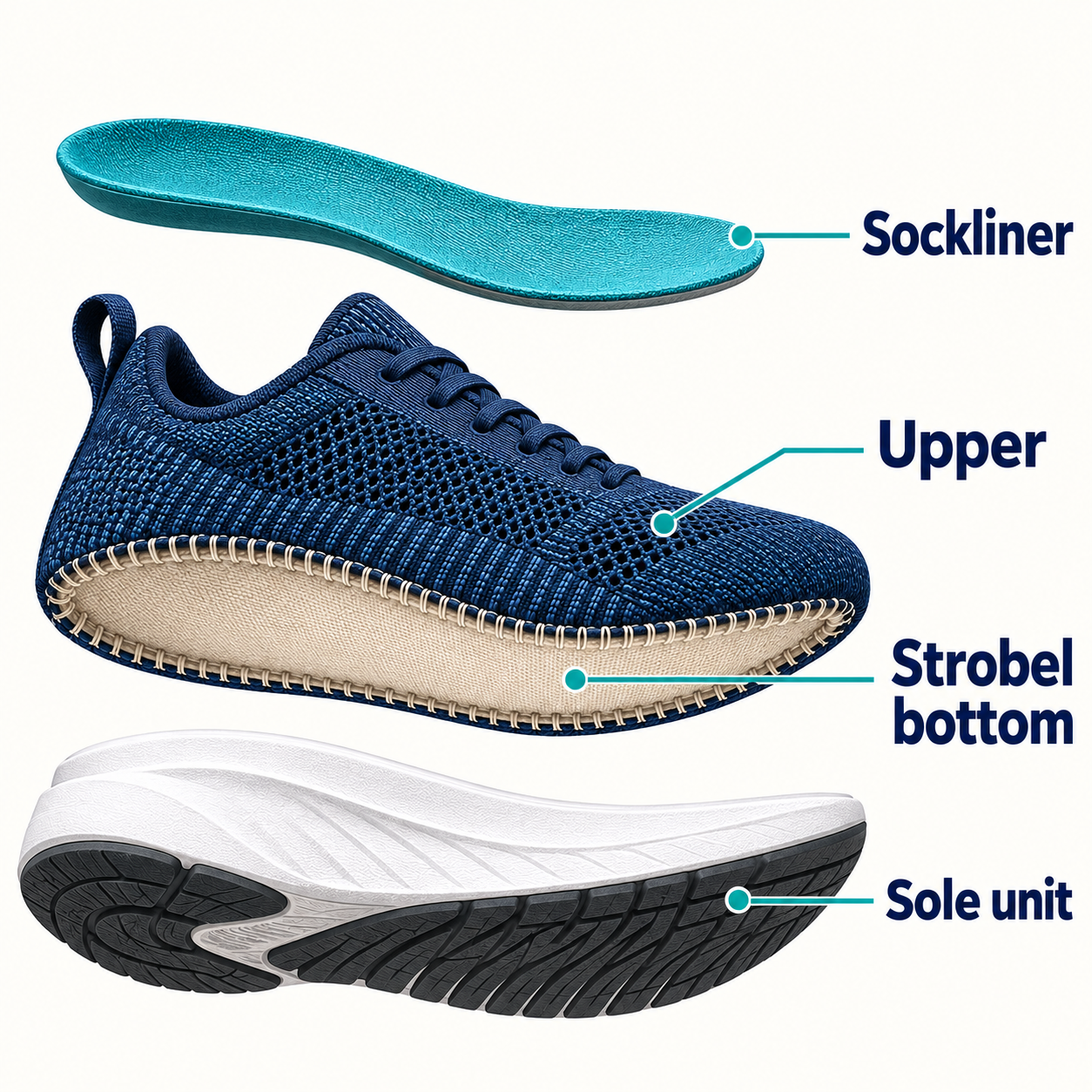
You may also see the sewn bottom called a Strobel sock; it is distinct from the sockliner above it.
“Strobel board” does not necessarily mean a rigid board. Shoemakers Academy uses the term for fabric or nonwoven material that closes the upper. The exact arrangement varies by design, so a shoe does not have to contain every layer shown in a conventional sneaker diagram.
Material choice matters, too. A bottom can bend readily while resisting stretch that would change the upper’s shape. Some constructions use composite materials: OrthoLite describes a Strobel application combining foam with a non-stretch fabric. The material specification should identify the layers used in your sample, including any cushioning combined with the structural fabric. This gives you more useful information than the construction name alone.
For the layers above the Strobel bottom, see our guide to shoe upper materials.
How Strobel Construction Works
A common example is a Strobel upper combined with a cemented sole. The following stages explain that arrangement; detailed operations vary with the design, materials, and production route.
Prepare and Align the Upper and Bottom Material
The upper and bottom material are prepared for stitching. Their alignment matters because they will form one assembly that must fit the last. Reference marks help the assembler keep the parts correctly positioned. A flexible bottom still needs the dimensional stability required by the design.
Stitch the Upper to the Bottom
A specialized machine joins the lower edge of the upper to the bottom material. Strobel identifies its 443-1 as a single-thread overlock machine for this operation. The machine forms the seam around the bottom of the upper, closing the assembly before lasting. The ground-contacting outsole is attached later.
Shape the Upper on the Last
The closed upper is fitted over a last, the form used to shape the shoe. The upper must sit correctly around it before the sole is attached. Lasting details depend on the materials and construction. During development, check whether this combination produces the intended shape and fit.
Attach the Sole Unit
In this example, the shaped upper is bonded to the sole unit. The finished shoe therefore uses both Strobel stitching and cemented sole attachment. Each term describes a different part of the assembly.
Where Strobel Construction Is Used
Strobel construction is common in athletic and casual footwear, making it relevant to running-style sneakers, everyday sneakers, and other designs where flexibility is part of the brief. Its use also extends beyond those categories. Lepi, for example, describes using a Strobel process for children’s footwear.
A flexible bottom can contribute to a shoe’s ability to bend, but the complete design determines how it feels and performs. The sole unit, reinforcing components, upper, and fit all affect the result. Two shoes described as Strobel-constructed can therefore feel quite different when worn.
You may also encounter combination constructions. Shoemakers Academy describes arrangements using Strobel construction in one area and board lasting in another to change local stiffness. A single shoe can therefore combine the two construction methods.
For development, begin with the intended use and the feel you want to evaluate. Then assess the whole sample against those requirements. A construction label alone cannot establish comfort, support, weight, or service life.
Strobel vs. Board Lasting—and How Cementing Fits In
In a typical Strobel construction, the bottom material is sewn to the upper. In board lasting, the upper is pulled around the last and secured to a lasting board. That difference changes how the underside of the upper is formed and creates different possibilities for the shoe’s structure.
Compare the two approaches against the design’s requirements for flexibility, shape, and reinforcement. Neither construction name, by itself, tells you which finished shoe will be more comfortable or durable.
Cementing answers a separate question: how is the sole bonded to the upper assembly? It can be used with a Strobel upper, as the process above shows. When a specification says “cemented,” you still need to establish how the upper’s bottom is constructed. When it says “Strobel,” you still need to establish the sole attachment method. Those two questions make a comparison much more useful.
What to Confirm Before Approving a Sample
Use the sample review to turn the construction name into specific decisions. Use the intended activity, design, and fit requirements as the basis for the discussion.
| Review item | What to clarify |
|---|---|
| Intended use | What flexibility and support does the design call for? How will you assess them in the complete shoe? |
| Bottom material | What are its composition and thickness? What information is available about its stretch and stability? |
| Stitching and alignment | Are there visible skipped stitches, uneven alignment, folds, or rough areas at the internal seam? |
| Fit and component interaction | How do the last shape, upper, and footbed work together in the finished sample? |
| Sole attachment and testing | How is the sole attached? Which performance checks, methods, and acceptance requirements need to be agreed? |
Keep visual observations separate from verified performance. An even-looking seam does not establish its breaking strength. Seam strength testing evaluates the breaking strength of a stitched connection. The appropriate method and acceptance requirements need to be selected for the materials and application. For a cemented shoe, assess the sole bond separately from the Strobel seam.
Record the questions and changes you agree on before approving the sample. This gives the next review a concrete basis: the specified material, the revised detail, or the performance evidence still needed. It also helps avoid approval based only on a general impression of softness or appearance.
FAQ
Is Strobel Construction Waterproof?
Strobel construction alone does not establish waterproofness. You need to consider the complete waterproof design and relevant test results. GORE-TEX’s footwear testing, for example, evaluates the materials and assembled system through checks that include water exposure and leak detection. For a waterproof specification, ask how waterproofing is achieved and how the finished shoe will be validated.
Can Shoes with Strobel Construction Be Resoled?
You cannot decide from the Strobel label alone. Ask the brand or a qualified repairer to assess the specific shoe, including its sole assembly, condition, and available replacement options. Confirm feasibility for the pair in question before relying on resoling as a future option.
Conclusion
Strobel construction describes an important connection within a shoe: the stitched joint between the upper and its bottom material. Understanding that connection makes it easier to discuss materials, compare construction options, and review a sample. If you are developing sneakers, share your reference design or sample, intended use, and open construction questions with HEVA Sport. We can discuss the requirements and the next steps for development and sampling.