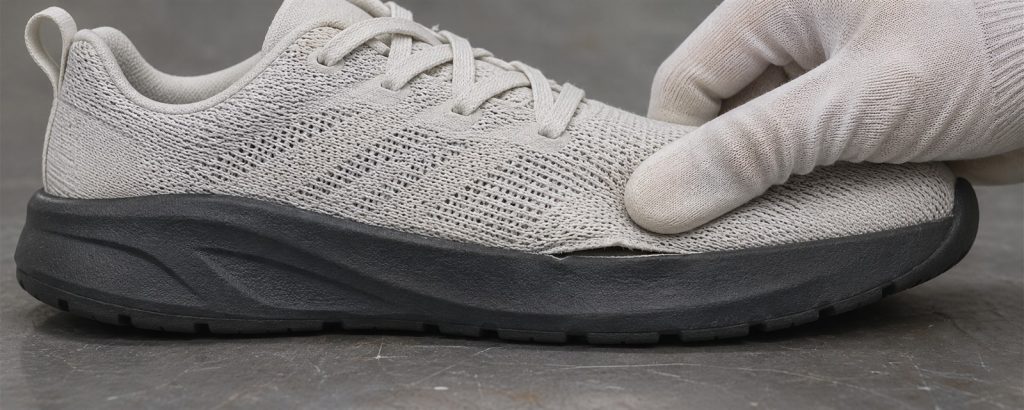
A sole adhesion report might give you a number in N/mm and a note that says “material tear.” The number expresses the measured separation force per millimeter of specimen width. The note tells you the material tore. Look for which material tore and where. To use either finding, you need to know which part of the shoe the lab tested and what your project requires. ISO 17708 gives the lab a method for testing the bond. Your product specification gives you the basis for deciding whether the result is acceptable.
What Does ISO 17708 Measure?
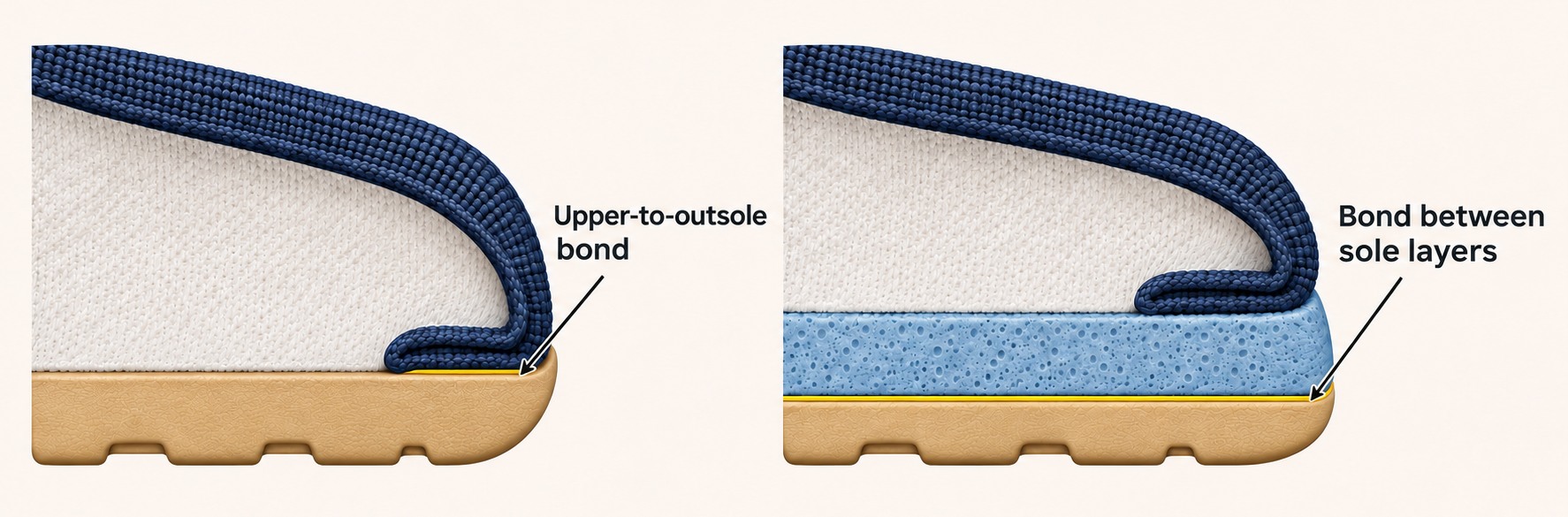
ISO 17708 is a test method for evaluating how a finished shoe resists separation near the edge of a bonded assembly. ISO reaffirmed the 2018 edition in 2026. Depending on the shoe and the bond under evaluation, the lab may test the bond between the upper and the outsole or the bond between adjacent layers of the sole. In a shoe with a bonded rubber tread over a foam layer, the second test would examine the rubber-to-foam join.
As the lab pulls the specimen apart, the bond may separate or the upper or sole material may tear. The location of that damage helps you understand what the measured force represents. For a broader comparison, see how to match footwear testing standards to the property and sample.
Which Shoe Constructions Does It Apply To?
The method covers closed shoes with a continuous upper assembly where sole adhesion needs to be evaluated. Cemented, vulcanized, and injection-molded constructions can fall within its scope. The way the shoe is built determines where the lab takes the specimen and how it prepares it.
If your design uses stitching, check what the stitches connect. A Strobel-stitched upper, for example, can still have a bonded sole that you want to evaluate. ISO 17708 says the test can be omitted for a joint formed by stitching or mechanical fasteners. If you need to assess that joint itself, ask the lab which test applies. For a shoe with several bonded sole layers, identify which layers you want the lab to evaluate when you request the test.
How Is Upper-to-Sole Adhesion Tested?
The lab conditions the finished footwear before cutting test specimens. It then selects a cutting and gripping setup suited to the shoe construction and the joint under evaluation. The lab measures the specimen’s width before the test. The lab uses a tensile testing machine to measure the force needed to peel the bond apart. The lab examines the exposed surfaces to describe how the specimen failed.
The adhesion result is expressed in newtons per millimeter (N/mm), which relates the measured force to the width of the test piece. That width matters when you interpret a reading or compare it with a value reported in newtons alone. The test method determines which force reading the lab uses.
Conditioning prepares footwear for testing in a specified atmosphere. If the testing plan calls for accelerated aging, ask the lab to identify the exposure and which specimens received it. For an aging comparison, ask for the unaged baseline and the exposure used for the aged specimens.
How to Read a Sole Adhesion Test Report
Start by matching the report to the shoe and the bond you asked the lab to evaluate. Two reports for the same model can describe different bonds. Use this checklist to see what is clear from the report and what you may need to confirm.
| Report item | What to check | What to do next |
|---|---|---|
| Sample identity | Style, revision, development or production stage, and sample or lot ID | Match the sample to the shoe you plan to approve. |
| Method and test location | Standard and edition, bonded layers, and location on the shoe | Confirm the report covers the bond you specified. |
| Test conditions | Conditioning, any aging exposure, and deviations from the method | Compare specimens tested under matching conditions. |
| Result and failure mode | N/mm for each specimen and how and where it came apart | Ask which material tore or which surface released. A photo can help. |
| Acceptance basis | Applicable specification, limit, and decision rule | Confirm how the lab reached its decision, if one is reported. |
Suppose two development samples yield similar N/mm readings. In one, the adhesive separates from the outsole surface. In the other, the foam tears. For the first, ask whether the adhesive stayed on the other material and whether the lab has a photo. For the second, ask where the foam tore and whether any foam remained attached to the outsole. A split within the adhesive is another possible observation. These details guide an investigation into the bond or materials. You may need further evidence to identify the cause. A study on surface treatment and peel strength in footwear shows how changing surface preparation shifted where some specimens failed during peel testing. The researchers prepared their own specimens for the comparison.
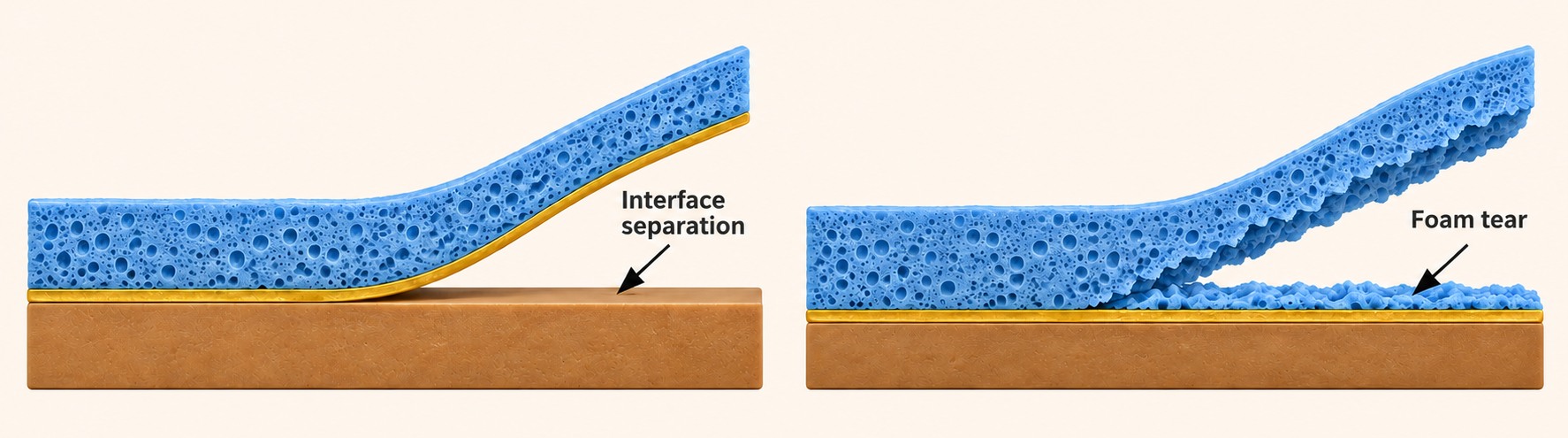
When a report says layers separated, ask which layers and whether the split occurred at their interface or within one of the materials. If you need a pass or fail decision, check how the applicable specification treats that failure mode and which test locations the requirement covers. Check whether the limit applies to each reading, the lowest reading, or an average. If a result is close to the limit, ask the lab how it makes the decision.
What to Confirm Before Sending Shoes for Testing
Give the lab the style and revision, the materials used in the sample, and whether the shoes came from development or production. If the shoe has several bonded layers, a simple cross section or labeled photo can identify the joint you want tested. Ask how many finished shoes the lab needs and whether its plan covers the locations you care about. Specify any aging requirement and supply the document that governs acceptance if you need a conformity statement.
For shipment acceptance, agree separately on how to sample the production lot and how the results will be used.
FAQ
Where can you obtain the official ISO 17708 standard?
Start with the ISO catalog entry for ISO 17708:2018. The catalog summarizes the scope and shows how to preview or purchase the standard. You may still see ISO 17708:2003 in search results. ISO withdrew that edition and lists the 2018 edition as its replacement. For a lab instruction or purchase specification, check the edition named in the project documents and obtain an authorized copy if you need the complete procedure.
Can you compare ISO 17708 results with SATRA TM411 results?
Both methods are used to evaluate footwear sole bonds. Before comparing numbers, ask the lab which method and version your project accepts. Then check whether the reports describe the same joint, specimen shape, pull direction, and any conditioning or aging. If the report uses a different method, confirm with the specification owner whether it can be used for acceptance. A side-by-side comparison on matched samples may help when your team is moving from one method to another.
Conclusion
When an ISO 17708 report arrives, check that it describes your shoe revision and the joint you intended to test. Read the strength alongside the failure description, then apply your project’s acceptance requirements. If you’re preparing a footwear sample with HEVA, bring the construction details and testing requirements into the development discussion so the sample sent to the lab matches the design you plan to evaluate.