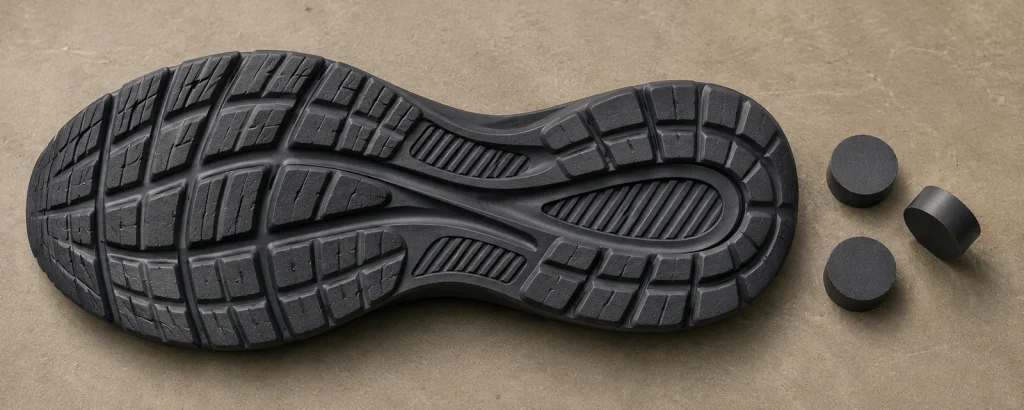
Two outsole test reports can cite ISO 20871 and give you numbers that are difficult to compare. One may report mass loss in milligrams, while the other reports volume loss in cubic millimeters. Before choosing between samples, check what each number measures, which part of the outsole the lab tested, and whether the results address the requirement you set for the shoe.
What Is ISO 20871?
ISO 20871 is a footwear test method for measuring how much material an outsole loses under controlled abrasion. It applies to outsoles regardless of material. In shoe development, you might use it to compare candidate compounds or check whether a sample meets an abrasion requirement.
The current edition is ISO 20871:2018. The year after the colon identifies the edition. You’ll find the date the lab ran the test elsewhere in the report. When reviewing results across sample revisions, check both. The edition tells you which procedure the lab followed, and the test date helps you trace the result to the right round of samples.
How Does the Abrasion Test Work?
The lab holds an outsole specimen against an abrasive sheet mounted on a rotating drum. As the drum turns, the holder moves the specimen across the sheet. Under the preferred conditions, the specimen moves across the sheet without rotating on its own axis, the applied force is 10 N, and the abrasion distance is 40 m. The lab weighs the specimen before and after to find how much mass it lost.
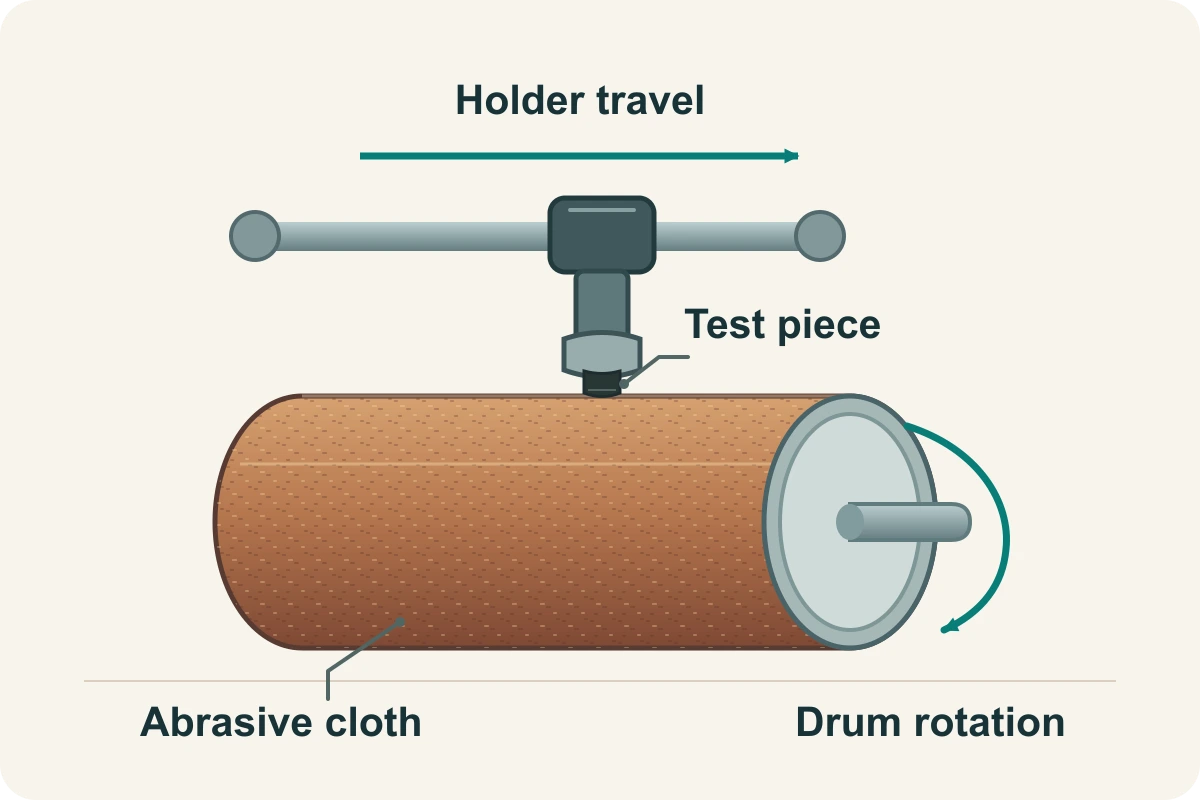
The lab also runs a reference rubber to check how aggressively the abrasive sheet is cutting. The reference result helps correct for differences in the abrasive surface, so the reported loss can differ from the change you would see on the balance. If the specimen would wear through before completing the usual distance, the method allows a shorter run with the result extrapolated to 40 m and the change recorded in the report. The distance describes travel across the abrasive sheet in the machine.
What Do the Results Mean?
Start with the name of the result and its unit. The terms below describe different stages of the same measurement.
| Result | Unit | What it tells you |
|---|---|---|
| Measured mass loss | mg | How much lighter the specimen is after abrasion. |
| Relative mass loss | mg | Mass loss adjusted using the reference rubber result. |
| Relative volume loss | mm³ | Adjusted loss expressed as volume using the specimen’s material density. |
Under ISO 20871, the lab divides the corrected mass loss by the material’s density to calculate relative volume loss. For the same relative mass loss, a less dense material has a greater relative volume loss. That’s why you should check which result the lab reported before comparing the numbers. If one report lists relative mass loss and another lists relative volume loss, ask the lab to supply results on the same basis.
When two specimens were tested under comparable conditions and the reports use the same loss measure, a lower value indicates a smaller loss on the measure reported. Ask the lab about measurement variability before treating a small difference as grounds for changing a compound.
Can You Compare Two Test Reports?
Before you rank two outsoles, check that the reports describe comparable tests and that each result belongs to the sample you’re considering. Start with the information on the report, then ask the lab about any conditions that could affect your comparison.
- Method and edition. Look for the full standard number and edition on both reports.
- Sample identity. Match the style, material, and color or sample code to the outsole you’re reviewing. If a compound changed between sample rounds, check which version the lab received.
- Sampling and conditioning. Ask where the specimens came from and how the lab conditioned them if those details matter to the comparison. For a sole with several materials, identify the area each result represents.
- Deviations. Check whether either run used a shorter distance or another departure from the procedure. Ask how the lab handled the change and whether it affects the comparison.
- Result and test date. Match the reported measure and unit, check the density used for volume loss, and confirm when the lab tested each sample.
If you find a mismatch, name it when you contact the lab. Asking whether a heel specimen and a forefoot specimen are comparable gives the lab a more specific question than asking which outsole is better.
What Counts as an Acceptable Result?
ISO 20871 tells the lab how to measure abrasion loss. The acceptance criterion comes from the product specification or other requirement that applies to your project. Check that criterion before you send the samples, especially if a technical sheet says only “test to ISO 20871.”
Ask which edition to use, which loss measure to report, and what limit applies to the product. If your specification sets a maximum relative volume loss, make sure the report gives the result in the corresponding unit and identifies the sample covered by the requirement. With those details in place, you can assess the test result against the specification and see what still needs clarification before approval.
What Does ISO 20871 Leave Out?
Outsole abrasion is one part of how a shoe holds up. A lab result describes material loss under the conditions of the test. For example, two compounds might show similar abrasion loss while behaving differently on a wet floor. If grip is part of your specification, evaluate it with a slip resistance test suited to the intended use. Flexing and sole attachment require separate evaluation. The test distance and reported loss alone give you no estimate of how many miles a shoe will last. Tread geometry and the surfaces the wearer encounters can also affect how an outsole wears over time.
ISO 20871 vs. ISO 4649
Both methods use a rotating drum, but they define different test scopes. ISO 20871 addresses footwear outsoles. ISO 4649:2024 addresses vulcanized or thermoplastic rubber and offers procedures with either a non-rotating or a rotating specimen. If a supplier gives you an ISO 4649 result and your specification calls for ISO 20871, ask the lab to test the outsole using that method. A shared unit such as mm³ leaves the procedure and specimen details unresolved.
FAQ
Where Can You Get the Official ISO 20871 Standard?
You can obtain the full standard from ISO or an authorized distributor. The public preview gives you an overview. Use the full document when you need the test procedure.
Does ISO 20871 Testing Require a Whole Shoe?
The lab performs the abrasion test on specimens. Ask the lab whether to send finished shoes or separate outsoles, and how many to send.
Conclusion
Before approving an outsole, match the report to the sample, check the method and result unit, and compare the value with the applicable product requirement. If you’re choosing between two samples, resolve differences in sampling or test conditions with the lab first. For your next test request, specify the sample ID, test method and edition, result unit, and acceptance limit if one applies.