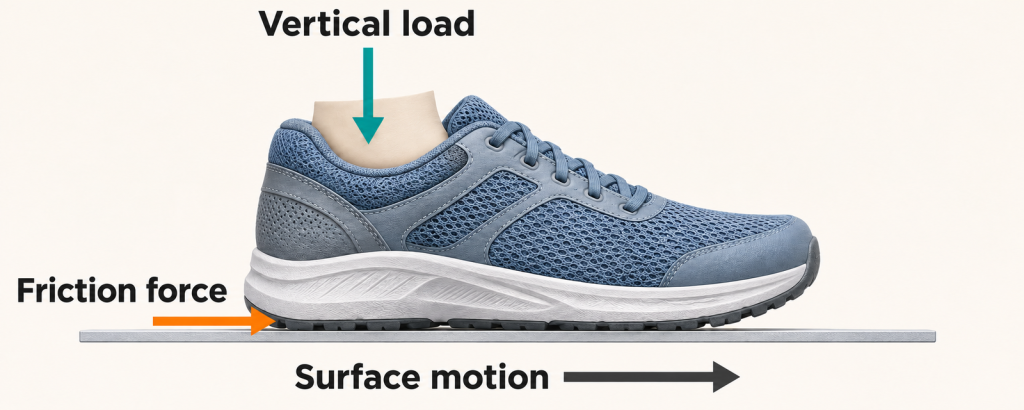
A shoe described as “tested to ASTM F2913” gives you a starting point for evaluating its slip resistance. To understand the result, you still need to know which sample was tested, what it contacted, and how the test was performed. This guide explains how the method works and what to look for when comparing reports or discussing testing for a new footwear design.
What Is ASTM F2913?
ASTM F2913 is a laboratory test method for measuring the dynamic coefficient of friction, or COF, between footwear and a test surface. It uses a whole shoe tester to evaluate relative slip performance under controlled conditions.
The method can be used with finished footwear, outsole units, heel top lifts, and sheet soling materials. That distinction matters when you review a report: a result for a material sample describes the sample tested. It does not automatically establish the performance of every finished shoe made with that material.
F2913 provides a way to measure friction. Deciding whether the result meets your requirements also involves the applicable performance specification or agreed acceptance criteria. Before you look for a pass statement, identify the sample and the conditions behind the measurement.
How the Slip Resistance Test Works
A whole shoe tester brings the footwear into contact with a selected surface, applies a controlled load, and produces relative sliding movement. The equipment measures forces during that movement to determine the dynamic COF.
You can think of COF as the sliding friction force relative to the force pressing the surfaces together. It has no units. A result of 0.50 does not mean a shoe is “50% slip-proof,” and COF does not measure your chances of avoiding a fall.
At a practical level, the process involves three stages:
- Define the sample and conditions. Identify the footwear or component, test surface, surface condition, and applicable method.
- Establish controlled contact and movement. Position the sample for the selected test mode and apply the specified loading and motion.
- Record and organize the results. Keep each result associated with its test conditions so it can be interpreted correctly.
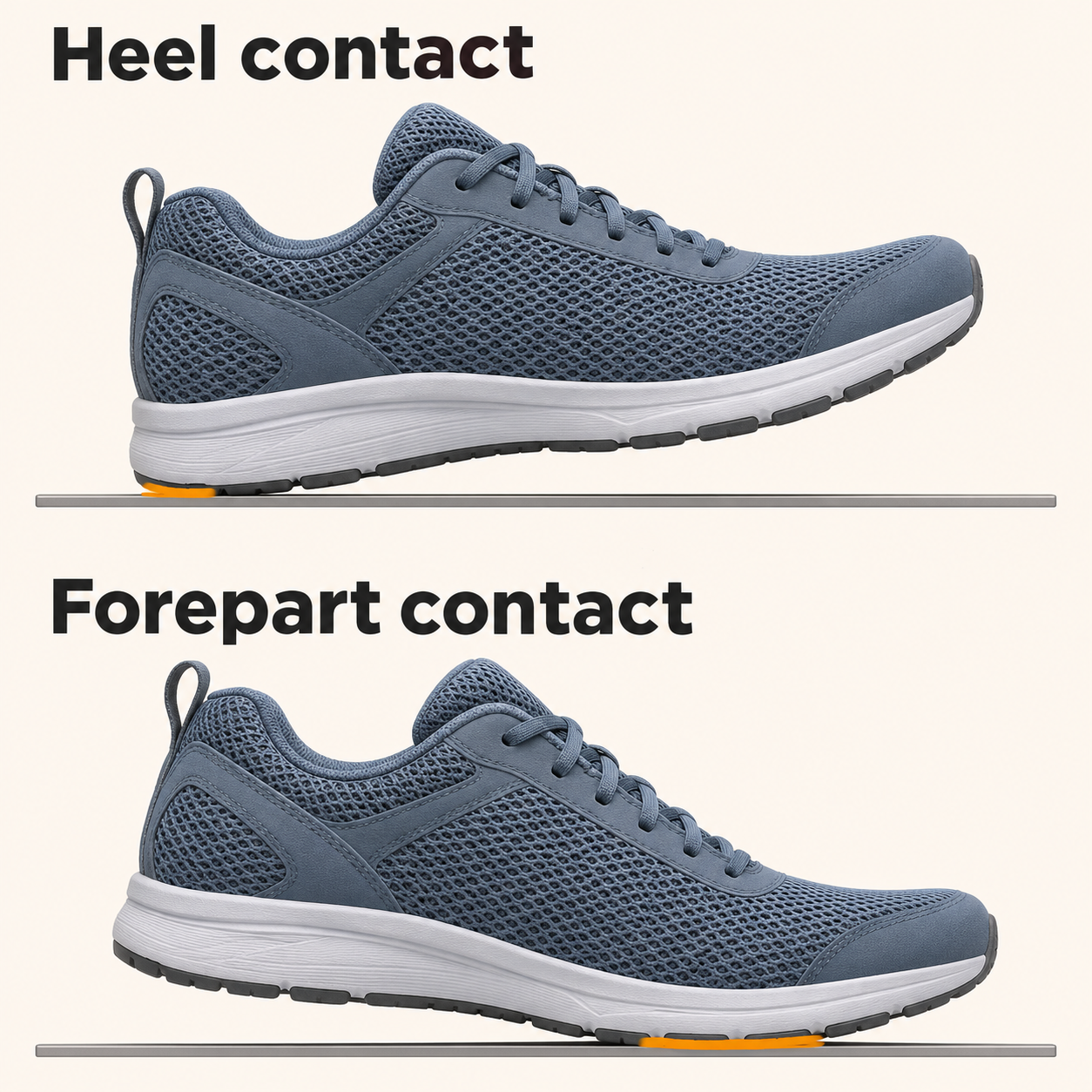
Heel and forepart results describe different contact modes. If a report includes both, read the corresponding results separately. The equipment may support additional positions or test settings, but its capabilities do not determine which modes your project requires. The laboratory should follow the applicable method and agreed test scope.
Why Test Conditions Matter
A COF value belongs to a particular combination of sample, surface, and test conditions. The measured COF can change with the floor finish, the presence of water or oil, and the contact mode. A dry-surface result cannot stand in for a wet or oily-surface result.
Consider this hypothetical comparison:
| Report | Surface condition | Contact mode |
|---|---|---|
| A | Dry tile | Heel |
| B | Wet tile | Forepart |
Even if report A shows a higher COF, these two rows alone cannot establish that shoe A is more slip resistant. You would first need corresponding results for the same surface, contaminant, and contact mode, along with compatible method versions and sample preparation. “Tile” itself may need clarification: the reports should identify the actual test surface.
Matching those details makes a comparison more useful, but it does not eliminate laboratory variation or measurement uncertainty. Ask the laboratory before treating a small numerical difference as a meaningful performance advantage.
Also consider how the shoe will be used. A result on wet tile does not establish performance on ice. For sports footwear, a laboratory sliding test does not fully describe traction during rapid stops or changes of direction. Footwear with studs introduces additional interactions with the ground, including interlocking and potential tripping risks. Testing should address the relevant use conditions without implying that any result guarantees grip everywhere.
How to Read an ASTM F2913 Test Report
Start by checking whether the report describes the shoe or component you are evaluating. Then work through the conditions and results. These seven questions provide a practical reading checklist:
- Who performed the test? Check the laboratory, report number, and date so you can trace the work and request clarification.
- What was tested? Match the sample identification, size, and condition to your footwear or outsole specification.
- Which method and edition were used? Look for the complete designation, including its year suffix.
- What did the sample contact? Identify the test surface and whether it was dry, wet, oily, or otherwise contaminated.
- Which modes and conditions apply? Check the contact mode and the loading, motion, and sample preparation used for the test. Ask the laboratory to clarify any missing details.
- What do the individual results show? Keep results associated with their conditions and ask about differences that need explanation.
- What supports a pass statement? Identify the performance specification or customer requirement used for the decision.
This is a reading aid, not a reproduction of the standard’s mandatory reporting clauses. Missing information is a reason to ask questions before drawing conclusions.
Edition suffixes deserve attention. You may encounter reports citing F2913-11, -17, or -19; ASTM currently lists F2913-24 as the active edition. A newer edition does not, by itself, tell you whether an older report meets your project’s requirements. Confirm the edition specified for the project and ask the laboratory whether relevant differences affect the intended comparison or claim.
ASTM F2913 vs. ASTM F3445
ASTM F2913 describes the test method. ASTM F3445 sets minimum slip resistance performance requirements for footwear evaluated using that method. The documents work together; F3445 is not a newer name for F2913.
A statement that a shoe was tested to F2913 therefore needs context before you interpret it as a pass. Check the results against the identified performance specification and its applicable edition. Where SR or SRO designations are involved, their requirements belong to the relevant performance specification rather than a universal F2913 rating scale.
Additional testing may also be appropriate for particular surfaces or contaminants. Meeting a laboratory performance requirement does not establish performance in every situation a wearer might encounter.
FAQ
Does “tested to ASTM F2913” mean the shoe is certified?
The phrase alone does not establish product certification. If certification is claimed, check the issuing organization, certification program, and products covered. Laboratory accreditation is separate: it concerns the laboratory’s competence within a defined scope. Neither an ASTM method reference nor an accredited laboratory’s name automatically makes the tested shoe a certified product.
Do outsole changes mean the shoe needs to be retested?
Changes to the outsole compound, tread, or construction should prompt a review of whether the existing report still represents the revised sample. Give the laboratory the change details and ask whether additional testing is needed. Do not assume every change requires the same response, or that a report for one outsole configuration automatically covers another. Keep a clear record linking the tested sample and its specification to the product you intend to make.
Where can you get the ASTM F2913 standard?
Obtain the applicable edition through ASTM International or an authorized standards provider. Check the edition before ordering or arranging testing. The public scope page explains what the method covers; it does not provide the complete procedure. This article is an introduction to interpreting the test, not a substitute for the standard.
Conclusion
ASTM F2913 helps you evaluate slip performance when you read the result together with the sample, method, and test conditions. Before approving a footwear design, organize the outsole specification, expected surfaces and contaminants, and intended acceptance criteria. Bring those details to your development partner and testing laboratory so the testing addresses the product and use conditions you actually need to assess.