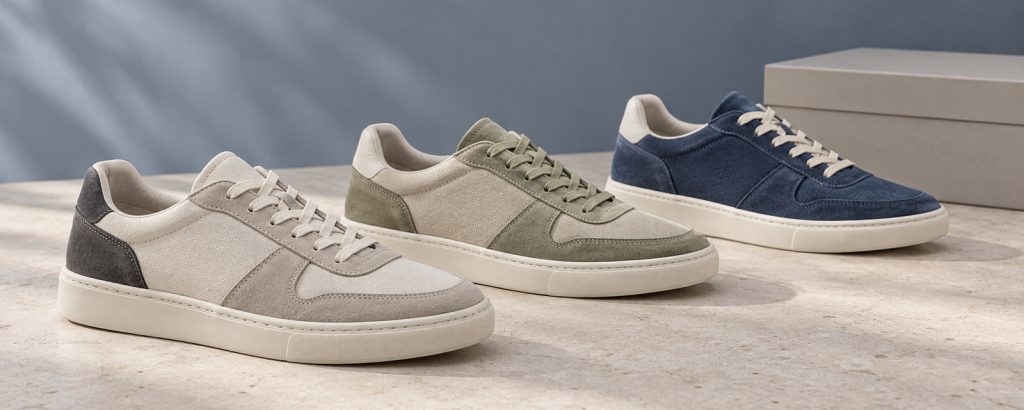
To start a sneaker brand, define who your first shoe is for, choose a development route, and build a budget around the work and inventory you need. Then find a suitable manufacturer, evaluate samples, confirm production requirements, and prepare to fulfill customer orders.
The useful starting point is a clear product brief. It connects your brand idea with practical choices about design, fit, price, quantity, and timing. Work through the steps below to understand what you can decide now and what still needs a quote, a sample, or technical input.
1. Define Your Customer and First Sneaker
Describe the person who will wear your sneakers and the situation you are designing for. Everyday commuting, casual office wear, and recreational sport can lead to different priorities. Be specific about the combination of appearance, fit, function, and price you want to offer.
Look at what those people already wear. Ask what works, what frustrates them, and what would make them consider another option. Conversations about a design can help you refine the idea, although enthusiasm alone does not establish how many pairs will sell.
Next, list your proposed styles, colors, and sizes. For illustration, one style in two colors and seven sizes creates 14 combinations. Two styles in three colors and seven sizes create 42, assuming every color offers the same sizes. These are product combinations, not order quantities. Each needs an inventory decision.
Use these combinations to assess the development work and inventory you can support at launch. A focused first collection should reflect your resources and evidence of demand. Also arrange a brand-name search before committing heavily to branded components, packaging, or promotion. For the U.S. market, consider similar marks used for related goods, as well as an exact-name match.
2. Choose Your Product Development Starting Point
Start from an Existing Style
An existing style can give you a reference for shape and construction. You might want to retain its sole while changing upper materials, colors, or branding. List those changes clearly and ask which are feasible within the proposed construction.
Existing components still need review. A last—the form used to shape the shoe—must work with the upper and sole. Changes to materials or internal components can affect the finished fit. Ask what adaptation and sampling work remains, even when a sole or style is already available.
Develop Your Own Design
With your own design, establish how the drawings will become technical specifications, patterns, components, and samples. New sole shapes or molded details may introduce tooling work. Confirm who will prepare each deliverable and how changes will be handled.
Terms such as private label, OEM, and ODM do not fully describe the work included in an offer. Get the scope in writing, including access to design files and agreed rights to use tools or components. If you are starting a running shoe brand, define the intended performance requirements and assessment work as part of that scope.
3. Work Out Your Budget and Sales Model
Budget Beyond the Sample
A meaningful startup budget depends on what you plan to make and how you plan to run the business. A sample fee may cover one physical pair, while development, tooling, revisions, and delivery are charged separately. Your first production order and the money needed to operate after launch are further commitments.
Build a budget using these categories, then replace estimates with project-specific quotes:
| Budget area | What it may cover | What to confirm |
|---|---|---|
| Development and samples | Design work, specifications, samples, revisions, and agreed assessments. | Included deliverables, sample rounds, extra charges, and payment dates. |
| Required tooling | Lasts, sole tools, cutting tools, or branding tools needed for the design. | Existing options, size coverage, fees, and use rights. |
| First production and packaging | The agreed pairs, shoe boxes, labels, and packing. | Order breakdown, included packaging, deposits, and balance payments. |
| Freight and arrival costs | Sample shipments, bulk freight, and applicable import or receiving costs. | Responsibility, quotation basis, and costs outside the factory price. |
| Launch preparation | Product photography, store setup, and planned promotion. | Work required before taking orders and when payment is due. |
| Ongoing operations and customer service | Storage, fulfillment, software, service, and returns handling. | Recurring costs and funds needed while sales develop. |
Keep quoted amounts separate from assumptions. Mark payment dates and check whether a package already includes a listed item. A possible credit against a later order does not remove the cash needed to pay the initial fee.
Check What Your Selling Price Must Cover
Consider how you plan to sell. A direct sale and a wholesale order can produce different revenue and selling costs. Work from the amount you expect to receive after relevant discounts and channel charges, then account for product, fulfillment, and operating costs.
If funds are limited, narrow the initial scope and resolve expensive uncertainties before committing to inventory. Research and a clear brief can help you get started, but launching and fulfilling orders still involve costs.
4. Prepare Your Brief and Find a Suitable Manufacturer
Look for experience with the kind of sneaker you intend to develop and an order scope the team can support. Ask how development, sampling, production follow-up, and quality checks will be organized. Ask for relevant product examples and how the team handled comparable development work.
Give Each Team the Same Starting Information
Send a concise brief covering:
- Intended use, target market, and the customer you are designing for.
- Drawings or reference shoes, with the changes you want.
- Material direction, colors, and branding details.
- Target price and what you expect that price to include.
- Proposed quantities, colorways, and size range.
- Your timing goal and decisions that remain open.
You can start a conversation with incomplete technical information. State what you have, then agree who will develop the missing specifications. Reference images help communicate direction, but the team still needs defined requirements to make and evaluate a sample.
When comparing shoe manufacturers, check that the offers cover comparable work. One may include technical development while another prices sample assembly only. Ask about revisions, tooling, shipping, production conditions, and the person responsible for decisions. A low headline price or fast reply gives you little information about those details.
5. Review Samples Before Approving Production
Review Appearance, Fit and Performance Separately
Agree what each sample is intended to help you decide. An early version may explore shape and construction, while a later version may be prepared for fitting or testing. Note temporary materials and any differences from the proposed production shoe.
Review appearance against the design: proportions, panel positions, colors, logos, and finishing details. For fit, evaluate the assembled shoe with the intended underfoot components and fastening arrangement. Record the size, relevant foot measurements, conditions, and specific observations.
A comment such as “pressure at the little toe after walking” gives the developer something to investigate. One person liking the fit provides limited information about the intended market. Agree what further assessment is appropriate.
Performance questions need suitable assessment methods and criteria. A clean bonding edge does not establish bond strength. Test results should identify the sample and specification they represent, especially if materials or construction later change.
Record What Still Needs Work
Keep feedback tied to a sample version. Separate accepted details, requested changes, and unresolved questions. On the next sample, check that the agreed corrections were implemented and whether they introduced another issue.
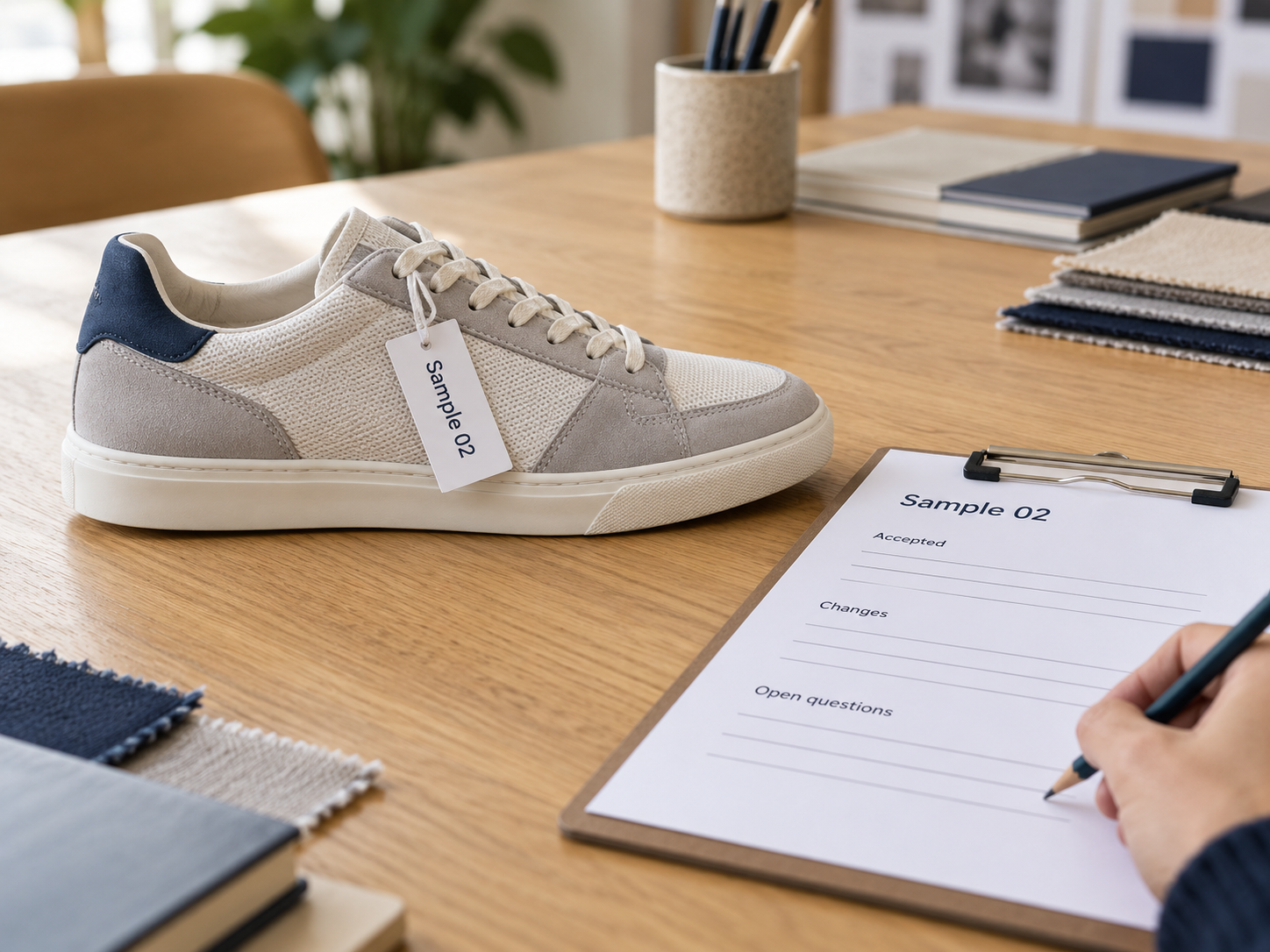
Before production approval, also confirm how the planned size range will be evaluated. One sample size cannot show how every size fits. Check which sizing system underlies the range and how any converted size labels will be verified against the finished footwear.
6. Confirm Your First Order and Delivery Plan
Ask how the minimum order quantity (MOQ) applies: per style, per color, or on another agreed basis. Then confirm the actual quantity for each size. Reaching the total minimum does not tell you whether the assortment suits your customers or your inventory budget.
Tie the order to the approved sample and current specifications. Both teams should know which materials, colors, branding, construction, and packaging have been accepted. Cross-check shoe, box, and carton information against the order breakdown. For footwear imported into the U.S., confirm the applicable country-of-origin marking requirements before approving labels and packaging.
Agree the inspection points, required results, and conditions for releasing the goods. Identify who will resolve exceptions. If a material substitution is proposed after approval, review its effects and determine whether documents, samples, or assessments need updating before accepting it.
Build the delivery plan around separate milestones: production readiness, completion, shipment, arrival, and receiving. Confirm who arranges transport and handles the relevant import and receiving work. A factory completion date alone does not establish when you can fulfill consumer orders.
Ask which materials, tools, approvals, and feedback each estimated date depends on. Use those dependencies when planning your launch, and update the schedule when the project scope changes.
7. Prepare for Launch and Use Customer Feedback
Check Launch Readiness
Prepare accurate product information, photographs, and size guidance based on the shoe you will sell. Check stock records, payment and fulfillment processes, customer support, and return handling before accepting orders. Your launch channel should fit both your audience and your ability to serve them.
Alongside product development, address the business setup appropriate to your location and situation: structure, registration, tax and licensing matters, and business banking. Brand-name clearance and these operating arrangements are separate tasks.
You can introduce the concept and build an audience while development continues. Taking paid orders adds fulfillment commitments. For covered U.S. online sales, you need a reasonable basis for your shipment promises. If you cannot ship as promised, follow the applicable requirements for obtaining consent to a delay or issuing a refund. Prepare for these responsibilities if you plan to take preorders.
Learn from Your First Orders
Track sales and available feedback by style, color, and size. Separate fit or sizing comments from product defects and service problems so that different issues reach the right person.
Look for reasons behind the results before expanding the sneaker line. A slow-selling size, a confusing size description, and a construction problem call for different responses. Use what you learn to discuss product changes, stock allocation, or a reorder.
FAQ
Can You Start a Sneaker Brand from Home?
You can organize activities such as planning, design coordination, marketing, and customer communication from home while arranging manufacturing and fulfillment elsewhere. Check the business and property-use requirements that apply where you operate. Also decide where samples, stock, and returns will go; working from home does not automatically make your home suitable for every operational task.
Do You Need Shoe Design Experience to Start a Sneaker Brand?
You do not need to perform every design and technical task yourself. You do need to explain the product you want, choose qualified help, and make informed decisions. Assign responsibility for translating the idea into specifications and reviewing the results. A visual concept becomes useful to the project when someone can work through its practical requirements.
Do You Need Your Own Factory to Start a Sneaker Brand?
You can work with an external development and manufacturing team. Establish who handles each part of the project and what requires your approval. Building a brand still involves setting product expectations, reviewing progress, and arranging how orders will reach customers. Owning production equipment is a separate business decision from developing and selling your sneaker collection.
Conclusion
Start by making your first sneaker project clear enough to discuss: who it serves, what makes it relevant, what you want to develop, and the range you can support. Connect those choices to a budget, sample reviews, and a workable delivery plan.
Prepare a short brief with your references, product targets, budget range, and open questions. HEVA can review that product direction with you and discuss the development work needed to move toward samples and production. Use that conversation to establish the next decisions for your project.