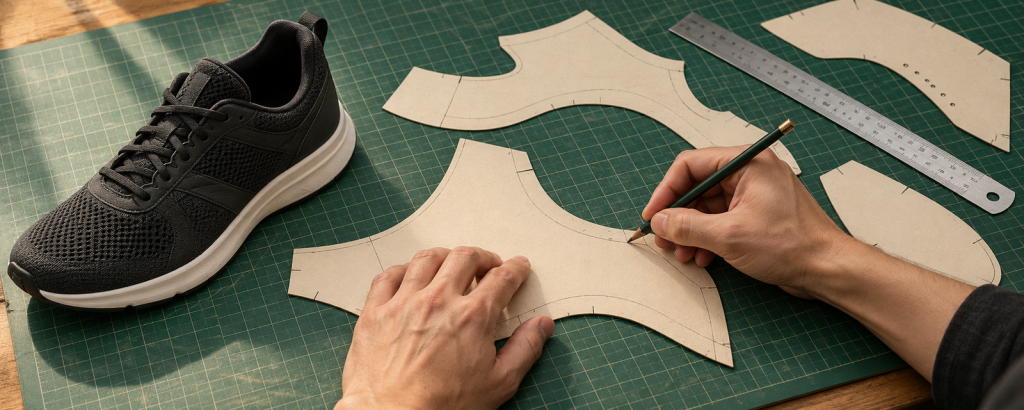
To budget for a shoe prototype, include the cost of making the sample plus any development, tooling, delivery, or assessment costs your project requires. A quote for one pair may cover only the physical sample; a development quote may include work that happens before that pair can be made.
For a sneaker project, start by identifying what you already have: a design, a usable pattern, a suitable last (the form used to shape the shoe), or an available sole. Then establish what needs creating or changing. The breakdown and illustrative budget below show how to compare those costs without treating a sample fee as the price of the entire project.
What Does a Shoe Prototype Quote Cover?
Before requesting a price, decide what the prototype needs to help you evaluate. You might be reviewing the upper’s shape, checking a complete shoe’s fit, or preparing samples for a specific assessment. Those tasks can require different materials, components, and amounts of work.
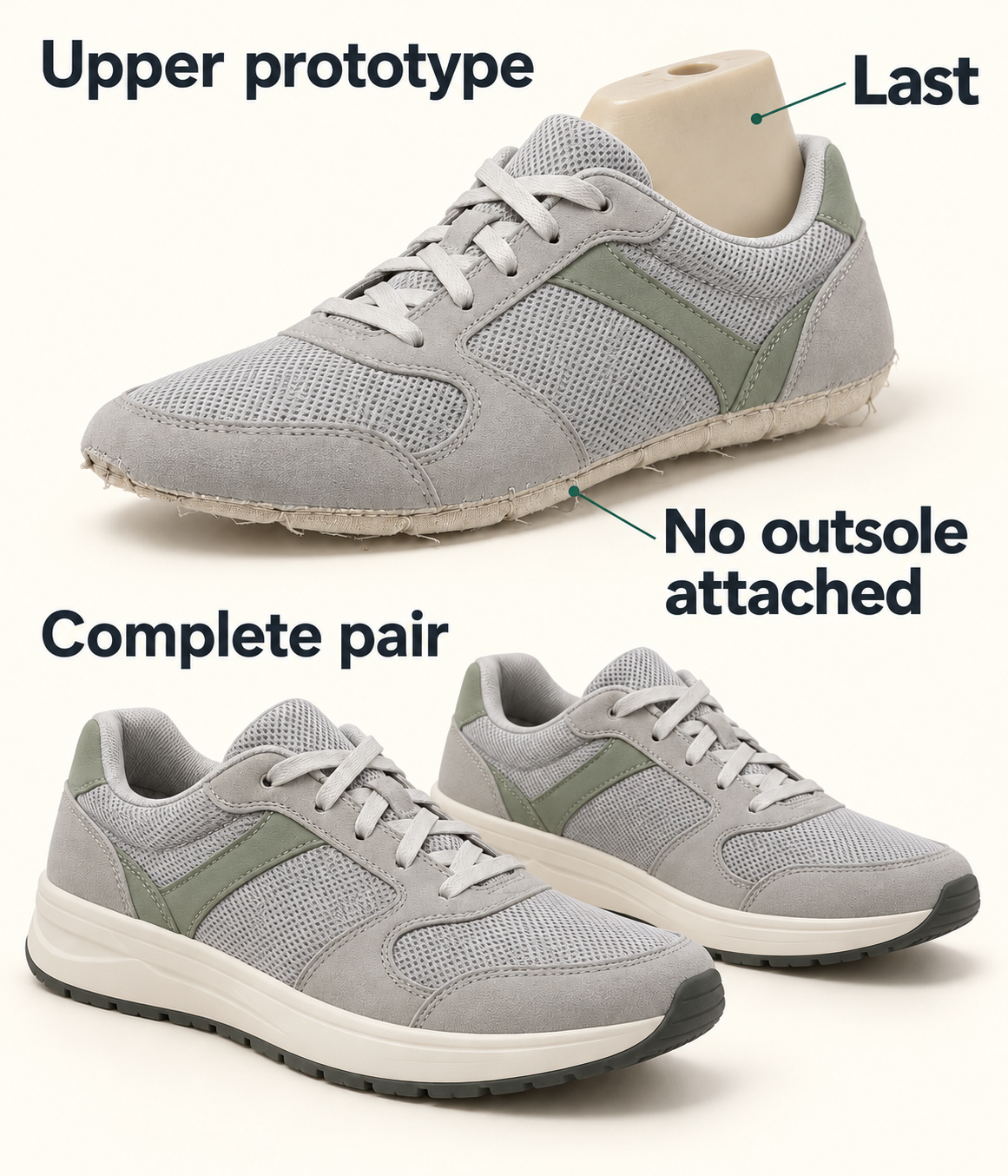
A pullover, for example, is an early upper prototype formed over a last, usually without the outsole attached. It can help you review the pattern and shape, but it is a different deliverable from a finished pair. Likewise, a digital last assessment does not replace evaluating fit in the completed shoe.
Confirm whether you will receive an upper, a single shoe, or a pair, which materials will be used, and what decisions that version should support.
Shoe Prototype Cost Breakdown
The sample you receive is the visible result of several possible development tasks. A sketch communicates appearance, while a pattern defines the cut pieces that must work around the last. Sole models and manufacturing tools add other kinds of preparation.
Use these categories to understand the quote. A supplier may combine them into one fee or list them separately.
| Cost item | Work it may include | What to confirm |
|---|---|---|
| Design & specifications | Drawings, material specifications, and construction requirements. | Which information is already supplied, and what still needs developing? |
| Patterns | Developing or adjusting the upper’s cut pieces to suit the last. | Are initial patterns and corrections included in the development fee? |
| Last work | Selecting, assessing, adjusting, or developing the shoe’s shaping form. | Is an existing last suitable, and which sizes are covered? |
| Sole models & tooling | Sole geometry, review models, sample tools, or production tools. | Which deliverable is included, and is later tooling charged separately? |
| Sample making & revisions | Materials and labor for the agreed pairs and included changes. | How many pairs and rounds are included? What counts as extra work? |
| Delivery & agreed assessments | Sample shipments and specified fitting or laboratory assessments. | Are assessment fees, shipping, and any additional test pairs included? |
A model used to review a sole’s shape is not the same as a production mold. Similarly, an appearance check does not establish bond strength or other performance characteristics. If testing is needed, confirm the method, required samples, and charges rather than assuming they come with the prototype.
An Illustrative Prototype Budget
The following figures are hypothetical. They demonstrate the calculation, not a market average, a HEVA quotation, or an actual customer project.
Assume one style in one sample size, with one pair made and shipped in each of two rounds. The development charge excludes sample making and delivery, and no new molds are needed.
| Assumed charge | Calculation | Amount (USD) |
|---|---|---|
| Development | $300 × 1 | $300 |
| Sample making | $200 × 2 rounds | $400 |
| Courier | $50 × 2 shipments | $100 |
| Illustrative total | $800 |
Illustrative only: the $800 covers this assumed two-round stage. It excludes testing, taxes, and any other applicable charges that would need separate confirmation. Two rounds are an assumption, not a promise that the design will be approved by then.
If a package already includes a sample round or delivery, do not add it again. Keep any possible future production credit separate from the amount you need to pay now.
Why Two Prototype Quotes Can Be So Different
Consider three development situations. An adaptation using compatible existing lasts and sole components may need pattern adjustments, selected material changes, and sample assembly. You still need the combination reviewed; an existing component is not automatically suitable or free to use.
A new upper built around an available sole can require more pattern work, reinforcement decisions, and fitting corrections. Using the same sole does not mean the upper requires the same development work, especially when upper materials stretch or form differently.
A design with a new sole profile or another custom component introduces additional geometry and tooling work. Clarify whether the price covers a review model, tools for samples, or tools intended for production. Not every construction follows the same tooling route. If a quote includes 3D printing, ask whether it covers a model, a usable component, or tooling for making the part. Confirm what that version is intended to evaluate.
Size coverage also matters. A prototype in one size does not validate the entire range. Grading develops related sizes, and the required lasts, patterns, and tools need to be considered together. Ask which sizes are included rather than multiplying every tool charge by the number of sizes.
Confirm the number of pairs and colors in each quote; different sample quantities or color versions can change the work involved.
Finally, confirm material availability and substitutions. A sample made with an available alternative may answer a shape question while leaving the final material decision open. Record that limitation before approving the next step.
How to Compare Quotes and Control Repeat Costs
Compare the scope before comparing the total. Check these points together:
- Price basis: currency, quote date and validity, and whether charges are per shoe, pair, style, round, or size.
- Included work: development tasks, tools, sample quantities, delivery, and any agreed assessments.
- Changes: included revisions, what counts as a scope change, and how additional work or corrections will be handled.
- Credits: which fee can be credited, the amount, and any order, quantity, or timing conditions.
For shipping, confirm the service, destination, charges included, and who pays for any return shipment.
A credit against a later production order is different from a cash refund. Confirm what happens if you stop after development, and do not subtract a conditional credit from your immediate budget.
To reduce avoidable repeat work, identify each sample version and collect your team’s feedback into one list for that round. Describe the location and issue clearly. For example, “the collar presses against the outside ankle in this sample size” gives the developer more to investigate than “the fit is wrong.” Necessary revisions still need time and budget; the aim is to make each round resolve a defined problem.
What to Send for a Useful Prototype Quote
You can begin with the information you have. A useful brief separates confirmed requirements from decisions that still need development:
- Product and reference: shoe type, intended use, sketches or a reference pair, and the features you want to change.
- Materials and components: selected materials, available specifications, your preferences for the sole, and open choices.
- Sample scope: sample size, planned size range, pairs and colors required, and what you need to evaluate.
- Project context: expected production quantities, target timing, and delivery destination.
If you do not have a complete tech pack, say so. HEVA can use your available references and requirements as a starting point for discussing development and sampling.
FAQ
Why can a prototype cost more than the bulk price per pair?
A single sample can require individual material preparation, pattern adjustments, and assembly outside the repeated bulk-production process. Its price may also include development work. Once the design is approved, production quantities and repeatable operations create a different costing basis. The prototype fee therefore does not directly predict your eventual bulk unit price.
Can I order a prototype without committing to bulk production?
Ask whether the supplier accepts a paid development-only project and what it will deliver. Confirm any conditions before paying, including whether a future production order is required. The arrangement for a prototype and the terms of a later production order should be clear; suppliers do not all offer the same service.
Does the prototype fee include design files or molds?
Do not assume that receiving a physical sample also includes every drawing, digital file, or tool used to create it. Confirm the deliverables, file formats, and arrangements for storing, using, or transferring tools. Payment alone does not tell you which files or tools will be handed over or on what terms.
Conclusion
A useful shoe prototype budget starts with the decisions your sample must support. Define the deliverable, identify new development and tooling, and compare the total for the same scope of work. If you are planning a sneaker with HEVA, share your references, intended use, sample requirements, and open questions to guide the discussion of the next development steps.