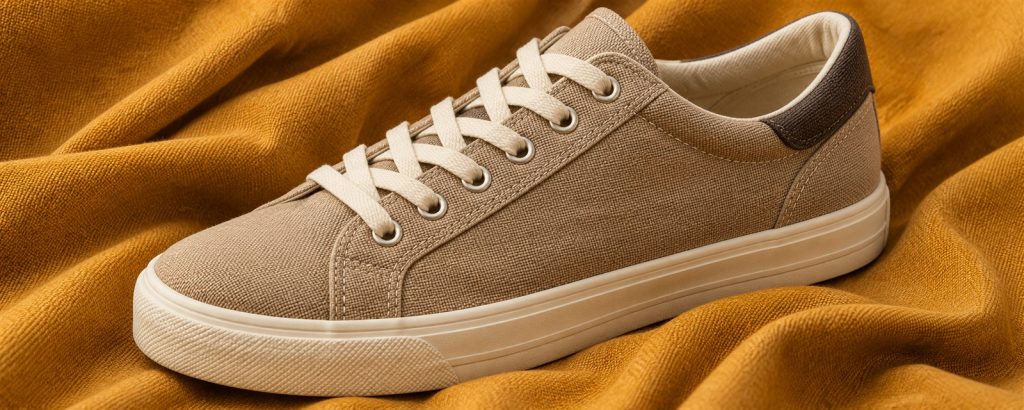
What Is the HS Code for Sports Shoes?
For U.S. imports, 6404.11 is a subheading to check for sports and athletic footwear with textile uppers and rubber or plastic outer soles. It covers specified sports footwear as well as tennis shoes, basketball shoes, gym shoes, training shoes, and similar athletic footwear.
That six-digit subheading is only part of the answer. The shoe’s materials and construction must fit the provision, and additional details determine the full U.S. HTS number. A product name such as “running shoe” or “lifestyle sneaker” does not establish those facts.
When Does 6404.11 Apply?
Check the Upper and Outer Sole
Start with the materials as the tariff rules define them. Heading 6404 covers footwear with textile uppers and certain types of outer soles. Within that heading, 6404.11 sits under the branch for rubber or plastic outer soles. You cannot carry every sole material named in the broader heading into this narrower subheading.
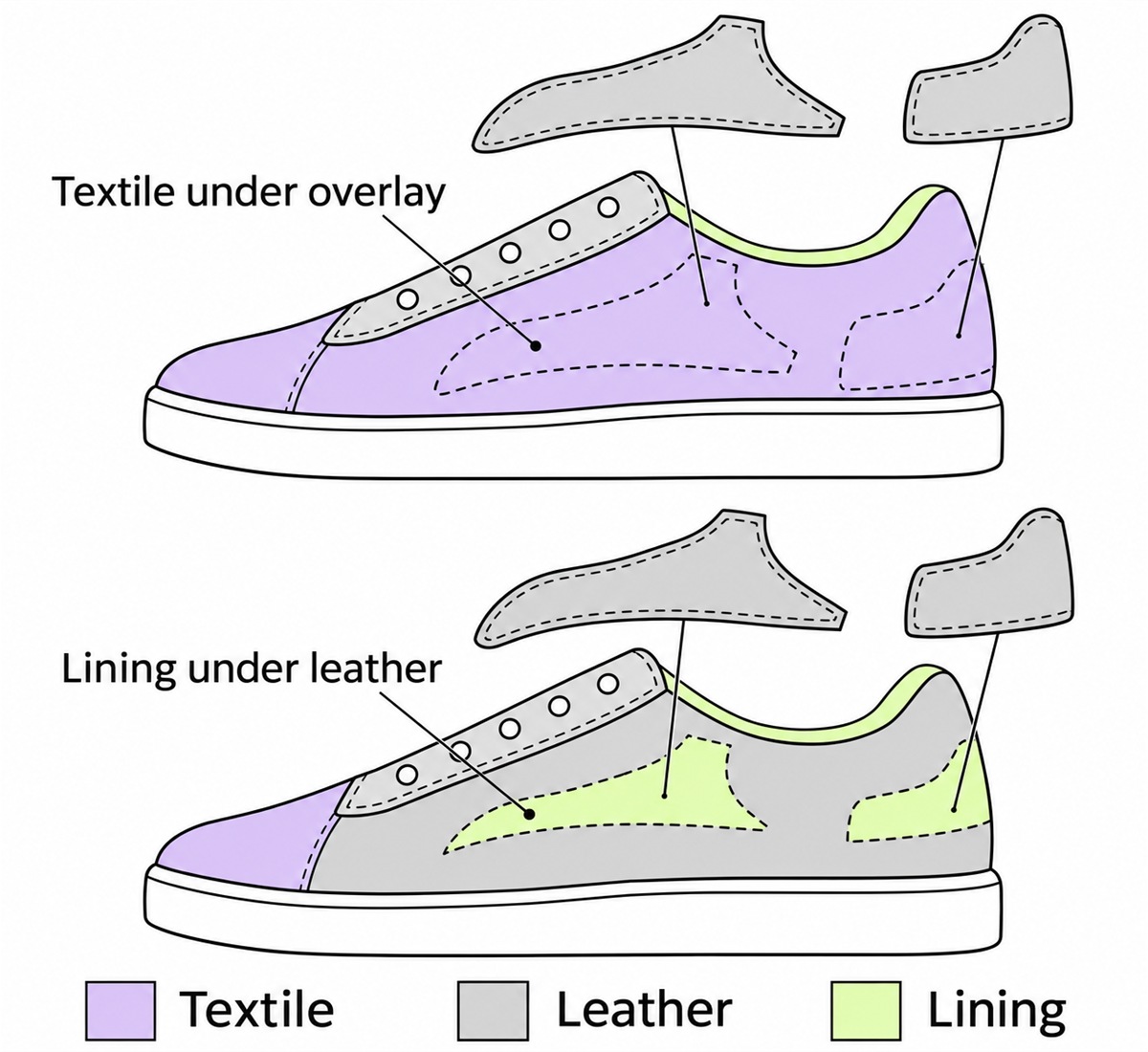
For the upper, Chapter 64 generally looks at the constituent material with the greatest external surface area, subject to its rules for coatings, accessories, and reinforcements. For the outer sole, the relevant area is the surface in contact with the ground, with specified attachments excluded. The material making up most of the shoe’s total weight is therefore not necessarily the material used to classify its upper.
A mixed textile-and-leather sneaker needs that assessment before you choose a material branch. If the upper instead qualifies as leather or rubber/plastics under the applicable rules, revisit the heading rather than carrying over 6404.11.
Understand the Two Footwear Categories
“Sports footwear” has a restricted meaning in Chapter 64. Subheading Note 1 includes footwear designed for a sporting activity with specified projections or provision for their attachment, such as spikes, cleats, or clips. It also names particular footwear, including cycling shoes and boxing boots.
The wording of 6404.11 extends beyond that restricted category. Additional U.S. Note 2 covers other athletic footwear of the tennis, basketball, gym, and training type, whether or not principally used for those activities. An ordinary training shoe does not need cleats to qualify under that part of the provision. Its actual characteristics still need examination.
Does Casual Wear Change the Classification?
Calling a sneaker “casual” does not automatically move it to 6404.19, the other-footwear branch for textile uppers and rubber or plastic outer soles. CBP examines the shoe itself, including its overall appearance, upper and sole construction, traction, cushioning, and means of securing it to the foot.
In HQ H265479, issued in March 2016 concerning earlier imports, CBP considered artist-designed Bucketfeet footwear. The lace-up shoes had canvas uppers, cushioned insoles, flexible rubber soles, and traction patterns. The company argued that the shoes were casual footwear inappropriate for sports. After examining the samples, CBP classified the lace-up styles under 6404.11.90. Their artwork and comfort features did not prevent that result.
H265479 discussed several characteristics associated with athletic footwear. In a separate ruling, NY N318673 (April 2021), CBP classified a sneaker as athletic even though it did not possess all the usual athletic-footwear characteristics. These examples show why classification is not a checklist in which a fixed number of checked boxes guarantees a result.
A more recent example is NY N358104, issued in February 2026. The applicant proposed a non-athletic classification for a Timberland sneaker. CBP instead classified it as athletic footwear after considering its textile-majority upper, flexible traction sole, underfoot cushioning, and secure closure. Both decisions show why the physical sample deserves closer attention than a lifestyle label.
How Similar Shoes Can Follow Different Classification Paths
These cases show how differences in materials and construction can lead to different classification paths. Each result applies to the merchandise described in that ruling.
| Sample or comparison | Shared or established facts | What mattered in the assessment | Result and limit |
|---|---|---|---|
| Bucketfeet lace-up versus slip-on styles held by elastic side panels, HQ H265479 | Both groups had canvas uppers, rubber outer soles, cushioning, and a foxing-like band—a band at the sole that overlaps the upper. | The lace-up styles had athletic construction features. The slip-ons were held by elastic panels at the sides of the upper, without laces, buckles, or other closures; CBP applied its footwear definition guidelines to that construction. | The lace-up styles fell under 6404.11.90; the slip-ons under 6404.19.90. This historical comparison does not establish a rule for every modern shoe without laces. |
| Timberland TB0A5RKZ/TFO Cupsole, NY N358104 | A mixed upper in which textile occupied the majority of the external surface area, with a rubber/plastic outer sole. | The upper material assessment and the shoe’s athletic characteristics supported the selected branch. | CBP selected 6404.11.9020 for the specific men’s sneaker under the ruling’s stated product and value conditions, including the over-$12-per-pair provision. |
| Two mountaineering/ice-climbing boot styles, HQ H338307 | Rubber/plastic uppers and outer soles, with a specially designed heel indentation supporting crampon attachment (an ice-gripping attachment). | The materials placed the boots in heading 6402; their sporting design and attachment provision supported sports-footwear treatment. | The ruling selected 6402.19.90 and revoked the earlier ruling for those styles. Being sports footwear did not place them in 6404.11. |
The boot example illustrates the sports-footwear classification criteria. Material classification comes before selecting the relevant sports-footwear branch. A claim of “crampon-compatible” needs supporting design details; compatibility alone should not stand in for the full assessment.
What to Confirm Before Choosing the Full U.S. HTS Number
Once you have a plausible six-digit branch, collect enough information to follow its remaining subdivisions. A practical review file should include:
- The exact style and sample: Match the proposed code to the construction you intend to import, including any changes made after sampling.
- Upper materials: Provide an external surface-area breakdown and identify coatings, overlays, and reinforcements for assessment under the relevant notes.
- Outer sole details: Show the ground-contact materials and traction pattern, rather than describing only the midsole foam.
- Construction and fastening: Supply clear photographs and descriptions of the closure, cushioning, sole attachment, and any foxing-like band.
- Sport-specific features: Where relevant, explain the activity and show cleats, clips, or attachment provisions.
- Further tariff conditions: Check the applicable value, wearer category, fiber, and construction distinctions in the current U.S. schedule. Not every condition affects every branch.
Read the parent descriptions above a candidate number. A line labeled “Other” only makes sense within that hierarchy. If you are comparing a ruling, also check its date, merchandise description, and any modification or revocation. HQ H338307 is an example of why an older ruling may no longer provide the same answer for the named merchandise.
These details give your customs broker or classification adviser a concrete product to assess. Resolve missing facts before relying on a supplier’s proposed number.
FAQ
Can I use another brand’s sports shoe HS code for my own design?
Use it as a research lead, then compare the underlying product facts. A similar silhouette may conceal different upper materials, fastening, or sole construction. NY N358104 expressly limits its holding to the described merchandise and factual situation. Ask for the reasoning behind a supplier HS code and have the proposed classification checked against your own design.
Should I recheck the classification after changing the upper or closure?
Yes. Flag the change for review before carrying the old code into the next order. Changing a material, overlay, or fastening arrangement may affect the facts supporting classification, although it does not necessarily change the number. Keep the revised specification and sample clearly identified so the review concerns the version you will actually ship.
Does the HS code tell me the total duty payable?
The code is one input to that calculation. You also need the applicable valuation, origin, entry date, and any additional duties or charges. A rate printed in an older ruling is not a current landed-cost quote. NY N358104 itself notes that its stated rate can change and that additional duties and other charges may apply.
Conclusion
To assess a sports shoe HS code, start with the upper and outer sole, then examine the footwear category and the conditions beneath the relevant subheading. Compare actual construction details when using a ruling, and keep the full U.S. number tied to the specific design being reviewed.
Before finalizing a new style, assemble the material breakdown, construction photographs, and sample details. For a HEVA OEM/ODM project, bring those inputs into the development discussion so the product information is clear when you seek classification advice.