What Do Durability Testing Standards Tell You?
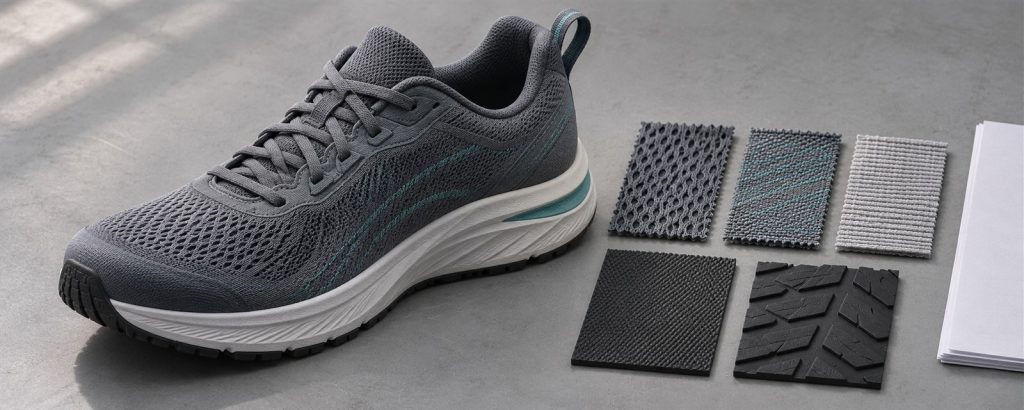
Athletic footwear durability testing standards help you evaluate specific risks, from outsole abrasion and repeated flexing to bond failure and changes in cushioning. The useful starting point is the question you need to answer about your shoe.
ISO 20871 addresses outsole abrasion, while ISO 24266 covers whole-shoe flexing durability. ISO 17708 evaluates upper–sole adhesion, and ASTM F1976 measures impact attenuation in athletic shoe cushioning systems and materials. Each provides a different piece of evidence.
Keep three things separate in your development brief: the test method, the acceptance requirements for your project, and any claim about service life. Naming a method tells the laboratory how you intend to assess a property; it does not, by itself, establish that the shoe meets your requirements or will last a stated distance. Agree on what an acceptable result means before testing begins.
Start With the Sport, Construction, and Likely Failures
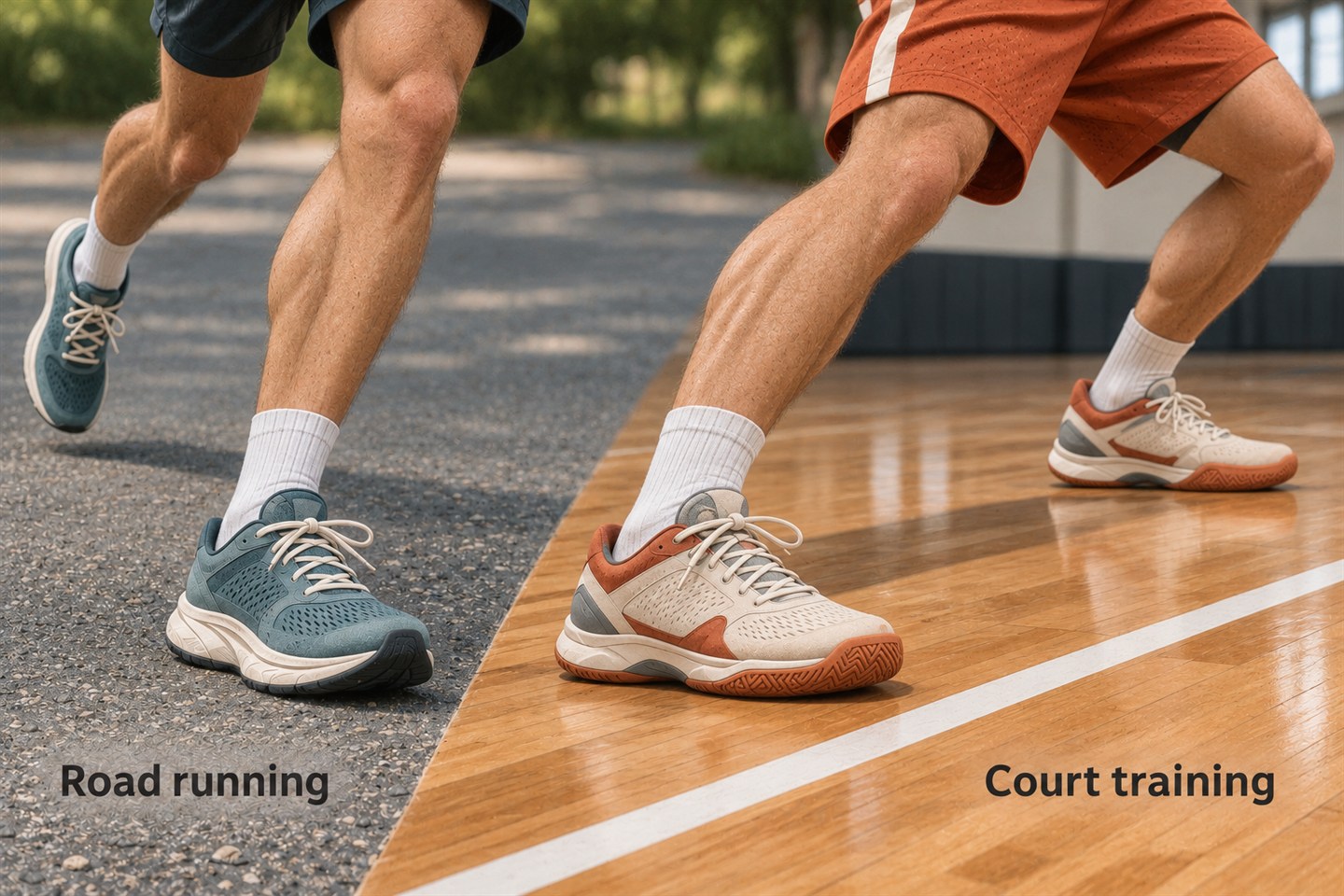
Before choosing methods, describe how the shoe is intended to be used. Include the activity, contact surfaces, likely exposure to moisture, and the materials and construction under review. Identify the sample version, too: results from an earlier material combination may not answer questions about the current design.
Then make the concern specific. “The shoe needs to be durable” leaves too much open. “We need to assess wear at the heel lining” identifies a location and a problem that can guide a test discussion.
Distinguish material behavior from the performance of the assembled shoe. An outsole abrasion result can help evaluate a material, but tread geometry also affects how the finished sole wears. A fabric abrasion test can inform a lining choice without establishing the durability of the seam beside it.
Use visible sample damage or previous development observations where available. If you are still identifying risks, frame them as questions to investigate. There is no need to turn every possible failure into an automatic test requirement. The aim is to prioritize evidence that could change a material, construction, or sample-approval decision.
Build a Test Plan Around Those Risks
The table below is a starting point for a laboratory discussion. Confirm the method’s scope and the appropriate specimen before commissioning work. These are candidate methods, not a mandatory package for every athletic shoe.
| Risk or question | Evidence to discuss | Candidate method | Scope check |
|---|---|---|---|
| Outsole abrasion | Resistance to material loss through abrasion | ISO 20871:2018 | Does not alone establish tread performance or whole-shoe life. |
| Repeated bending | Damage to the assembled shoe during flexing | ISO 24266:2020 or SATRA TM92 | Check geometry and the selected procedure; do not assume equivalent results. |
| Upper or lining wear | Abrasion resistance of flexible sheet materials | SATRA TM31 | Specify dry/wet conditions and damage assessment; seams need separate consideration. |
| Upper–sole or sole-layer separation | Separation resistance and failure mode | ISO 17708:2018 | Check construction, sampling location, and whether separation or material tearing occurs. |
| Cushioning retention | Impact attenuation after a defined loading history | ASTM F1976-24 for measurement | Agree on loading or wear simulation separately; this is not a universal fatigue protocol. |
| Hydrolysis-sensitive materials | Mechanical performance after accelerated exposure | SATRA TM344 for pretreatment | Select for susceptible materials; do not apply automatically to every sole compound. |
Check flexing applicability before comparing cycle counts. ISO 24266:2020 includes two methods whose results may not be comparable. Its scope excludes whole shoes with heel heights above 50 mm, sole thickness above 25 mm in the flexing area, or a flexing angle below 45° as determined under ISO 17707:2005, Clause 6. These are method applicability limits, not footwear quality thresholds. A description such as “thick-soled” is not enough to establish suitability.
SATRA TM92 also evaluates assembled footwear under repeated flexing. It is not intended to determine the flex-cracking resistance of upper or soling materials themselves.
For each selected test, record the sample identity, method and version, specimen arrangement, conditioning or exposure, measurement or damage assessment, and acceptance basis. Agree on quantities, loading conditions, test duration, and who will confirm the requirements.
If you do not yet have an acceptance specification, explain the intended use and the failure you want to avoid. Discuss applicable product requirements and suitable reference samples with the laboratory. A development comparison can help you choose between designs, but outperforming a reference sample does not automatically establish acceptable quality or service life. Set the decision criteria before reviewing the results.
Assess Performance After Repeated Use or Aging
Initial performance is only part of the durability question. Your plan should also identify which properties need evaluation after a defined exposure or loading history. Keep the treatment and the subsequent measurement clear, so the result answers a specific development question.
Check cushioning after a defined loading history
ASTM F1976-24 measures impact attenuation under specified conditions. Results depend on factors including specimen geometry, material thickness, energy input, and previous loading. A measurement on a fresh sample therefore cannot, on its own, demonstrate how well cushioning will be retained. F1976-24 is not intended for shoes classified by the manufacturer as children’s shoes.
Discuss a suitable repeated-loading or wear-simulation procedure with the laboratory, then agree on the impact-attenuation measurements needed for comparison. Keep specimen and measurement conditions comparable, and document the loading history. The procedure must suit the question: F1976 should not be presented as a universal cushioning-fatigue schedule.
Impact attenuation is also a specific laboratory measurement. It should not be treated as a direct measure of an individual wearer’s comfort or as evidence that a shoe prevents injuries.
Match environmental aging to the material
For materials susceptible to hydrolysis, including relevant polyurethane sole and upper materials, SATRA TM344 provides an accelerated pretreatment approach. The useful evidence comes from appropriate mechanical evaluation afterward and comparison with untreated reference material.
Select the follow-up test for the material and concern—for example, flex-cracking resistance for PU solings or coating adhesion for PU upper materials. Ask the laboratory to arrange specimens and reference groups appropriately, particularly when the evaluation is destructive.
This approach does not make hydrolysis testing a blanket requirement for every EVA or rubber sole. Nor does a stated number of days under accelerated conditions establish a fixed number of years in storage or use.
Use the Results to Make Development Decisions
Read the result alongside the agreed requirement and the observed damage. For an adhesion test, separation at an interface and tearing within a material are different observations. Record the location and failure mode before assigning a cause. A disappointing value alone is not enough to conclude that the adhesive is at fault.
Decide what the evidence supports next. You may be ready to proceed with the current design, investigate a material or construction change, or run additional work to resolve an unanswered question. When a change is made, document it so subsequent results can be interpreted against the correct sample version.
Keep relative comparisons, model-based predictions, and actual-use observations distinct. A result can show how two samples performed under the same conditions without establishing either shoe’s total service life.
Some specific methods support conditional life estimates. SATRA describes a simulated walking-abrasion approach that predicts sole life within that method’s framework. That does not make arbitrary flex cycles or abrasion measurements convertible into running mileage for an entire athletic shoe.
Wear trials can add information about the intended activity, fit, and use conditions. They complement laboratory evidence, but a few favorable wear reports should not become a general mileage guarantee. State what was evaluated and leave unsupported lifetime claims out of the approval decision.
FAQ
Why can two labs report different durability results?
First check whether the reports describe comparable work. Confirm the method and edition, any method variant, specimen details, conditioning, exposure, and test settings. Consumables can matter as well: abrasive materials that do not meet the relevant specification can affect consistency.
Ask the laboratories to clarify any differences in those conditions before interpreting the results. A higher number is not automatically the more useful result, and disagreement does not by itself prove that either laboratory made an error. If the difference affects approval, agree on a comparable follow-up assessment.
Can one test report cover several styles in the same shoe range?
Check what the report actually evaluated. A shared collection name does not establish that the styles have the same materials or construction. Changes in thickness, tread, bonding, or other structural details may affect the risk you are assessing.
Compare the other styles with the tested sample and discuss the differences with the laboratory. Existing evidence may remain useful for an unchanged feature. For a changed component, first check whether that evidence still addresses the relevant risk. A change does not automatically require a complete retest.
Conclusion
A useful durability test plan connects the shoe’s intended use with specific questions, suitable methods, and agreed acceptance requirements. Include the sample version and any loading or aging conditions needed to evaluate performance beyond its initial state.
Before approving the next development sample, identify what the results support and what remains unresolved. Bring that information into your footwear development discussions with HEVA: the intended activity, materials and construction, areas of concern, and available test evidence. A clear brief gives the discussion a concrete starting point and helps define the next development decision.