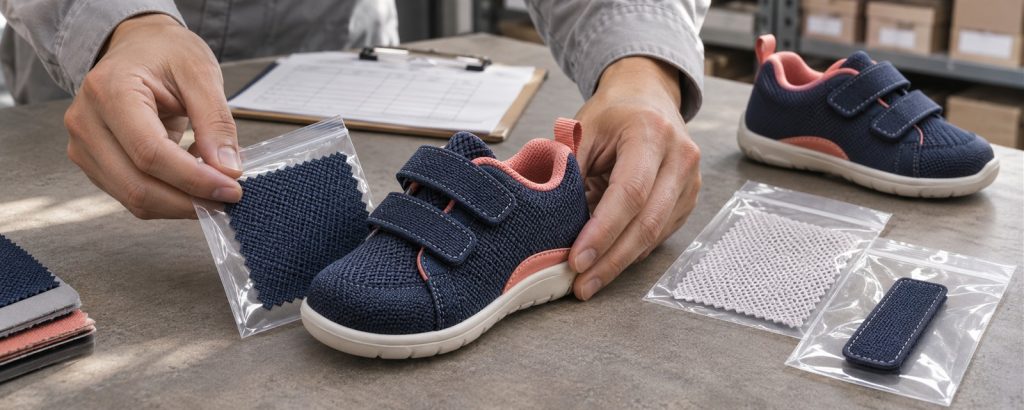
A shoe can look unchanged while the evidence behind it has changed. A new surface print, a different decorative component, or a move to another manufacturer can raise questions that an earlier test report does not answer.
Before you arrange children’s footwear safety testing, confirm five things: what product you are testing, why each test is needed, what the samples represent, what the reports cover, and how you will handle changes during production.
This guide focuses on ordinary children’s footwear for the U.S. market. It helps you prepare a testing brief and identify questions to resolve with your laboratory and production team before samples are sent.
Define the Shoe and Its Market
Start with the intended market, age group, and use. A description such as “kids’ sneaker” leaves too much open for a meaningful testing proposal.
Under the U.S. Consumer Product Safety Commission’s definition, a children’s product is designed or intended primarily for children 12 years of age or younger. Shoe size alone does not establish that intended age. Make the age range explicit, alongside the product’s intended use and any features that need separate assessment.
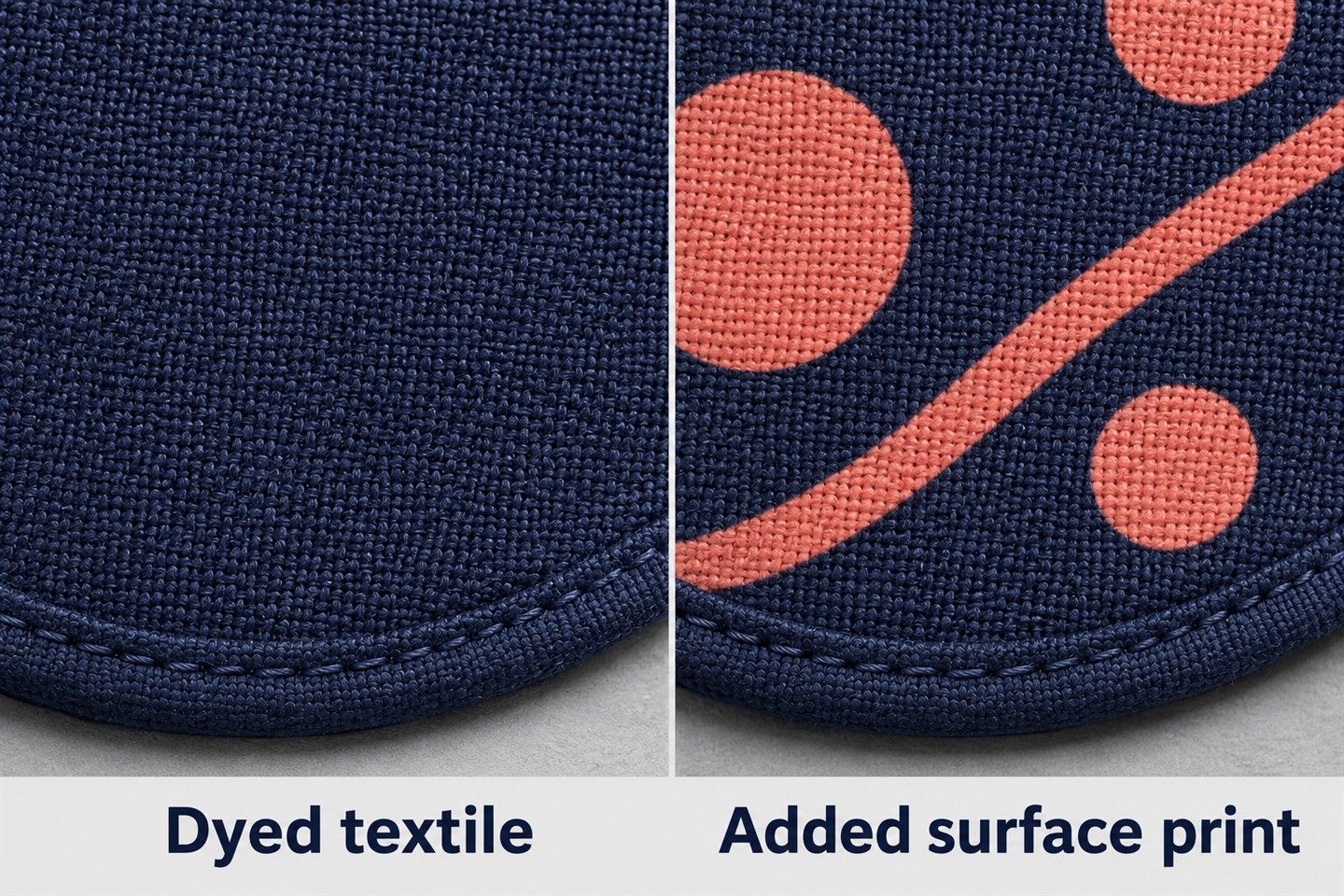
Next, identify the actual construction. Give the laboratory a current bill of materials, or BOM, with the style number and revision date. Include the upper, lining, sole, fasteners, decorations, and relevant finishes. “Textile upper” is less useful than a description that distinguishes dyed fabric from fabric with a surface print or coating.
Flag lights, batteries, or features intended for play. These may require a separate scope assessment beyond the ordinary footwear covered here.
Also identify relevant state requirements and customer specifications. A U.S. destination does not, by itself, describe every requirement in your sales channel. The aim is to give the laboratory enough information to explain its proposed scope and identify anything that remains unresolved.
Separate Required Tests from Performance Checks
Check the Basis for Each Test
Ask what each proposed test is intended to establish. A testing package may combine federal requirements, state requirements, customer specifications, and additional checks recommended for the product.
Use these three categories when reviewing the scope:
| Basis | What to confirm | What not to assume |
|---|---|---|
| Legal requirements | Applicable rule and why it covers this product or component | A general test package does not establish which rules apply. |
| Product risks | Feature or foreseeable failure being assessed | The absence of a specific mandatory test does not mean there is no risk. |
| Agreed performance requirements | Customer method and acceptance criteria | A requirement can matter to the order even if it is not federally mandated. |
These categories can overlap. A performance requirement may also address a safety concern. Its inclusion in a customer specification can make it an important condition of the order even when it is not a federal testing requirement.
Keep the method and acceptance criteria beside each item. A test name without either may leave you and the laboratory working toward different expectations.
Match Chemical and Physical Checks to the Product
Lead illustrates why material descriptions matter. For U.S. children’s products, accessible components must meet the applicable total lead limit of 100 parts per million. Paint and similar surface coatings have a separate lead limit of 90 parts per million. These are distinct requirements, not an average allowance for the whole shoe.
The CPSC has determined that certain materials do not require third-party testing for total lead content. Check whether the material and its finish meet the conditions of the relevant determination. That does not automatically remove the obligation to comply or issue an applicable certificate. A textile description alone is insufficient to claim an exemption, especially when finishes or added treatments are involved.
Other rules also have defined scopes. The federal small-parts rule includes exclusions for certain clothing and accessories; this does not establish that every shoe decoration is exempt or presents no detachment risk. Federal phthalate restrictions apply to defined children’s toys and child care articles, so a toy testing package should not automatically become the testing plan for ordinary footwear.
Attachment strength, flexing, and abrasion may be relevant performance checks, depending on the construction and agreed specification. Confirm the appropriate methods and criteria rather than assuming every children’s shoe has the same mandatory physical test thresholds.
Prepare Samples and Product Information
Build a Testing Brief
Give your laboratory and production team one brief they can both reference. It can be a simple document, provided the information identifies the version being tested.
Before sending samples, fill in:
• Destination market and intended use: ____
• Intended age group and size range: ____
• Style number and BOM revision: ____
• Materials, prints, coatings, and other finishes: ____
• Colors, decorations, and component suppliers: ____
• Sample stage and any differences from the production specification: ____
• Customer specifications, including applicable restricted-substance requirements: ____
• Existing reports and the products or components they are intended to cover: ____
• Proposed test scope and the laboratory responsible for each part: ____
• Responsibility for supplying records, reviewing results, and preparing required documents: ____
This is a practical preparation checklist, not an official CPSC form or a complete testing protocol. Leave unresolved items visible. A blank marked “supplier confirmation pending” is more useful than a material description copied from an earlier version without checking it.
Agree on Sample Coverage
Development testing can help identify problems, but a sample made with temporary materials does not automatically establish compliance of the final production version. For certification, establish how the samples represent the product being manufactured.
Ask the laboratory to confirm the required quantities and whether it needs finished shoes, individual components, or both. Discuss how relevant differences across colors, sizes, and constructions will be covered. There is no useful universal number of pairs for every test plan, and the darkest color is not automatically the worst case for every test.
For a hypothetical example, suppose a dyed textile upper gains a surface print. The earlier fabric report does not, by itself, establish coverage for the added treatment. Identify the print and its application, then confirm which evidence or testing is needed. Do not assume every print is classified identically.
Record what was sent, including sample identifiers and the matching specification. That connection will matter when you receive the results.
Check What the Reports Cover
Verify the Lab and the Evidence
For applicable children’s product rules requiring third-party testing, verify that the specific laboratory is CPSC-accepted for the tests you need. A familiar laboratory brand or general accreditation does not establish acceptance for every rule. Ask which facility will perform the work and who will issue the report.
Customer performance testing needs its own scope check. The qualifications and methods accepted for those tests may be specified by your customer; they should not be confused with CPSC acceptance for regulatory testing.
When reviewing an existing report, look beyond the pass result. Can you connect its sample description to the component, source, and production version you intend to use? Does it cover the relevant rule and material, and can you obtain the supporting documentation?
Supplier or component testing can be useful when the applicable conditions are satisfied, including due care and traceability. It is not automatic coverage for every style or color using a similarly named material. Conversely, a valid component report should not be discarded simply because it was arranged by a supplier. Where a report’s identity or scope is unclear, ask the issuing laboratory to confirm it and resolve discrepancies before relying on the result.
Where an applicable safety rule requires testing of the finished product, you must test the assembled shoe; component reports cannot replace that testing. Do not combine unrelated colors or materials into one sample as a general cost-saving shortcut; confirm whether any proposed composite testing is permitted and suitable.
Assign Document Responsibilities
Agree on the document handoff before testing is finished. Three types of information serve different purposes:
• The test report records the samples, methods, and results.
• The Children’s Product Certificate, or CPC, certifies compliance with applicable children’s product safety rules.
• Permanent tracking marks on the product and its packaging, to the extent practicable, connect the shoes to their manufacturing source and production details.
For domestic manufacture, the responsible domestic manufacturer issues the CPC; for imported products, that responsibility generally rests with the importer. A laboratory report is not a substitute, and a CPC is not an approval issued by the CPSC.
Check that product identification, applicable rules, manufacturing and testing information, and responsible contacts are consistent. If an exemption or determination is being relied on, verify its effect on testing and certification separately.
Assign someone to maintain the supporting records and confirm applicable certificate delivery and import-filing requirements. Completing the laboratory work does not complete every document obligation.
Plan for Changes and Continued Production
Put change review into the production plan before the first order is released. Otherwise, you may discover only after production that a substituted component is not covered by the existing test evidence.
A material change can involve design, manufacturing processes, or component sources where the change could affect compliance. If you think such a change may have occurred, the affected product or component must be retested through a CPSC-accepted laboratory, followed by a new CPC after passing results.
The extent of testing depends on the effect. Where a changed component does not affect other components or compliance with other applicable rules, earlier evidence may be combined with new component testing. Changing the whole-product manufacturer requires retesting and recertification under CPSC guidance.
Consider two hypothetical situations:
• A decorative component comes from a new supplier. Review its material identity and chemical evidence. If its dimensions, structure, or attachment also change, assess the related physical risks and performance requirements.
• The same shoe design moves to another manufacturer. An unchanged appearance does not remove the need for retesting and recertification.
Record what changed, which styles are affected, who reviewed the change, and what evidence supports release.
Continued production also requires attention to applicable periodic testing arrangements. The schedule depends on the compliance plan and its conditions; there is no single report expiration date that answers every situation. For a short production run, confirm whether periodic testing is required; the short run alone does not remove applicable initial testing or material-change requirements.
Record the applicable testing interval, the basis for that interval, and who will arrange the next required test.
Assign responsibility for monitoring changes and maintaining the testing schedule. Routine production inspections remain useful, but visual checks cannot replace required laboratory testing.
FAQ
How Can You Compare Footwear Testing Quotes?
Send each laboratory the same brief and request an itemized proposal. Compare the tests and methods, color or component coverage, sample preparation, report deliverables, and any separate charges for shipping or retesting.
Ask each laboratory to identify exclusions and the information it still needs. A lower total may reflect fewer tests or narrower sample coverage rather than a lower price for the same work. Confirm turnaround against the agreed scope and sample availability instead of relying on a general advertised lead time.
Can You Use a Laboratory Outside the United States?
Yes. For testing required under applicable CPSC rules, check the specific overseas facility and its accepted test scope in the CPSC’s laboratory listing. Confirm any separate customer requirements before sending samples. An overseas location does not, by itself, prevent a laboratory from being suitable.
Can One Report Support Sales in More Than One Market?
Some results may be reusable, but one report is not automatically evidence of compliance everywhere you sell. Compare the applicable restrictions, test methods, product scope, and documentation requirements for each destination.
For example, a result for soluble lead under another testing system does not establish compliance with the U.S. total lead requirement. Ask the laboratory to identify which existing results can support the additional market and which gaps need further work.
Conclusion
A useful children’s footwear testing plan connects a defined product to a clear scope, representative samples, and evidence you can trace back to production. It also identifies who will prepare the required documents and what happens when the product or manufacturing arrangement changes.
Start by completing the testing brief for your current style. Resolve differences between the sample and production specification, then confirm the outstanding questions with your laboratory and production team. That gives you a concrete basis for arranging the work and reviewing what the results actually cover.