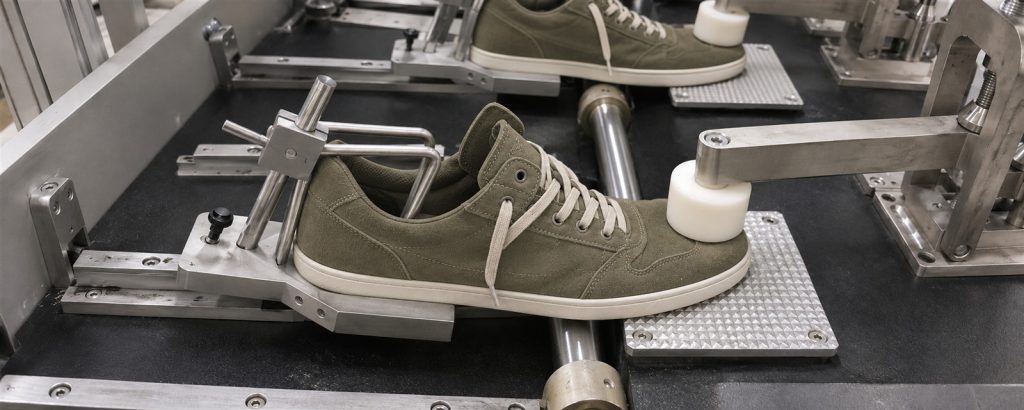
A flexing result can look straightforward: a shoe completed a stated number of cycles, and the report describes its condition afterward. But the cycle count alone does not tell you enough to compare samples or approve a design. SATRA TM92 assesses the resistance of completed footwear to repeated flexing. Understanding its scope, test conditions, and damage observations helps you decide what the result supports—and what still needs checking.
What Does SATRA TM92 Test?
SATRA TM92 evaluates a finished shoe as an assembled product. This matters when you are reviewing a sample: the result belongs to the footwear tested, with its particular materials and construction.
SATRA describes the method as applicable to most types of footwear. It specifically excludes assessing the flex-crack resistance of upper or soling materials. Those material properties require an appropriate assessment of their own.
Keep that distinction when discussing a result with your development team. A whole-shoe observation should not become a standalone rating for a rubber compound or upper material. Similarly, a material test does not, by itself, describe how the completed shoe performs under repeated flexing.
How Whole-Shoe Flexing Works
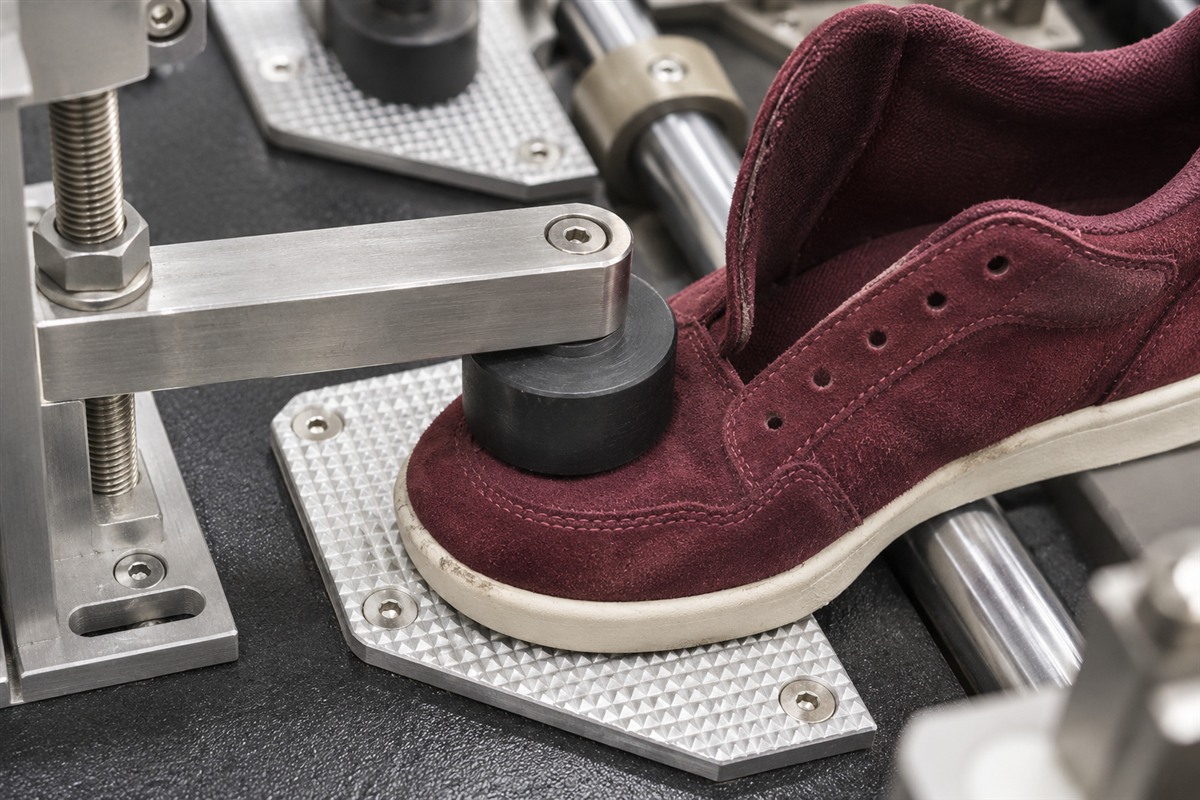
In the SATRA TM92 test method, a machine repeatedly bends the footwear through a specified angle around its natural flexing line. The sample is then examined for signs of damage after a predetermined time or number of flexes.
The public method summary explains that the flexing angle and the intervals between assessments depend on the type of footwear being tested. That makes the conditions part of the result, rather than incidental details.
Read the cycle count together with the flexing angle and inspection intervals specified for that sample.
How to Read a TM92 Test Result
Start with the sample identification, then read the conditions and observations before relying on a pass/fail label. The following table is a practical reading aid, not a list of mandatory SATRA TM92 report fields.
| Report information | What to check | What it cannot establish alone |
|---|---|---|
| Sample and revision | Which shoe, size, and development version were tested? | The behavior of a different construction or every production unit. |
| Flexing conditions and inspection points | What angle and cycle or time intervals were used? | That another report used comparable conditions. |
| Damage description and supporting images | What was observed, where, and at which inspection? | The single cause of the observed change. |
| Acceptance criteria | Which stated requirements support the verdict? | A universal pass threshold for every shoe. |
Separate three questions as you read: what happened to the sample, how that observation was judged, and what might have caused it. A visible change is an observation. Whether it meets the agreed requirements is a separate judgment. Explaining the cause may require further examination or testing.
If the description is unclear, ask the laboratory to clarify the location and inspection point and provide supporting images where available. Use the applicable assessment criteria when describing and evaluating the damage. SATRA’s public summary describes an assessment for signs of damage; it does not provide the complete test procedure.
There is also no basis in that summary for giving every shoe the same passing cycle count. Confirm the applicable method and project requirements with the laboratory. A number copied from another company’s specification is not automatically your acceptance threshold.
Using Results to Compare Shoe Samples
Before comparing two revisions, check whether they were tested under comparable conditions. Confirm the sample identities, method versions, test conditions, inspection points, and acceptance criteria.
Consider a simple development example: you change a shoe construction, then receive a second report produced with different flexing conditions. The two results may help guide discussion, but the difference cannot be attributed solely to your construction change. First ask the laboratory how the changed conditions affect interpretation.
Record what changed between samples and which question the next test is meant to answer. If several materials or construction details changed together, be cautious about crediting one of them for the result.
This approach keeps sample review focused. Instead of treating a higher cycle count as an automatic improvement, you can discuss whether the evidence addresses the development question and whether a more comparable assessment is needed. It also gives your team a clearer basis for deciding what to investigate next.
What TM92 Does Not Establish
Whole-shoe flexing answers a specific question. It does not establish every aspect of footwear performance.
SATRA TM77 assesses water penetration during flexing. Its public description places the footwear in a tray of water and examines it for signs of water entry. A TM92 damage assessment should therefore not be reported as a waterproofing result.
Upper-to-sole adhesion is another separate property. ISO 17708 describes testing resistance to separation at relevant parts of the footwear assembly, including the upper-to-outsole bond and adjacent outsole layers. Observing separation during flexing does not mean that a quantitative adhesion test has been performed. If bond strength is the question, discuss an appropriate adhesion assessment with the laboratory.
The same caution applies to wear-life claims. The public TM92 information reviewed for this article does not provide a conversion from flex cycles to months of use or walking mileage. Predicting service life is a separate reliability-analysis task. Keep the conclusion tied to the tested sample and its stated conditions. Do not extend it to comfort, all other performance properties, or every pair made with a similar design.
FAQ
Where can you obtain the official SATRA TM92 method?
Obtain the complete method through SATRA’s official test-method service. Its public listing states that the method is available to members and non-members. Check the current format and purchase terms directly with SATRA rather than relying on an unofficial PDF download.
Which SATRA TM92 version should you reference?
The official public listing reviewed for this article identifies the November 2016 version. SATRA’s January 2017 update notice confirms the revision from the 1992 edition. For a new test request or a historical report, confirm the applicable version with the laboratory and your project requirements.
Is the public method summary enough to run the test?
No. The summary explains the scope and principle, but it does not supply the complete procedure. Use the full applicable method with the laboratory’s confirmed requirements. This article and a machine supplier’s specifications cannot substitute for the information needed to conduct the test correctly.
Conclusion
Read a SATRA TM92 result as evidence about a particular shoe under particular flexing conditions. Before using it to approve or compare samples, check the sample revision, test conditions, observations, and acceptance requirements. When the question concerns water penetration, adhesion strength, or another property, identify the additional evidence needed. That gives your development team a practical next step without asking one flexing result to answer everything.