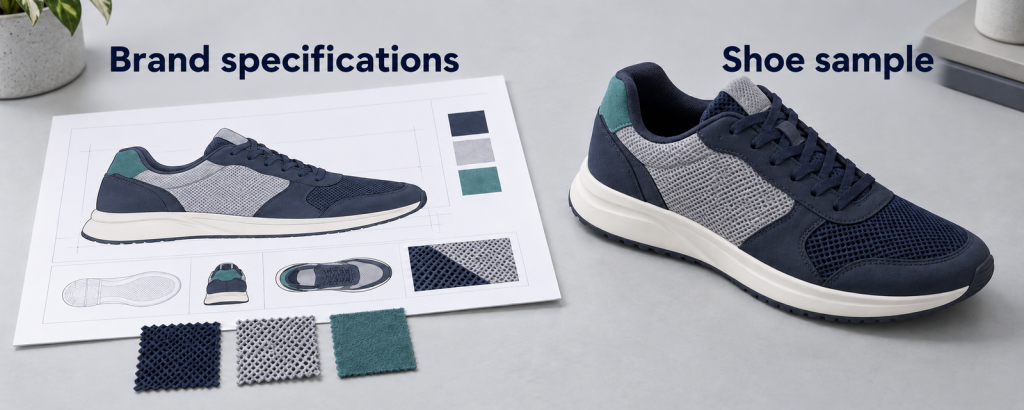
OEM stands for Original Equipment Manufacturer. In shoe manufacturing, it commonly describes an arrangement in which a manufacturer produces shoes for a brand using that brand’s design or specifications. It explains how production is organized. It does not, by itself, tell you whether a pair is authentic, how well it performs, or who owns every design file and mold involved.
What OEM Means in Shoe Manufacturing
In a typical OEM shoe project, your brand sets the product direction and provides the design or specifications that guide production. The manufacturer makes the shoes against the requirements you have confirmed together. The finished product carries your brand, even though a separate business handles manufacturing.
That division of work can include technical development support. A design drawing may show the silhouette and color placement while leaving material thickness, component details, or construction decisions unresolved. Agree on who will turn those details into usable production instructions, who will review them, and what development work the arrangement includes.
Design, development, and manufacturing may involve different teams. Calling a company an OEM supplier does not establish that it provides all three services. Ask what it will actually deliver and what your team must supply.
This arrangement lets a brand have its own footwear produced without owning every production facility. It still requires decisions, documentation, and approvals; the OEM label does not make those responsibilities disappear.
Are OEM Shoes Original or Fake?
Shoes made by an independent manufacturer can be authentic products of the brand that commissioned them. A brand does not need to manufacture every pair in its own facilities. NIKE, for example, describes its use of independent contract manufacturers in its official reporting. Contract manufacturing is compatible with producing a brand’s original products.
A retail listing that advertises “OEM shoes” or “OEM quality” raises a different question. Those words alone do not establish that a brand authorized the product, that the seller has an authorized source, or that the pair matches a genuine brand specification. A familiar brand name in a listing or website address is also insufficient evidence.
If you are checking a particular pair, establish its source and consult the brand’s own guidance. The manufacturing term cannot authenticate it for you.
Quality is a separate question again. An unsupported “OEM quality” claim gives you no defined material, construction, or performance requirement to check. Treat authenticity and product quality as separate questions, each requiring evidence relevant to the pair you are evaluating.
How an OEM Shoe Project Works
Consider a hypothetical mesh casual sneaker for your own brand. This example shows how decisions move through development; it is not a HEVA customer case.
- Define the brief. Describe the intended use, design direction, and available drawings or references. Identify which references show inspiration and which design information you are entitled to use. A third-party branded shoe is not permission to copy its design.
- Resolve the details. The development team translates the direction into agreed materials, components, sizing requirements, and branding details. Record open questions so the manufacturer does not have to guess what you intended.
- Review the sample. Your team checks the sample against the brief and specifications, then records the changes it approves or requests. Keep revisions identifiable so comments refer to the same version.
- Confirm the production basis. Align the approved sample, current specifications, and order requirements before production. Resolve any differences between them rather than leaving competing instructions in circulation.
The useful distinction is between a reference, a working proposal, and an approved production requirement. Each serves a different purpose. Your brand approves the product decisions, while the development and manufacturing teams carry out their agreed responsibilities.
OEM, ODM, and Private Label: How the Terms Relate
These terms answer related questions, but they do not form three mutually exclusive boxes. OEM and ODM commonly describe the design and development arrangement. Private label describes the brand under which the product is offered.
Term | What it helps describe | What you still need to agree |
OEM | Production starting from your brand’s design or specifications. | Technical development support, specifications, approvals, and production scope. |
ODM | Manufacturer-led design or joint development, potentially including new design work. | Design starting point, development responsibilities, and rights to use the results. |
Private label | A product supplied for sale under another company’s brand. | Branding details, design and production arrangements, and permitted use. |
An ODM project can involve creating a design around your requirements; it need not mean choosing an unchanged catalog style. Likewise, placing your private label on a shoe does not automatically make the design exclusive to you.
Usage varies between suppliers. When comparing proposals, describe the design you are starting with, the work you need, and the approvals and rights you expect. That gives you a clearer basis for comparison than the service name alone.
What Determines OEM Shoe Quality?
Quality depends on the actual shoe: its materials, components, construction, and how consistently production meets the agreed requirements. “OEM” does not specify any of those details. There is no useful universal quality ranking you can infer by putting OEM, UA, and “Class A” labels in order.
Start with requirements that can be checked. Identify the material and component specifications, the approved sample, and the inspections or tests appropriate to the intended product. Another brand’s relationship with the same manufacturer does not establish your shoe’s specifications or quality. Evidence should represent the materials and construction you will actually receive, rather than a different sample that happens to look similar.
Different checks answer different questions. Visual inspection can identify appearance and workmanship issues. Fit review addresses how the shoe fits and feels. Relevant performance testing examines properties that appearance alone cannot establish. A neat-looking upper does not prove durability, and a sample that feels comfortable does not answer every performance question.
Changes after approval need attention too. If a different mesh or sole component is proposed, review what the substitution affects. You may need to update specifications, review another sample, or repeat relevant testing. Let the impact of the change determine the review and any retesting. Not every adjustment requires the same full test program.
Clarify Brand, Design, and Tooling Rights
Having your logo on a shoe does not answer who owns the design files, who controls the molds, or whether another customer can use the same base. These are separate parts of the project, and they deserve separate questions before work begins.
- Existing designs and brand assets: Who supplies each item, and what permission covers its use? Identify your branding, any existing shoe design, and any manufacturer-provided elements separately.
- New development work: Who will own the resulting designs or technical files? Which files, formats, and versions will your team receive? Agree on the deliverables as well as the right to use them.
- Physical tooling: Who owns and holds the lasts or molds, and who may use them? What conditions apply to release, transfer, or handover? Paying a tooling charge does not, by itself, explain every right or practical handover condition.
- Exclusive use: Does the arrangement cover a particular style, market, use, or period? State the scope you need instead of assuming that custom branding creates exclusivity.
- End of cooperation: What happens to files, copies, brand assets, and tools? Clarify return or delivery arrangements and whether any agreed use can continue, rather than assuming everything transfers automatically.
Permission to use an asset, assignment of rights, confidentiality, and exclusivity serve different purposes. An NDA addresses confidentiality; it does not by itself settle all ownership and usage questions.
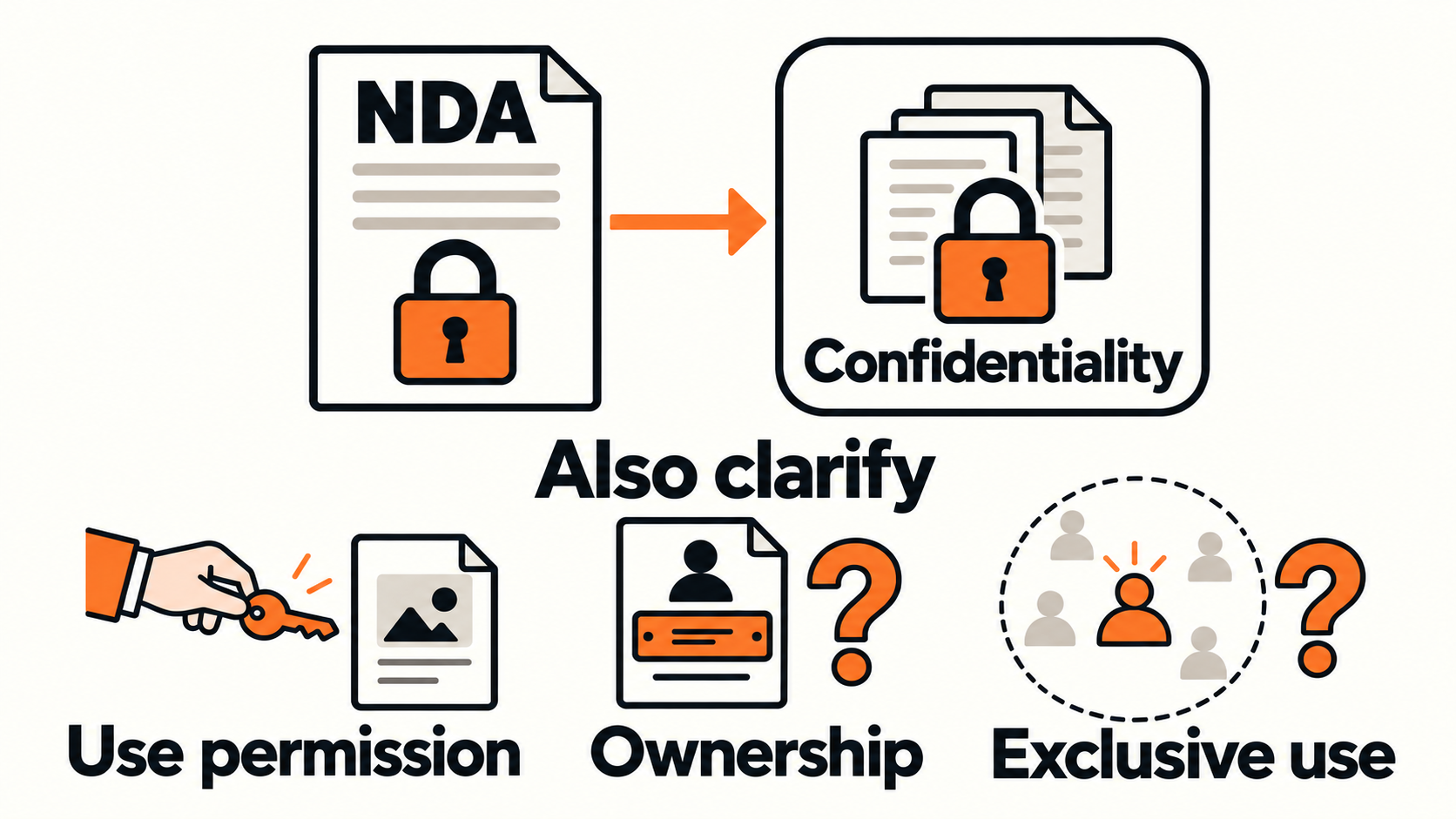
Use these questions to define what you need from the project. The answers depend on the arrangements you make, not the OEM label.
FAQ
Can You Start an OEM Shoe Project Without a Complete Tech Pack?
Yes, you can begin an initial HEVA project discussion with drawings, references, intended use, and a list of unresolved decisions. That conversation helps identify what information is available and what development support is needed. Before moving ahead, agree on who will complete the specifications, what that work includes, and its terms. Starting a discussion is different from being ready for production. Your team and the people handling development still need to establish a clear, approved basis for making the shoes.
Does OEM Shoe Manufacturing Always Require New Molds?
No. The OEM name does not determine whether new tooling is needed. Review the proposed design against available sole units, lasts, size ranges, and construction requirements. An existing option may be usable, but its availability and permitted use need confirmation, and it must work with the upper and construction. If the required shape or fit cannot be achieved with suitable existing tooling, assess what new tools are necessary. Existing components are not automatically interchangeable across different shoe projects.
Conclusion
OEM shoe manufacturing makes more sense when you look beyond the label: where the design comes from, who develops and makes it, what gets approved, and what rights each party has. Those details tell you more about how the project will work than a broad claim about authenticity or quality. To discuss an OEM or ODM project with HEVA, bring your product direction, available design information, and open questions. That gives the discussion a practical starting point for defining the next development steps.