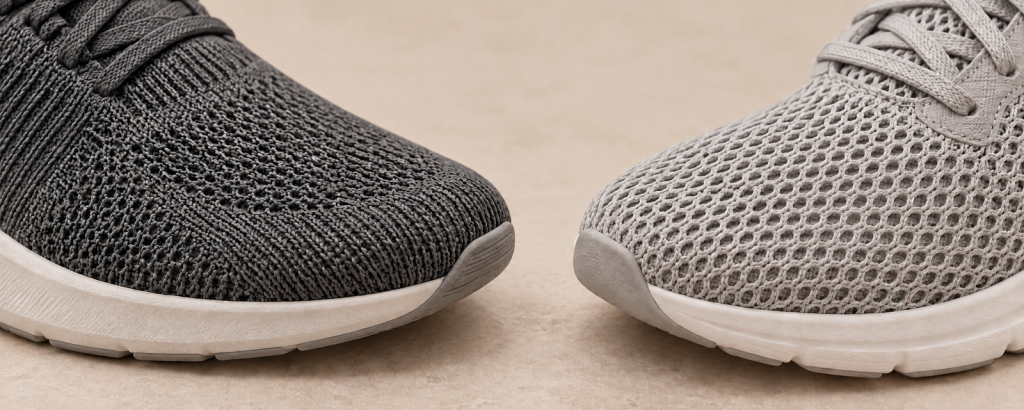
For a soft upper that follows the shape of your foot, start by comparing flexible knit options. If ventilation is your first priority, look at open mesh designs and their linings. When comparing knit and mesh shoes, these are useful starting points; the yarns, layers, reinforcement, and fit of the actual shoe determine the result.
This guide compares the uppers: the parts above the sole that cover and hold your foot. It explains what to look for in each option and how to bring that comparison into development and sampling.
What Knit and Mesh Mean in Shoe Uppers
Knit describes a fabric made from interlocking yarn loops. Changing the yarns and stitch structure can create softer, firmer, more open, or more closely packed areas within an upper.
Mesh describes an open structure with visible spaces between the yarns. Mesh can itself be knitted, so the two terms overlap. Engineered mesh uses deliberate changes in structure across the material, such as more open areas for ventilation and denser areas where a design needs more hold.
In a shoe discussion, “knit” often points to a close-fitting knitted upper, while “mesh” points to a more visibly open textile upper. Ask which specific construction is being proposed. Polyester and nylon identify fibers; they do not tell you whether the fabric is knit or mesh, or how the finished upper will perform.
Knit vs Mesh Uppers at a Glance
Use this comparison to shortlist designs. The columns describe options you may encounter, and some features can appear in both. The last column identifies what makes the comparison useful.
| Factor | Knit options | Mesh options | What to check |
|---|---|---|---|
| Airflow | Open or dense stitch zones | Open mesh with different backing layers | All planned upper layers |
| Fit and stretch | Soft, close-fitting designs | Firmer or flexible panel designs | Stretch direction and recovery |
| Foot hold | Engineered zones or added reinforcement | Panel shape, overlays, and lacing | Heel and midfoot movement |
| Wear risks | Exposed yarns and reinforced areas | Mesh panels, seams, and overlays | Abrasion, snagging, and tearing |
| Wet conditions | Yarns, layers, and surface finishes | Openings, lining, and water protection | Evidence for the required conditions |
| Development cost | Shaped knitting or cut-and-sew routes | Fabric preparation, assembly, and finishing | Complete upper cost at your quantity |
| Weight | Finished upper with the specified construction | Finished upper with the specified construction | Compare the same size and included components. Record fabric mass per area and finished-shoe weight separately. |
Breathability, Fit, and Support
Breathability: Check All the Layers
A large opening in the outer fabric tells you only part of the story. The lining, backing, and any bonded layers also belong in the comparison. Ask to see the proposed combination, especially where foam or reinforcement covers the visible openings.
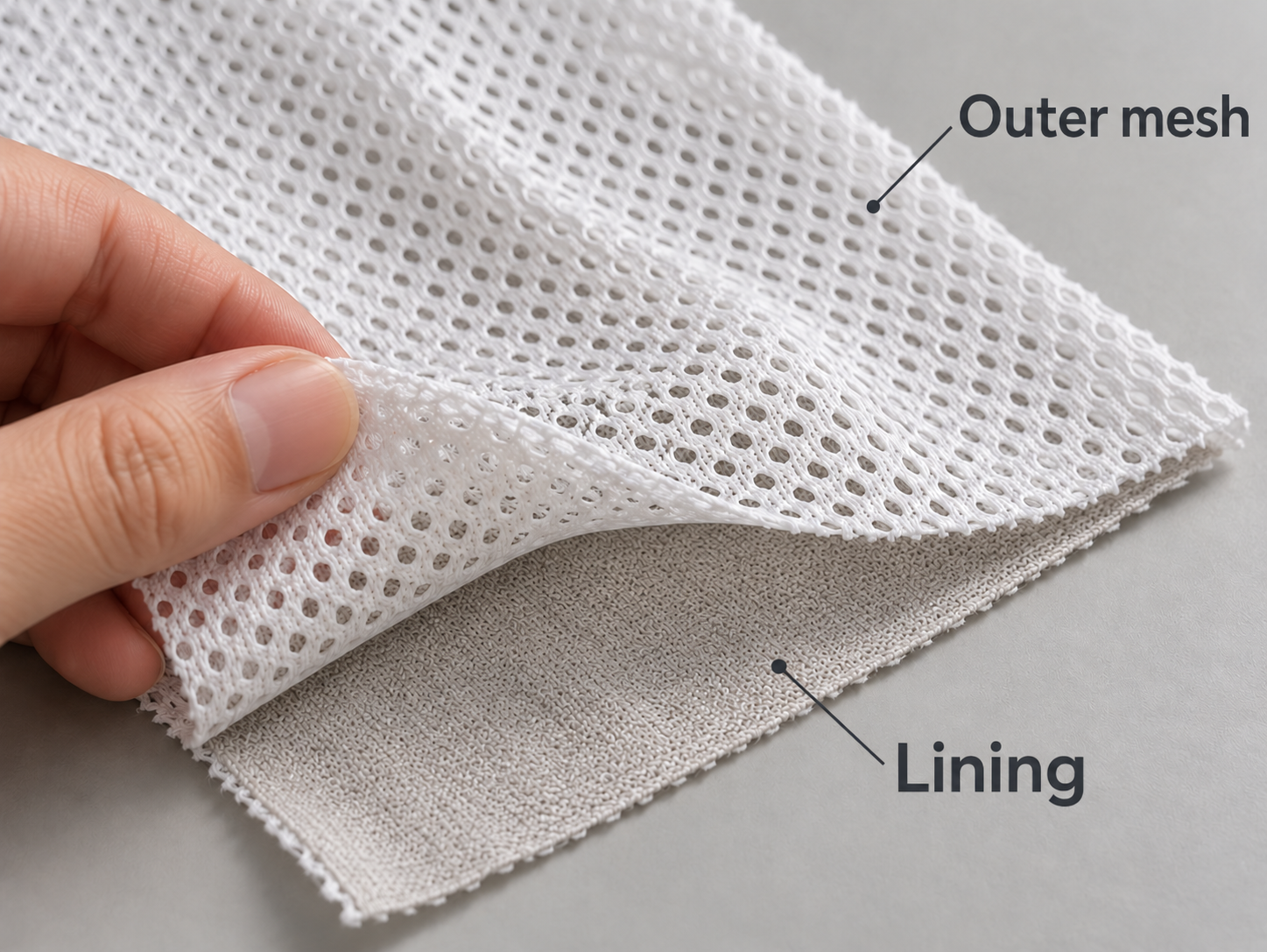
Breathability can also mean different things in a test report. Air permeability measures air passing through a material. Water vapor permeability concerns moisture moving through it as vapor. Check what was tested and under which conditions before comparing results. A result for an unlined fabric describes that fabric, while a result for a layered assembly describes that combination.
Fit: Compare Stretch and Recovery
A flexible knit can feel accommodating across the forefoot. That makes it worth considering when you want a soft, close fit, but you still need to decide where movement is welcome and where the upper should resist it.
Stretch and recovery deserve separate attention. Notice how far the material gives, in which direction, and how it returns after the force is removed. Then check it in the assembled shoe. Backing, seams, and reinforcement can change how a fabric moves. Pulling a swatch by hand helps you compare initial feel; it does not establish how the shoe will retain its shape through use.
Support: Check Where the Upper Holds Your Foot
A soft upper can include firmer sections around the midfoot or lacing. Knitting can create different zones, while panel shapes and added reinforcement offer other ways to control movement. Mesh designs can also combine open areas with more structured sections.
During fitting, look for the heel staying seated and the midfoot being held comfortably as you move. Check whether tightening the laces improves the hold or simply creates pressure. A material that feels pleasant across the toes still needs to work with the collar, fastening, and overall shoe shape.
Durability and Wet-Weather Trade-Offs
Wear Risks to Check
To compare durability, start with the wear the upper is likely to face. Repeated rubbing, catching a yarn on a rough object, and tearing near a stressed edge are different problems. A good abrasion result cannot answer all three.
Review exposed yarns, the toe area, panel joins, and reinforcement edges. Ask which checks suit those risks and whether the results cover the material you plan to use. For example, an assessment of the outer fabric alone leaves questions about the seams and added components in the completed upper.
Rain, Moisture, and Drying
Separate the ability to transmit water vapor from the ability to keep liquid water out. A breathable upper may admit rain through openings or other parts of the construction. A water-repellent finish on a textile also leaves the seams, edges, and upper-to-sole connection to consider.
If wet-weather protection is part of your brief, define what you expect and review evidence for the finished shoe. Material tests help you choose components; a whole-shoe assessment also considers how they are joined.
Drying is another question. Compare the actual yarns, layers, finishes, and test conditions before calling one option faster drying. A result from a particular shoe or fabric cannot establish that every mesh upper dries faster than every knit upper.
How to Choose for Your Shoe’s Intended Use
Start with how the shoe will be worn, then choose the two or three qualities that matter most. This keeps you from selecting an attractive swatch and discovering later that it works against the fit or use you wanted.
For everyday wear and walking, compare pressure across the forefoot, flexibility as the shoe bends, and how the upper looks during wear. A soft knit and a flexible mesh may both be candidates. Look at the finished collar and lining as well as the visible outer material.
If you are comparing knit and mesh running shoes, consider ventilation alongside how securely the upper holds your foot during repeated movement. Review seams or reinforcement where you feel rubbing, and check whether the laces give you a comfortable hold. After the initial fitting, assess the shoe for its intended running use.
For training that includes turns or changes of direction, make the need for foot hold explicit in the brief. Identify where you want flexibility and where you want less movement within the shoe. Evaluate the proposed upper in that context, together with the rest of the shoe.
What to Confirm During Development
Compare the Complete Upper Cost
The manufacturing route affects what you need to discuss. A knitted upper may be knitted close to its final shape, or made from knitted fabric that is cut and sewn. Shaping, reinforcement, and finishing can still be part of the work. A mesh upper may likewise involve different layers, panels, and assembly steps.
Ask for a comparison that identifies the complete upper specification. Depending on the project, useful items to clarify include material consumption, design or knitting-program changes, cutting and stitching, backing or lamination, reinforcement, and finishing. Establish which operations and development charges apply, and compare quotations at the same planned quantity.
This gives you a firmer basis than comparing fabric prices alone. It also helps you see whether changing a panel, yarn, or construction detail changes the quotation. Keep those assumptions attached to the quote so you can tell what has changed when you review a revised option.
Review Both Options in a Shoe Sample
Where practical, compare the alternatives using the same last (the form used to shape the shoe), size, and sole construction. Wear the same socks and repeat the movements relevant to the shoe. Record differences in forefoot pressure, heel movement, midfoot hold, and how the upper bends. If other components differ, note them so the feedback remains useful.
Check appearance while the shoe is being worn, too. Stretching can change how openings and patterns look. Compare panel alignment, reinforcement edges, and the chosen color in the assembled upper.
Use this fitting feedback to refine the design, then agree on any material or performance assessments the intended use requires. A sample review and a laboratory result provide different kinds of evidence; keep both tied to the specification you are approving.
FAQ
Are Flyknit and knit the same thing?
Flyknit is Nike’s name for its engineered knitting technology. Knit is the broader description for fabrics made from yarn loops. A knitted upper from another source should be described by its own yarns, structure, and construction. If you use a branded shoe as a reference, explain the fit or visual detail you want to explore.
Can you machine-wash knit or mesh shoes?
Check the care instructions for the specific shoe. The knit or mesh label alone does not establish whether machine washing is suitable for the assembled pair. Nike recommends hand washing its Flyknit and mesh shoes, while instructions from other brands can differ by model. Follow the stated cleaning and drying method, including any limits on heat or cleaning products.
Conclusion
Choose an upper by the fit, ventilation, hold, and appearance your shoe needs. Compare specific knit and mesh constructions, then check how the selected materials work together in a sample. Make sure the specification matches the sample you approve.
For a project discussion with HEVA, bring your intended use, style references, and the upper options you want to compare. Those details give the development conversation a clear starting point.