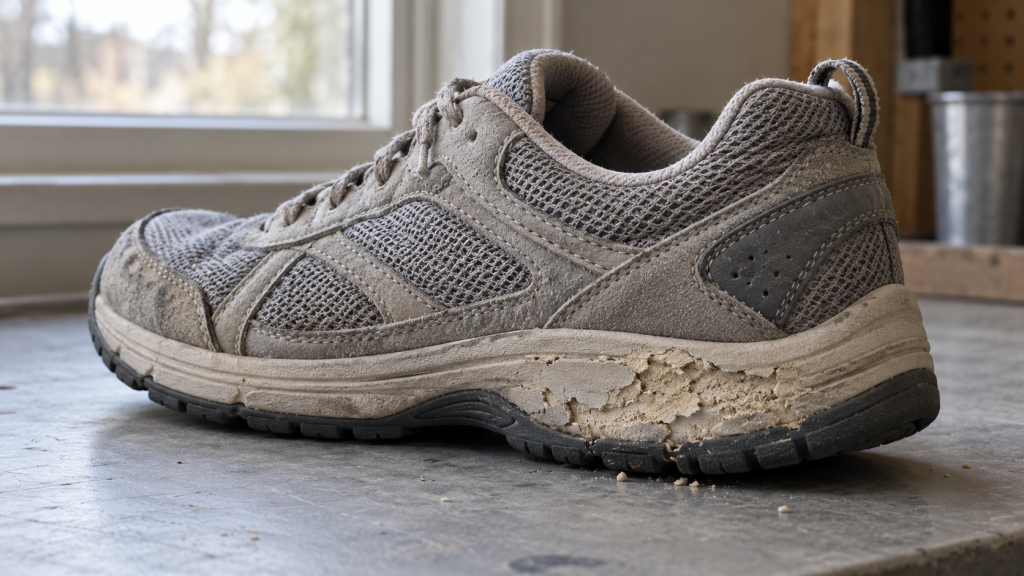
You take a pair of shoes out of storage. The uppers still look good, and the tread shows little wear—but pieces of the sole start coming away. Hydrolysis can explain this kind of failure in some polyurethane components, even when the shoes have barely been worn.
Before you reach for glue, look at which part is breaking down. Understanding the material, the damage, and the limits of repair will help you decide what to do next.
What Is Hydrolysis in Shoes?
Hydrolysis is a chemical reaction involving water that can break down susceptible materials. In shoes, it can affect polyurethane (PU) sole components, gradually reducing their strength until they crack or crumble. Moisture in the air can contribute; the shoes do not have to be soaked.
The damaged part may be a midsole—the cushioning layer between your foot and the ground-contacting outsole. A rubber outsole can still look intact while the PU component above it breaks apart. Looking only at the tread can therefore miss the problem.
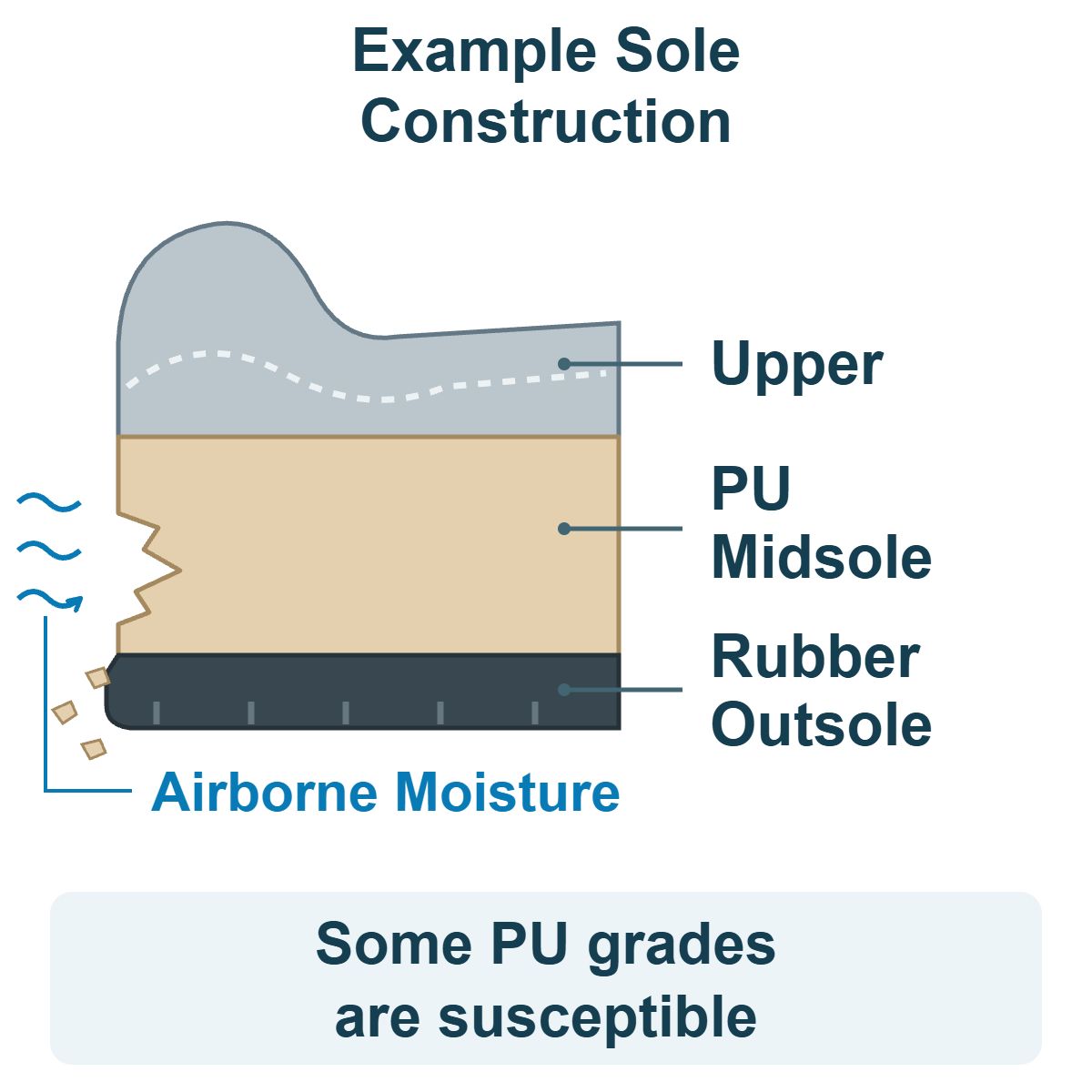
PU is a broad material family. Its resistance to hydrolysis depends on its chemistry and formulation. For example, BASF’s guidance on its thermoplastic polyurethane (TPU) materials distinguishes polyester-based and more hydrolysis-resistant polyether-based grades, while also describing the role of stabilization. Those differences are a reason to check the specific material; they do not establish a lifespan for every PU foam sole.
Other sole materials can also deteriorate, but you should not label every crack, worn patch, or detached sole as hydrolysis.
Why Can Soles Crumble Even When Shoes Are Rarely Worn?
Time in Storage Still Counts
Wear marks tell you about contact with the ground. They reveal much less about how long a material has been exposed to its surroundings. A pair kept for occasional use can accumulate years of storage without much visible tread wear.
The relevant history also starts before purchase. SATRA’s discussion of PU sole failures includes the time after molding, through transport, warehousing, retail storage, and use. Buying shoes recently does not, by itself, establish that their sole components were recently made.
Moisture, temperature, formulation, and exposure time all matter. Warm, humid conditions can accelerate deterioration in susceptible grades, but there is no single expiration date you can apply to every shoe. An early failure needs investigation; the purchase date alone cannot establish the cause or who is responsible.
What Regular Wear Can—and Cannot—Tell You
Some footwear brands recommend regular use as part of their care advice. Follow the guidance for your particular shoes, but do not treat a wearing schedule as a guarantee against hydrolysis.
Going for a walk does not verify the remaining strength of an aging midsole. Likewise, low mileage does not prove that it is sound. Check shoes after storage, and have visible deterioration assessed rather than trying to wear through it.
Is It Hydrolysis, Sole Separation, or Ordinary Wear?
Start with the location of the damage. Is material breaking into pieces, are two layers separating, or is the surface wearing down? These observations give you a useful description, although they cannot identify the chemistry on their own.
| What You Notice | What It May Suggest | What It Does Not Prove |
|---|---|---|
| Foam crumbles or sheds pieces | The material is losing its integrity. | That hydrolysis is the confirmed cause. |
| A gap opens between layers | The bond and adjacent materials need examination. | That only the glue has failed, or that hydrolysis is responsible. |
| The tread is worn smooth | Wear at the ground-contacting surface. | That the midsole and other internal components are still sound. |
More than one problem can occur together. A sole may separate because the material supporting the bond has deteriorated, while a different shoe may have an adhesion problem without crumbling foam. Heat can also affect sole bonds.
For that reason, a photo or a quick squeeze is not a reliable pass-or-fail test. Describe what you can see and let the manufacturer or a qualified repairer assess uncertain damage. Do not pull layers apart or gouge the sole to imitate a laboratory test.
What Can You Do Once the Sole Starts Crumbling?
If the sole is visibly breaking apart or separating, stop relying on it for normal wear and arrange an assessment. A sound-looking upper does not compensate for a sole that is losing its structure.
The repair question depends on what has failed. If the surrounding materials remain sound, a repairer may be able to address a bonding problem. But when the material itself is powdery or crumbling, gluing the pieces together does not restore its original strength. Drying the shoe cannot reverse the chemical damage described for susceptible polyester-based PU either.
Resoling may be an option for a suitable shoe. It involves replacing affected sole components, rather than trying to preserve degraded foam. The repairer needs to consider the construction, the condition of the remaining shoe, and whether appropriate replacement parts are available. Some models have manufacturer-supported resoling services; that does not make every sneaker repairable.
Ask which affected components would be replaced, including the midsole if it has deteriorated, and whether the rest of the shoe can support the repair. If a suitable repair is unavailable, replacement may be the practical choice.
How Can You Reduce the Risk During Storage and Use?
Care gives you some control over the conditions your shoes experience. It cannot erase their material history or guarantee a particular number of extra years.
- Clean and dry shoes according to their care instructions before storing them. Allow damp footwear to air out after use.
- Choose a cool, dry, ventilated storage area. Avoid leaving shoes damp in a closed container for an extended period.
- Keep drying gentle. Do not use a radiator, an oven, or a hot car as a shortcut.
- Check after storage. Look around the sole edges and exposed midsole for cracks, loose pieces, or gaps between layers. If something has changed, seek advice before returning the shoes to use.
These habits help you care for your shoes and spot visible changes. Even if everything looks intact, hidden components may still have deteriorated.
Be cautious with advice promising to stop hydrolysis completely through a particular wearing interval, a sealed bag, or a desiccant packet. Without evidence for your material and storage conditions, none is a sound basis for a lifespan guarantee.
What Should You Discuss When Developing a Shoe?
When specifying a new shoe, turn a broad request for “hydrolysis resistance” into questions that a material supplier, factory, and testing team can answer:
- Which component and material are being specified? Identify the layer, formulation or grade, and relevant supplier information.
- What conditions should the shoe accommodate? Discuss expected transport, inventory time, storage, and use.
- Does the evidence match the proposed material or sample? A report for a different grade or component may not answer your question.
- What do the results show after aging compared with untreated reference samples? Confirm the test method and version, exposure conditions, duration, performance checks, and acceptance requirements.
SATRA TM344 describes warm, humid aging followed by mechanical testing against untreated reference specimens. Relevant checks can include flex cracking, tensile strength, tear strength, and abrasion resistance. A sole bond is a separate concern, assessed with appropriate adhesion methods.
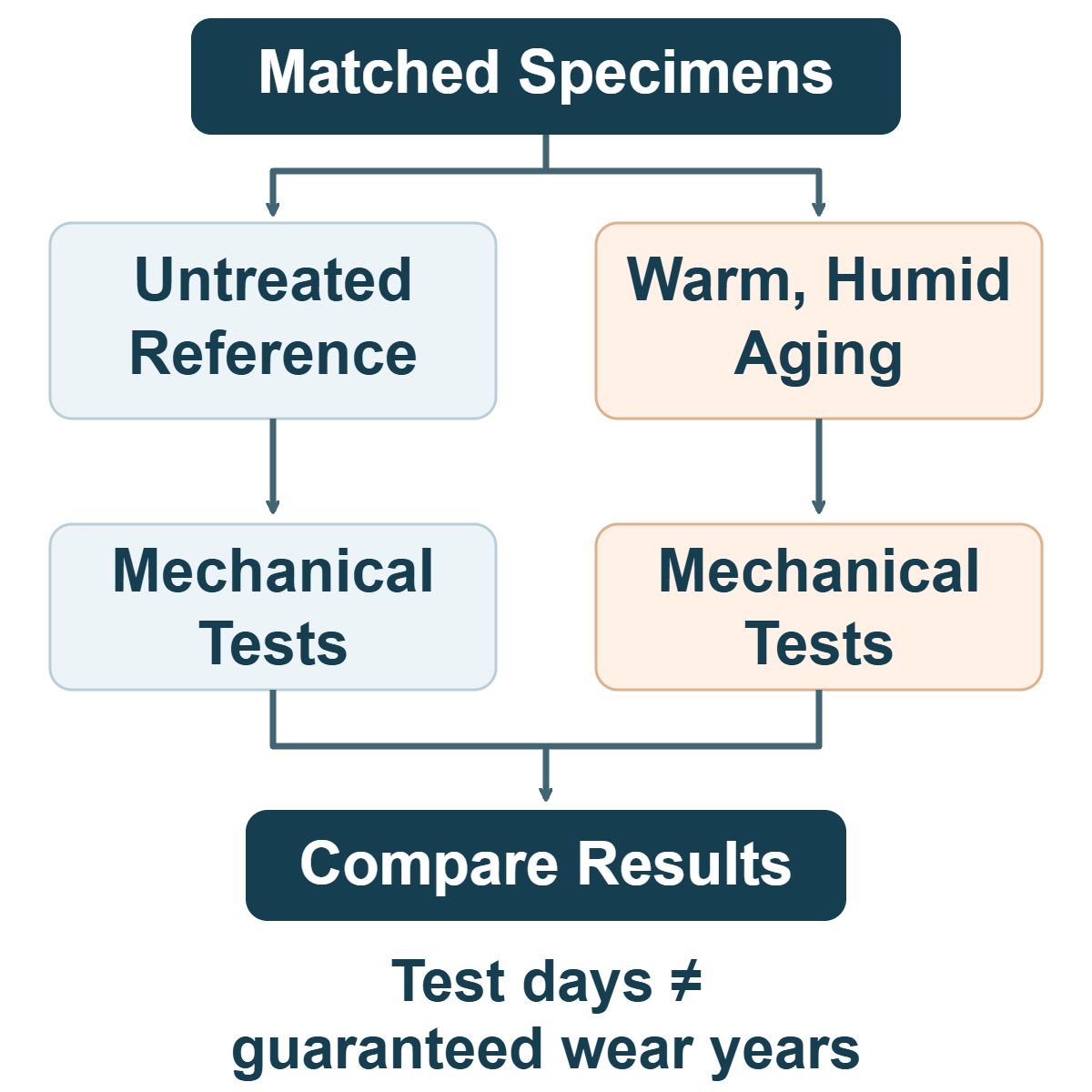
A statement that a sample survived a certain number of days needs those details to be meaningful. With a prediction model supported by relevant evidence, accelerated aging results may help estimate shelf life. Test days alone, however, do not translate into guaranteed years of wear.
Agree on the requirements for your actual construction instead of relying on a material name or a general durability claim.
FAQ
Is “dry rot” the same as hydrolysis?
The description “dry rot” does not establish which shoe material failed or why. Hydrolysis names a specific chemical process involving water. When asking about damage, describe the affected layer and what it is doing—crumbling, cracking, or separating—rather than relying on the label. The appearance alone may not identify the cause.
Can hydrolysis affect PU-coated uppers too?
Yes. Susceptible PU coatings on upper materials can also be affected; SATRA TM344 covers PU-based upper materials as well as sole materials. Peeling alone, however, does not confirm hydrolysis. The coating, its adhesion, and other possible causes need consideration. This article focuses on soles. For upper care, follow the guidance for your specific material.
What information should you provide when asking about a crumbling sole?
Include the brand and model or a clear label photo, pictures of the whole shoe and damaged area, and a short account of when you bought it, how it was stored, and when the problem appeared. Say when details are unknown. These details give the manufacturer or repairer a clearer starting point, though photos may not be enough to identify the cause or determine whether repair is possible.
Conclusion
A crumbling sole calls for a closer look at the affected component and the shoe’s history. Good storage and regular checks can help you manage conditions and spot damage, but they cannot restore material that has already degraded. Seek an assessment before relying on a failing sole. If you are developing a sneaker, discuss your sole materials, expected conditions, and validation requirements with HEVA Sport as part of your OEM/ODM project.