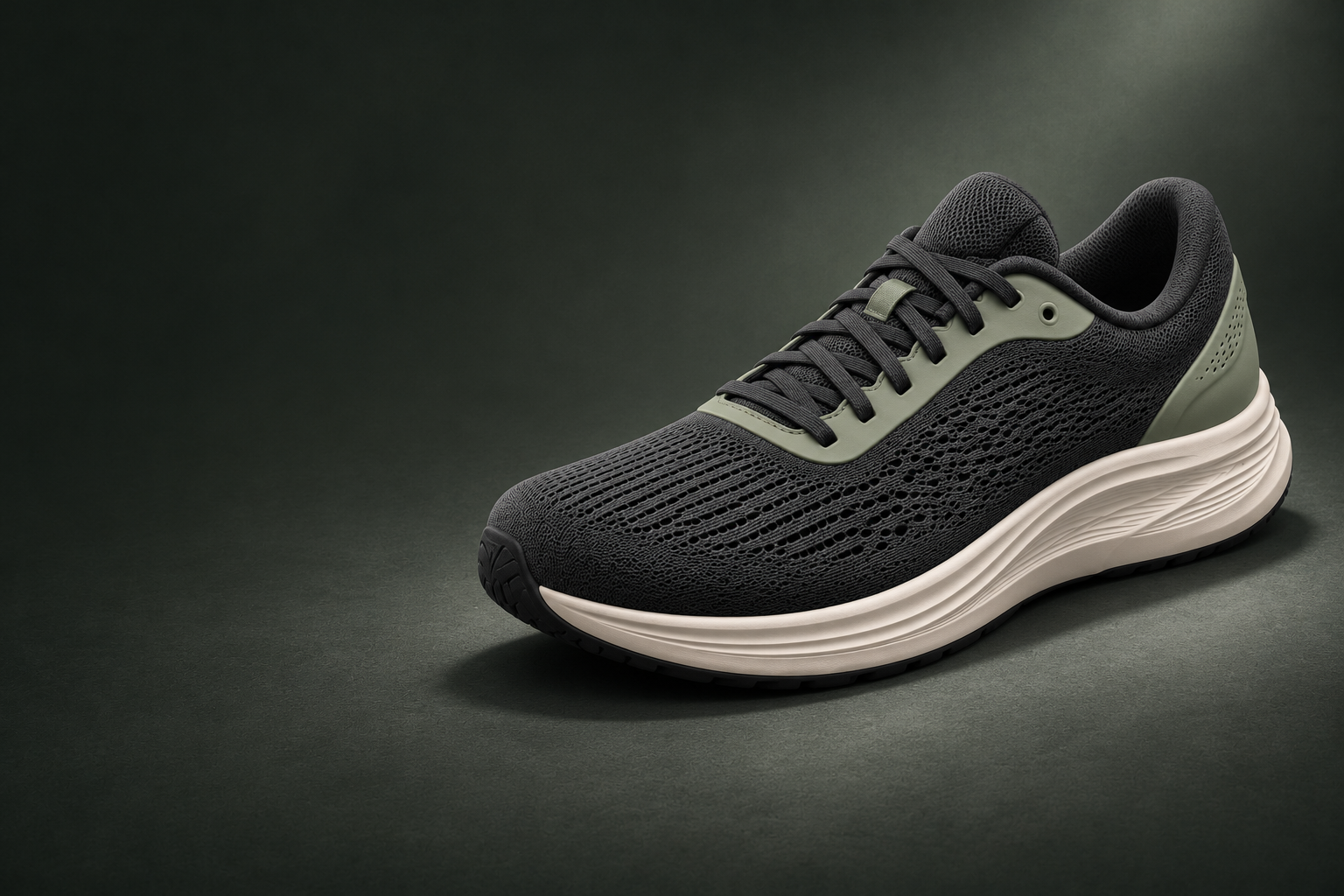
OEM / ODM RUNNING SHOE DEVELOPMENT
Wide Toe Box
Running Shoes
Manufacturer
Develop your collection around a roomy toe shape, with mesh or knit uppers and a choice of sole profiles.
Choose a design direction below, then refine the fit, construction, and branding with HEVA.
Explore Wide Toe Box
Running Shoe Designs
Compare three design directions: panelled mesh, a fuller sole profile, or a simpler knit silhouette.
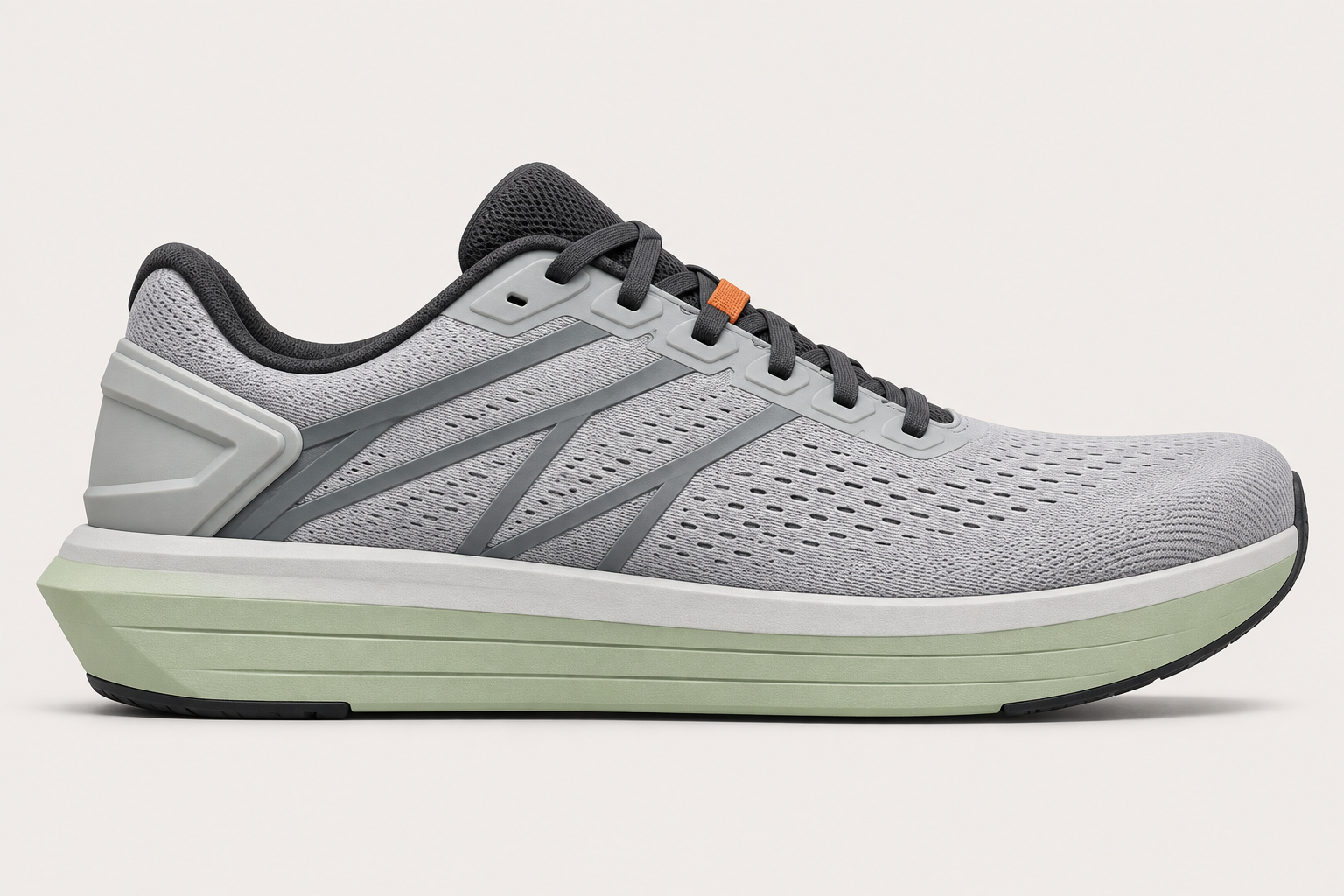
Daily Road-Running Design
Panelled mesh · Structured heel · Straighter sole profile
A panelled mesh design with visible side overlays, a defined heel counter, and a straighter sole profile. A starting point for a traditional daily road-running collection.
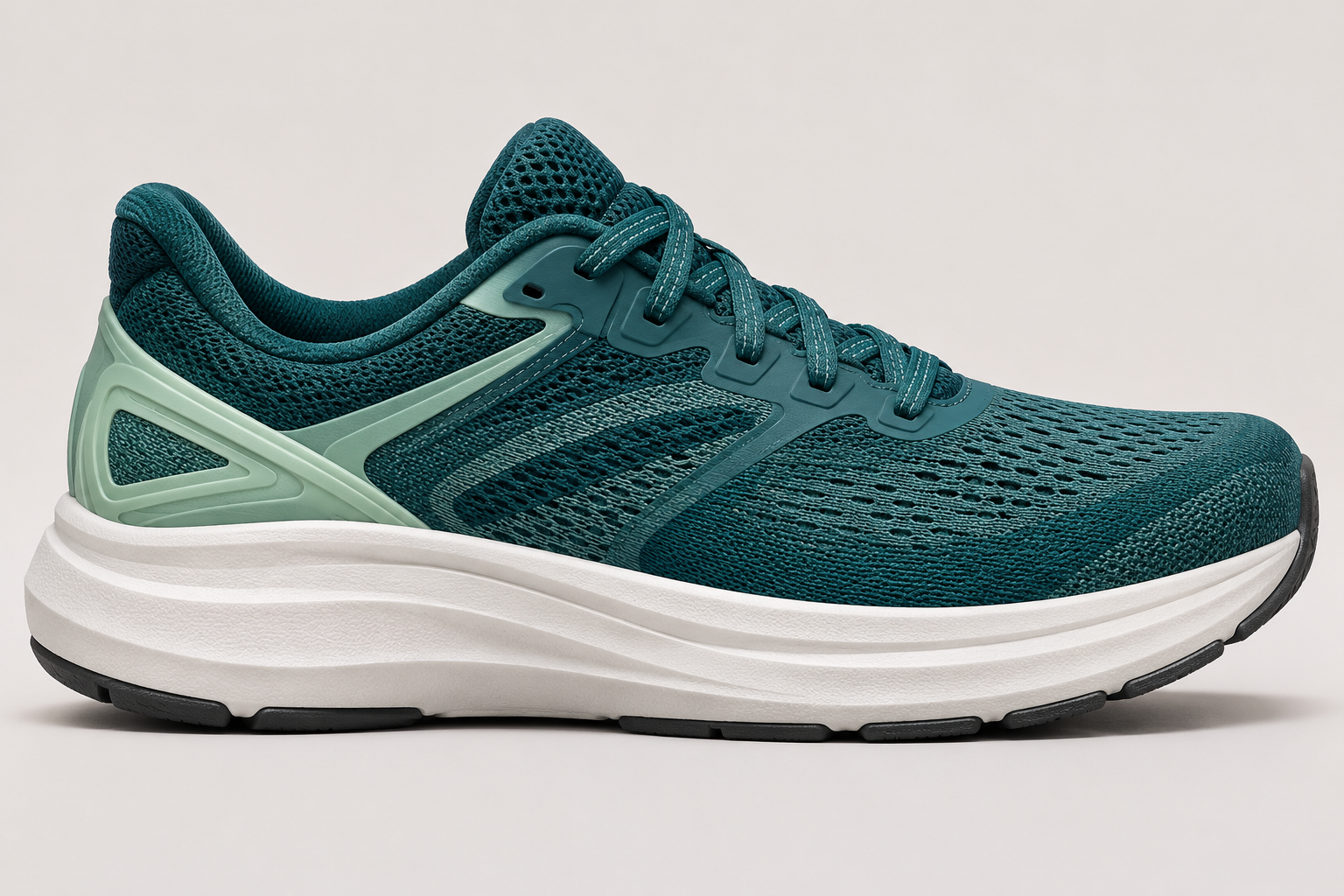
Cushioned Mesh Road Design
Open mesh · Fuller sole · External heel frame
A fuller midsole silhouette with a curved forefoot, open mesh panels, and an external heel frame. Choose this direction for a more substantial road-running design.
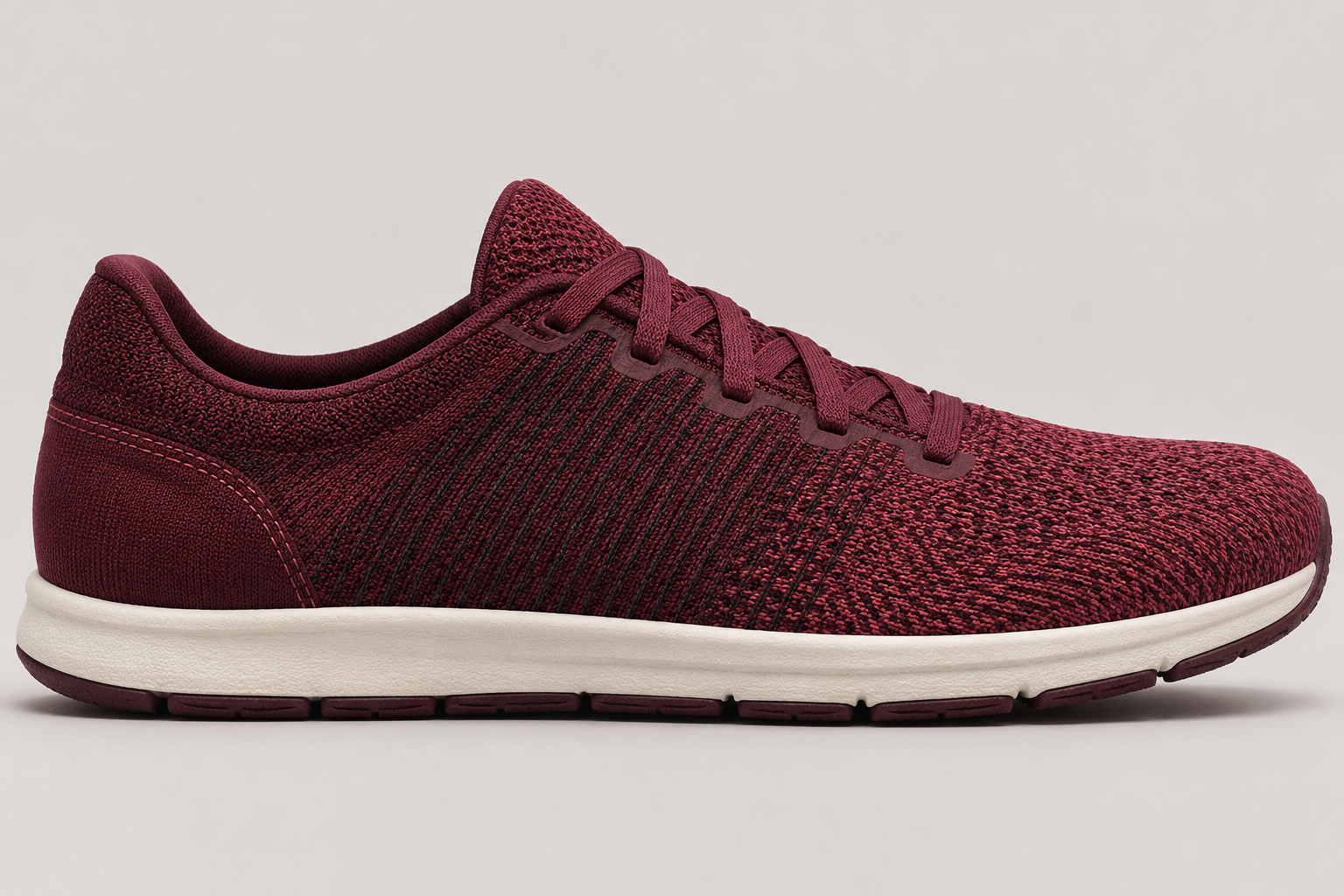
Lower-Profile Knit Design
Knit upper · Fewer overlays · Slimmer sole
A knit upper with fewer external overlays and a slimmer sole profile. Choose this direction for a simpler silhouette with less visible bulk.
A Closer Look
at the Wide Toe Box
Three views of the forefoot show how the toe outline, upper profile, and sole shape work together.
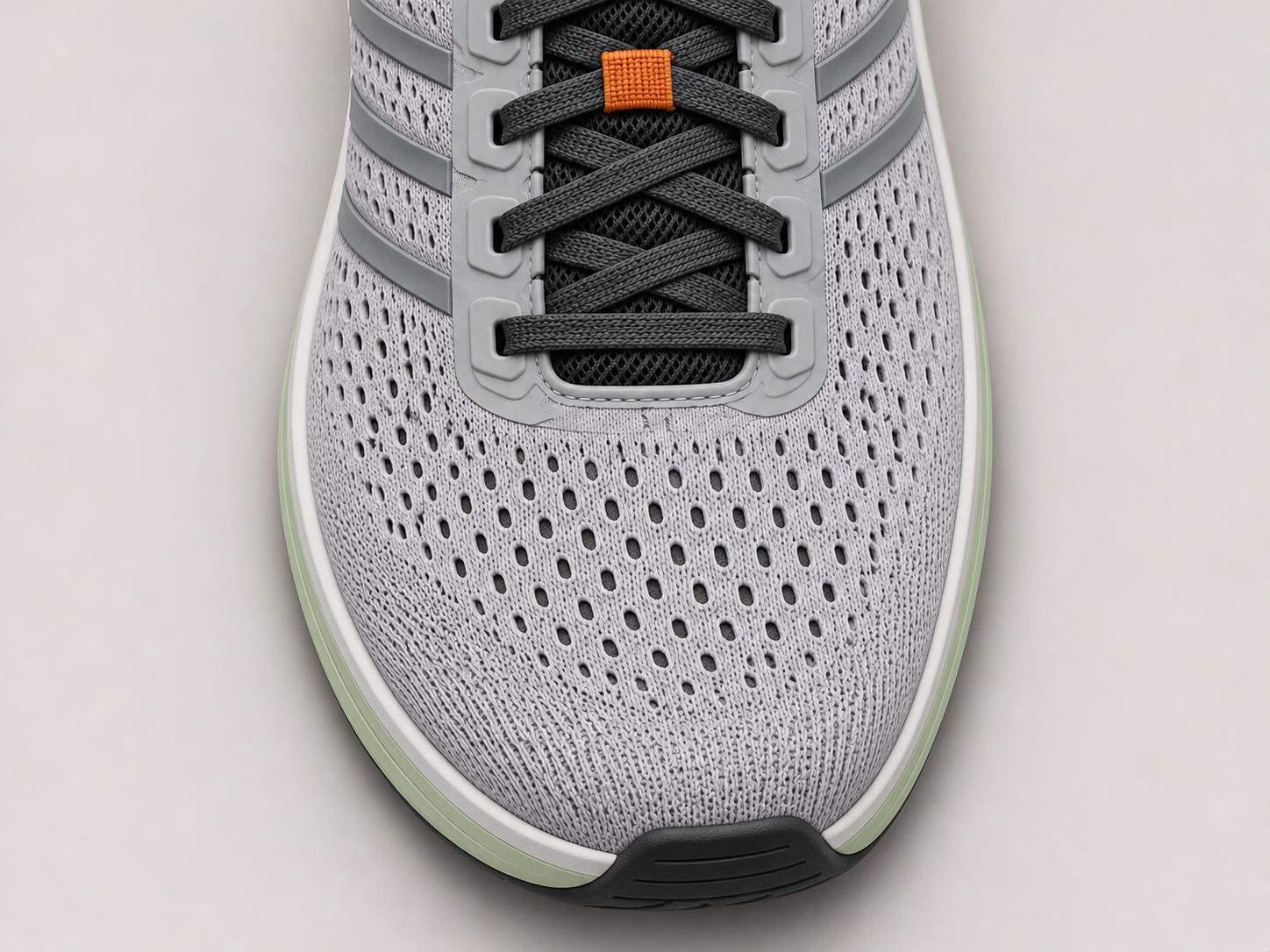
Room Beside the Toes
The rounded outline carries width forward toward the toes, with a less tapered big-toe side and a curved little-toe edge. The shape opens out ahead of the laces rather than widening the entire shoe.
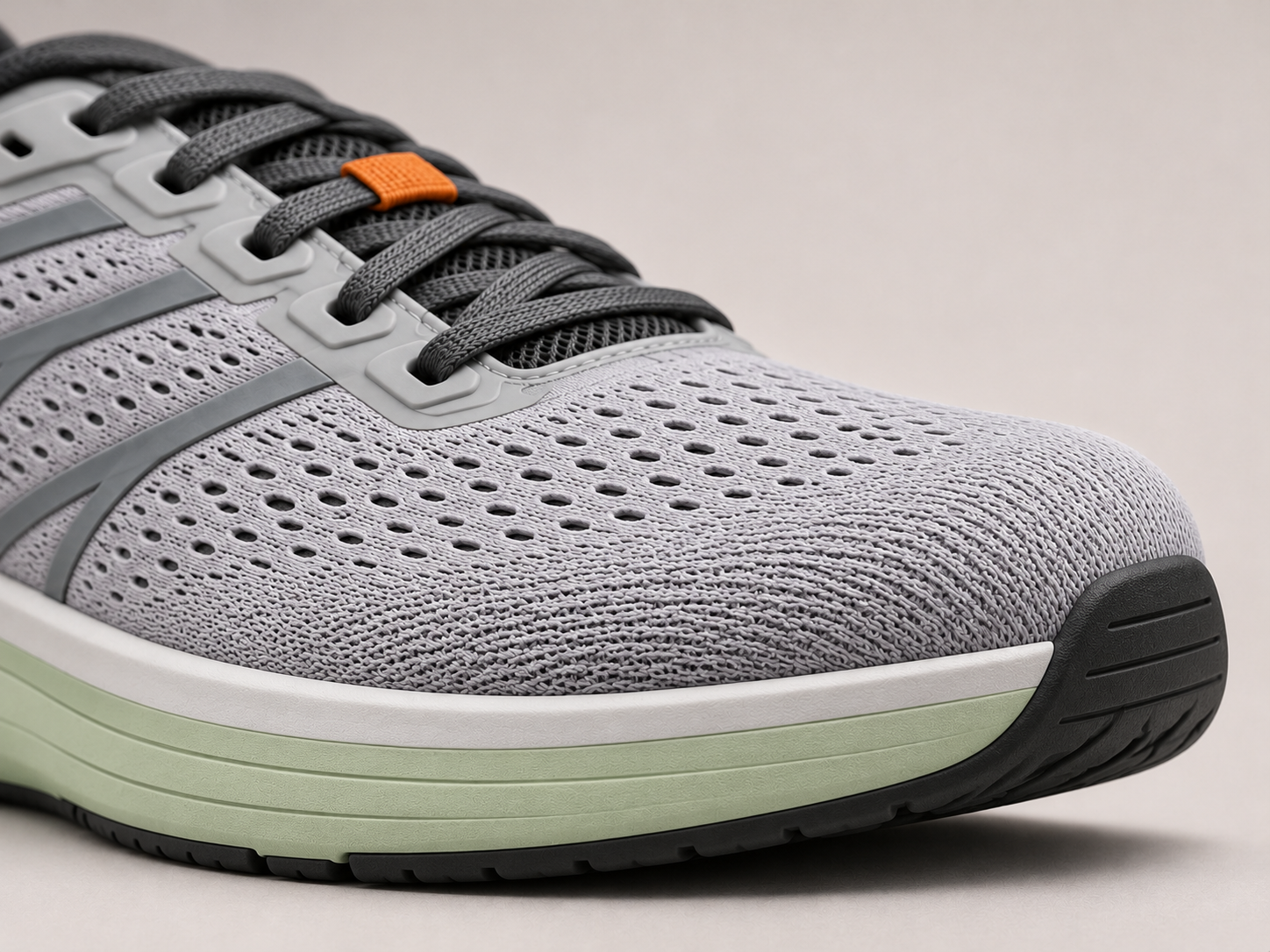
Space Above the Toes
A gently raised forefoot upper adds shape above the toes. Reinforcement stays mainly around the perimeter; the lining and chosen insole must be considered when confirming the space inside the finished sample.
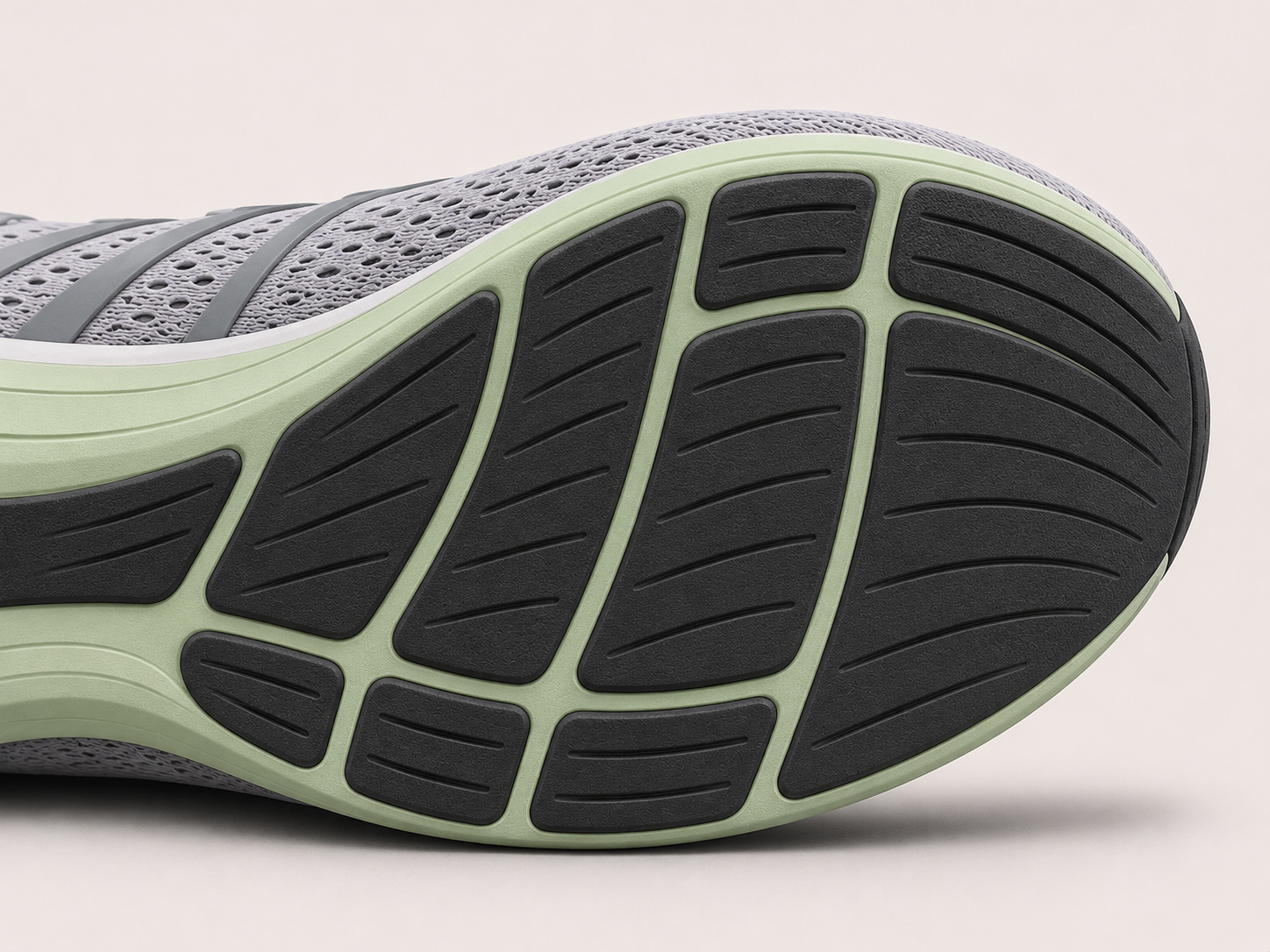
A Matching Forefoot Sole
The sole outline follows the broad forefoot instead of pairing a roomy upper with a narrow base. Rubber sections and flex channels complete the underside; cushioning and heel-to-toe drop are specified separately.
Make the Design
Your Own
Toe Shape & Fit
Define where you need more room: beside the toes, above them, or through more of the shoe.
Upper & Sole
Develop the mesh or knit, overlays, lining, and sole construction around the selected design.
Color & Branding
Develop colors, logos, and packaging around your collection.
Size Range
Plan fit review across your men’s, women’s, or unisex size range.
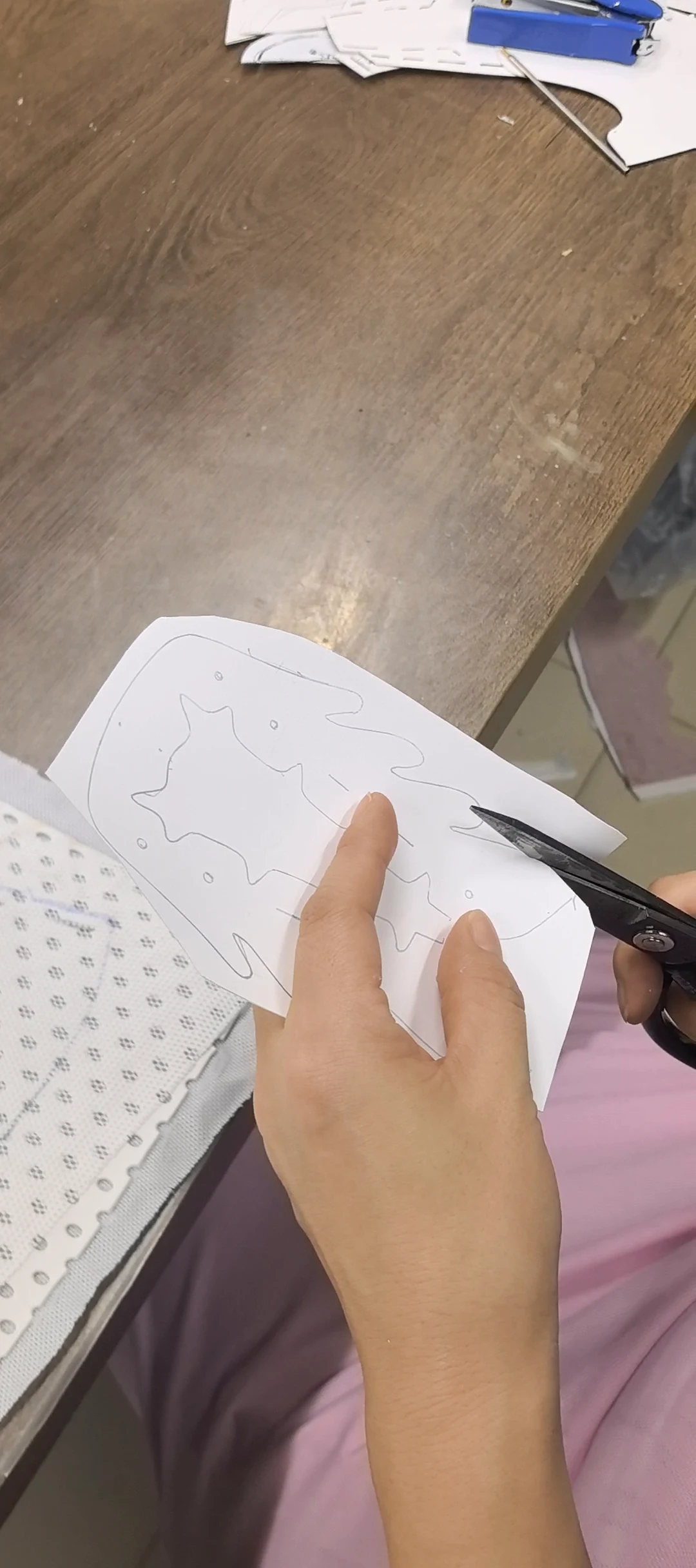
Check Toe Room.
Then Check the Whole Fit.
Review your wide toe box running shoe with the intended insole, socks, and lacing. A roomy outline is only the starting point: the finished upper and sole must work together on the foot.
Toe clearance in three directions
Check space in front of the longest toe, beside the big and little toes, and above the toes. Note where contact occurs: at the tip, under a toe overlay, or along an internal seam. Each location points to a different adjustment.
Hold without overtightening
After adjusting the laces, check heel lift and movement through the midfoot during walking and a short trial run. If holding the heel requires excessive lace tension, review the lace panels, collar, and heel shape as well as toe width.
Fit with the final components
Use the planned insole and lining when comparing samples. A thicker insole or additional padding changes the space inside the shoe. Record those components so a later revision is compared on the same basis.
Consistency across your size range
Record the sample size, foot length and forefoot width, socks, and exact pressure or movement points. Check representative sizes across the range; approval of one size does not establish the fit of every size.
Turn each finding into a specific change—more toe height, a different toe outline, a revised seam, or a closer heel fit—rather than a general request to make the whole shoe wider.
Wide Toe Box Running Shoe Questions
Is a wide toe box the same as a wide-width shoe?
No. A wide-width version may add room through several parts of the shoe. A wide toe box describes room around the toes. Compare where each design adds space, especially if your target fit needs a narrower midfoot or heel.
Does a stretchy mesh upper create a wide toe box?
Not by itself. Stretch describes how the upper gives; it does not define the toe-box shape. The last, panel shape, lining, insole, and sole outline also affect the room available.
Can I keep an existing outsole and widen the upper?
That depends on the requested shape and the match between the last and sole unit. A pattern adjustment may address some changes; a substantially different outline may need other components or tooling.
Can the same concept be used for trail running?
Toe room is one requirement. A design for trail running also needs tread, protection, and foot hold appropriate to the intended surface. The intended terrain determines what else needs to change from the road-running design.
Start Your Wide Toe Box
Running Shoe Collection
Send your preferred design, reference shoe, sketch, or tech pack. Tell us the toe shape, sole profile, and size range you want.
HEVA coordinates development and production with suitable partner factories. MOQ and timing are confirmed for your project.