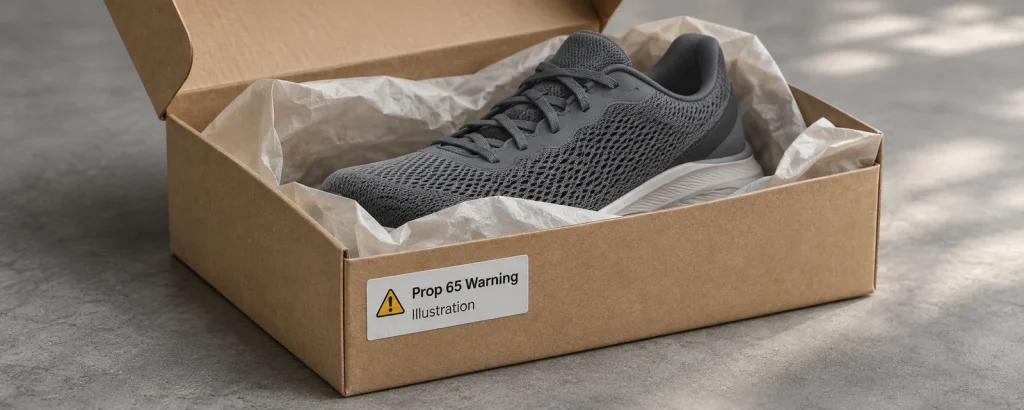
If you see a California Prop 65 warning label on a shoe box or a warning on the product page, it flags possible exposure to a listed chemical. To understand what it means for the pair you’re looking at, start with the full warning and the exact shoe style. If you’re reviewing a shoe for sale, those same details help you check whether a supplier’s report covers the product you plan to offer.
What Does a Prop 65 Warning on Shoes Mean?
Proposition 65 is a California law that generally requires businesses to warn people before knowingly and intentionally exposing them to certain listed chemicals, unless an exemption applies. For example, a warning is not required when exposure is at or below the applicable safe harbor level, where California has set one. California lists chemicals for cancer, reproductive harm, or both. The wording can tell you which of those hazards the warning addresses. Some warnings name the chemical. Older short-form labels may give the hazard without naming it.
A chemical’s listing describes the harm it can cause. Your exposure depends on whether and how you come into contact with it and how much reaches you. The wording alone doesn’t tell you how much exposure wearing the shoes might involve. A warning alone doesn’t tell you whether the shoe meets a separate product safety standard.
Why Do Some Shoes Carry a Prop 65 Warning?
Two shoes that look alike can use different materials in the sole or upper. Even within one style, a material can vary by color or supplier. Those differences give you a starting point when you ask why a warning appears on one product.
California’s Office of Environmental Health Hazard Assessment lists some shoes among the products that can contain DEHP, a phthalate used to make certain plastics flexible. The agency also notes that some leather goods may contain low levels of hexavalent chromium. If the warning names DEHP, ask which part it refers to. If you’re looking at a leather shoe, ask whether any chromium VI testing covered the leather used on that style.
Should You Be Worried About a Prop 65 Warning on Shoes?
How much exposure you might get from wearing the shoes depends on the chemical and how you come into contact with it. If you’re deciding whether to wear or buy a pair, ask the brand which chemical the warning refers to, which part of the shoe is involved, and how you could be exposed during ordinary use. Send the model number and a photo or screenshot of the warning so the brand can respond about the right product. If the reply only repeats the label, you still have limited information about how much exposure wearing that pair might involve.
You’d need product information to assess exposure from an unlabeled pair, too.
What to Check for a Specific Shoe
Start with the full warning, including any wording that identifies what it applies to. California’s guidance gives an example involving BPS in thermal paper. If a notice specifically names a receipt, packing slip, or shipping label, check whether it refers to that paper.
| What to check | What it tells you | What it doesn’t tell you |
|---|---|---|
| Style number, color, lot, and full warning | Which version and warning you’re reviewing | Your level of exposure |
| Component and chemical | Where to focus your questions | Whether other parts contain that chemical |
| Lab report: sample, method, date, and reporting limit | What was tested and at what reporting limit | Your exposure to the chemical during wear |
| Exposure assessment, if available | Which contact routes, uses, and shoe versions the assessment covers | Whether it also applies to a different material or use |
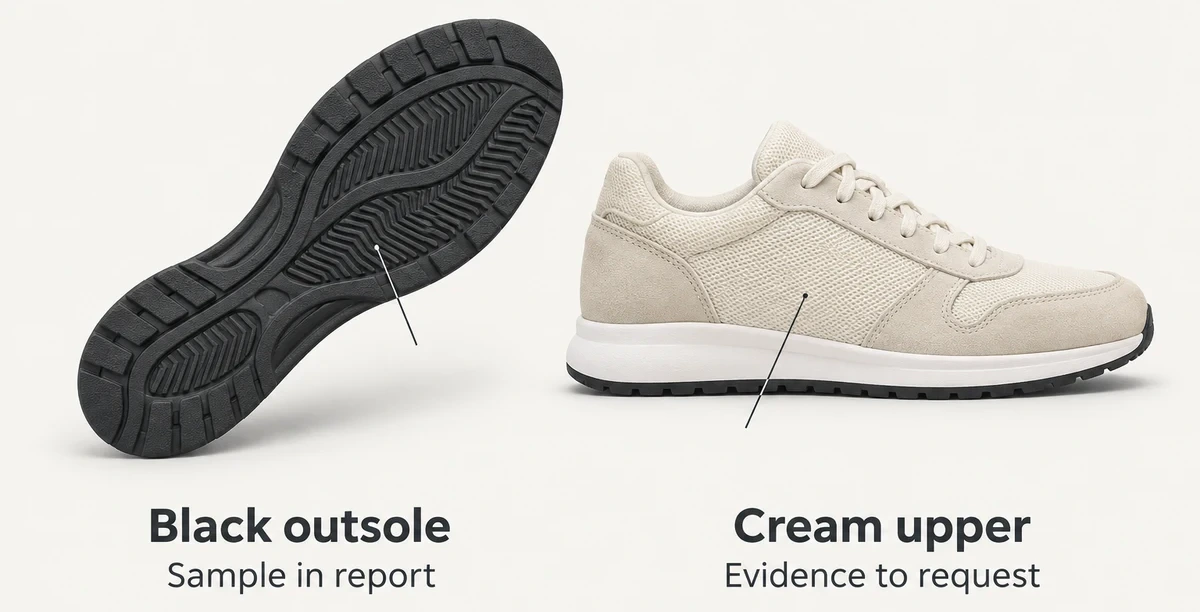
Suppose the supplier sends a report for a black outsole, but you’re reviewing a cream version and the warning refers to the upper. First check the sample description. That report only covers the black outsole that was tested. Ask for evidence on the upper used in the cream version. If you also want to use the outsole result for that version, confirm whether the outsole materials match and whether the report covers that material.
A lab report can show how much of a chemical was in the sample. An exposure assessment also considers how someone could come into contact with that chemical during use. Prop 65 itself does not require a universal shoe test. If a supplier gives you a compliance statement, ask which shoe versions and chemicals it covers and what evidence supports it. If a supplier, formulation, or component changes, check whether the existing evidence still covers the current shoe before you decide what further information or testing you need.
Before Selling the Shoe in California
When a warning is needed, confirm who supplies the wording, who handles labeling or another applicable warning method, and who keeps the online listing current. If you use California’s safe harbor methods for online sales, provide the warning online before the purchase is complete and use an applicable method for the warning on or with the product. Open the listing for the exact style and follow the purchase path without placing an order. Check that the warning is prominently displayed before you complete the purchase and clearly applies to that shoe. If the product page uses a warning link, check that it is clearly marked as a warning and opens the warning text. A warning buried in general site content does not meet the prominent display requirement. Then compare the online warning with the warning supplied with the product or used through the applicable sales channel.
California’s updated short-form safe harbor rules took effect on January 1, 2025. The new format names at least one listed chemical for each type of harm the warning addresses. A single chemical can cover both if it is listed for both and the warning identifies both. Products made and labeled before January 1, 2028 can still carry the prior short-form wording on their labels if they are sold later.
FAQ
Can a REACH Test Report Replace a Prop 65 Assessment?
A REACH test report can support a Prop 65 assessment if it covers the relevant material and chemical. You still need to assess exposure under California’s rules. For example, a chromium VI result for a leather part that comes into contact with skin can help you check that part against the applicable EU restriction.
Do Vegan Shoes Need a Prop 65 Warning?
Whether a vegan shoe needs a warning depends on the chemicals and potential exposure associated with its components. For example, if the shoe uses a flexible plastic, ask the supplier what it contains and what test or exposure information is available.
Conclusion
If you have the shoes in front of you, save the full warning and send the brand the style number and color. Ask which part and chemical the warning refers to. If you’re developing or listing a shoe, gather the material details and existing reports for the version you’ll sell. Use those records to identify what you can carry forward and what you still need to check.