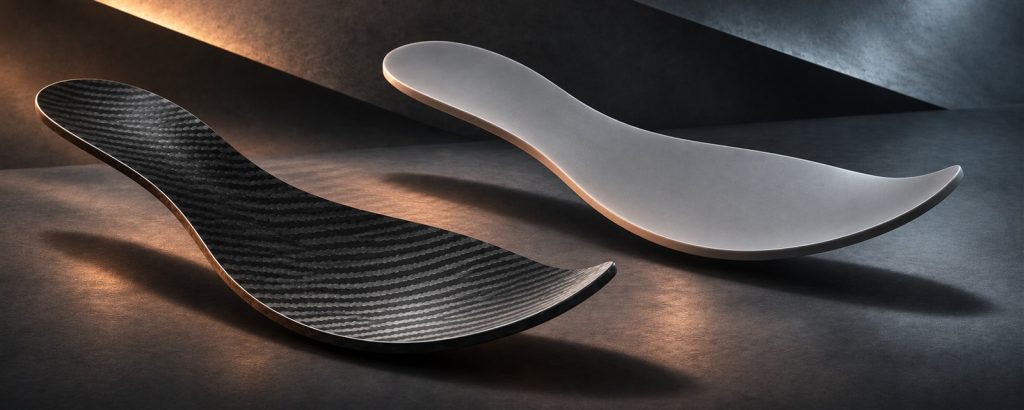
For fast training, a nylon-plated design can be a useful starting point. For a race-focused shoe, a carbon-fiber plate is another option to explore. The choice becomes clearer when you compare how each plate works with the foam, sole shape, and intended use. This guide explains what the material labels mean, which differences deserve attention, and what to confirm before choosing or developing a running shoe.
Carbon vs. Nylon Plates at a Glance
Use this comparison to identify the questions worth asking. Material descriptions tell you about construction; ride feel, useful life, and cost need information about the actual shoe or development proposal.
| Comparison point | Carbon-plated design | Nylon-plated design |
|---|---|---|
| Material | Carbon fibers held within a resin matrix. | A nylon polymer base, which may include reinforcement. |
| Bending behavior | Tuned through fiber arrangement, plate shape, and dimensions. | Can use a semi-rigid structure; reinforcement and shape affect bending. |
| Product use | Found in racing and selected fast-training models. | Found in fast-training and racing models. |
| Weight and feel | Compare complete shoes in the same size, including fit, foam, and sole geometry. | |
| Durability | Evaluate structural wear and changes in performance under defined use conditions. | |
| Cost | Compare equivalent specifications and order conditions; separate plate, sole, and finished-shoe prices. | |
What Carbon and Nylon Plates Are Made Of
Carbon-Fiber Composite Plates
A carbon plate is a composite: carbon fibers provide reinforcement, while a resin matrix holds the structure together. Fiber arrangement, plate thickness, curvature, and placement help determine how the finished structure behaves.
Continuous fibers and chopped-fiber reinforcement are different constructions. If two proposals both say “carbon,” ask what that description covers before treating them as equivalent.
Nylon Plates
Nylon is a polyamide plastic. A nylon plate can be shaped into a stiffening element within the shoe, and its behavior depends on its formulation, reinforcement, and dimensions. Saucony, for example, describes the Endorphin Speed 5 plate as a full-length, semi-rigid nylon structure.
There is also overlap between the labels: nylon can serve as the resin matrix in a carbon-fiber composite. That makes the actual construction more informative than the material name alone. For a development project, request the base polymer and reinforcement details alongside the plate drawing. The drawing should identify its length, thickness, shape, and position within the sole.
How the Plate Works with Foam and Shoe Geometry
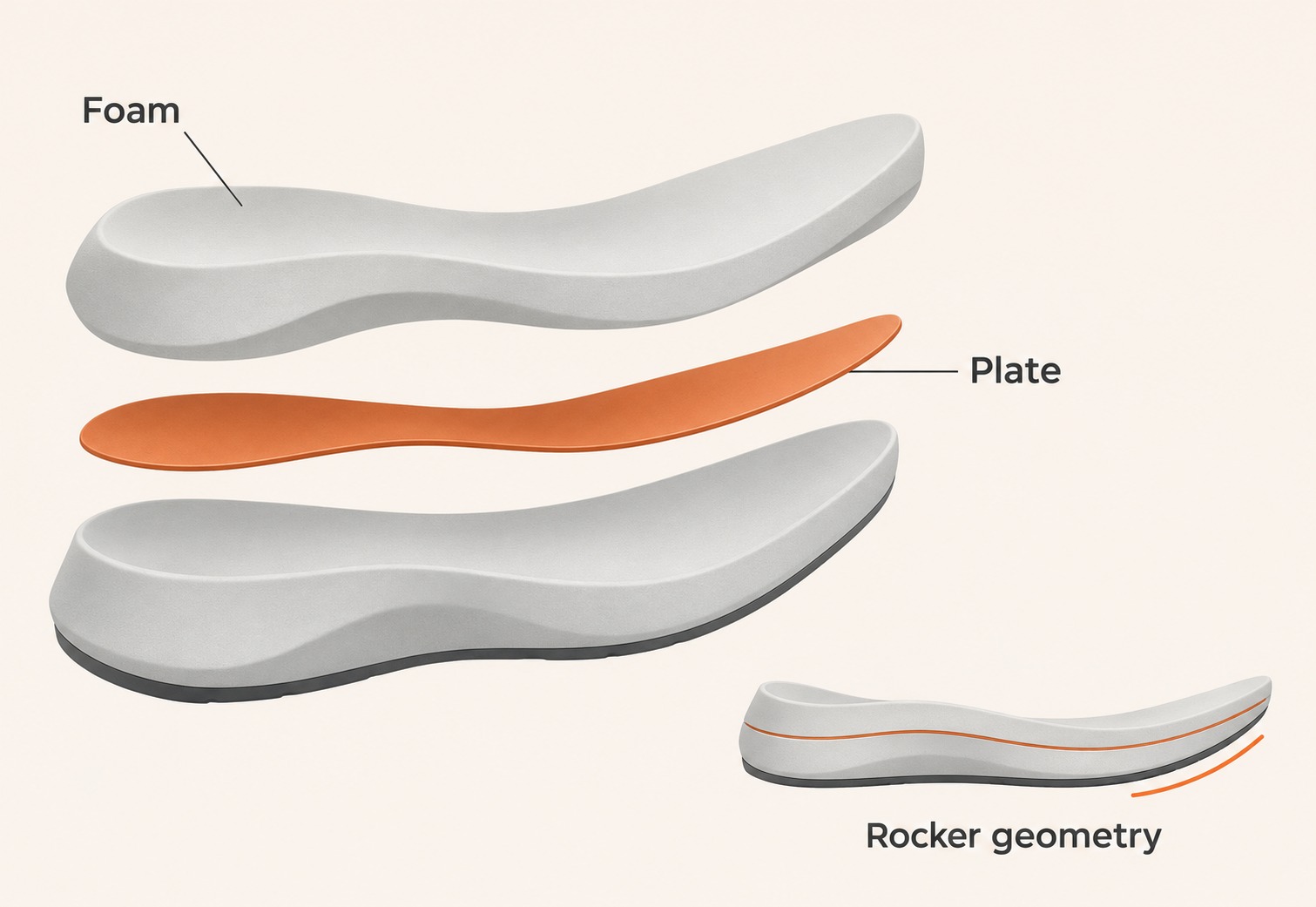
A plate changes how the shoe bends along its length. This resistance is called longitudinal bending stiffness. The foam responds to loading, while the sole’s curved profile, or rocker, helps shape the transition toward toe-off. These features work together as you move through a stride.
Higher bending stiffness does not automatically produce better running economy—the energy needed to run at a given speed. In a study of two carbon-plated prototypes, runners used less energy in the less stiff version than in the stiffer version under the tested conditions. Both were carbon-plated shoes; the experiment did not compare carbon with nylon.
This distinction matters when you evaluate performance claims. A shoe’s measured energy savings cannot simply be assigned to its plate material or translated directly into a race-time improvement. Ask what was tested: a plate, a complete shoe, or runners wearing that shoe. For sample comparisons, keep the foam and geometry consistent where possible, and record any differences that could influence the result.
How to Choose for Training and Racing
Daily Training
Start with the fit and ride you want the shoe to deliver over repeated runs. In wear trials, assess comfort at the target runner’s easy pace, how smoothly the shoe rolls forward, and how comfortably the upper holds the foot. A nylon label alone does not establish comfort or stability. Compare the complete shoe, including its base shape and cushioning.
Tempo Runs and Faster Workouts
For sessions with pace changes, assess transitions as the runner accelerates and returns to a steady rhythm. A nylon-plated model may suit this role, but check its stated purpose and how the full design responds.
Saucony’s Endorphin range illustrates the overlap: the nylon-plated Speed 6 is positioned for fast training, while the carbon-plated Pro 5 is intended for racing and key tune-up runs. These are examples of product positioning, rather than a rule that assigns each material to a single activity.
Race-Day Use
Compare candidates against the target distance, effort, and fit requirements. A race-focused carbon-plated shoe may be worth considering, while a nylon-plated model can remain a candidate if its design meets your brief. Evaluate the ride at the intended pace and duration.
For product development, describe that intended experience clearly: a versatile trainer and a dedicated racing model need different briefs. Compare weight using the same shoe size, and note differences in foam, outsole, and upper construction before attributing an advantage to the plate.
Comparing Cost and Durability
Compare Equivalent Quotes
First establish what the price covers: the plate, the assembled sole, or the finished shoe. Then align order quantity, size range, construction, and performance requirements. Ask suppliers to distinguish one-time tooling or development charges from recurring unit costs.
Include the foam specification, assembly work, and agreed validation in the comparison. Retail prices and promotional discounts do not reveal manufacturing costs. Without equivalent proposals, a fixed claim that one plate material saves a particular amount would be misleading.
Separate Wear from Performance Retention
A plate that remains intact does not tell you whether the whole shoe has retained its original feel or performance. Foam, outsole wear, and the assembled structure also deserve attention.
Research comparing new and worn carbon-plated prototypes with different foams found different changes in running economy after use. It supports checking the complete shoe over time; it does not establish a nylon-versus-carbon lifespan ranking.
For a project, agree on the use conditions and the changes you will assess, such as structural damage, outsole wear, bending behavior, and ride feel. A universal replacement mileage based only on plate material would overlook those differences.
What to Confirm Before Sampling
A useful brief gives your development team enough detail to prepare comparable options. Include:
- Intended use: daily training, faster sessions, or racing, together with the target wearer and size range.
- Material construction: the base polymer or resin, reinforcement type, and the information supporting those descriptions.
- Plate geometry: length, thickness, curvature, and placement within the sole.
- The surrounding shoe: foam specification, sole geometry, upper fit, and target weight in a stated size.
- Evaluation conditions: the bending tests, durability checks, and on-foot trials you want to agree on before approving a sample. Ask for the test object, setup, method, and units before comparing bending-stiffness figures.
Where practical, compare samples with the other major variables held consistent. If several features change at once, record them so the result can be interpreted sensibly. Agree on these points for your project, and tailor the validation plan to the shoe’s intended use and requirements.
FAQ
Is Carbon-Infused Nylon the Same as a Carbon-Fiber Plate?
The label alone does not establish an equivalent construction. Ask what the base polymer is, what form of carbon reinforcement is used, and how that reinforcement is arranged. Those details let you distinguish a specific reinforced-nylon design from another composite plate without guessing its structure from the name.
Are Nylon-Plated Running Shoes Suitable for Beginners?
Being a beginner does not determine which plate material suits you. Look at the specific shoe’s intended use, fit, and feel, and consider whether it matches the running you plan to do. A nylon plate is neither a requirement for starting out nor, by itself, evidence that a shoe will suit a new runner.
Do You Need a Plate for Faster Training?
No. Shoes without a plate are also an option. Saucony, for example, positions its non-plated Endorphin Azura for daily training and uptempo workouts. You can include such designs in your comparison without assuming that either plated or non-plated shoes perform better.
Conclusion
Choose around the running experience you want, then examine the construction that supports it. Plate material, foam, geometry, fit, and evaluation conditions give you a more useful basis for comparison than a carbon or nylon label alone. If you are developing a running shoe, bring those requirements to HEVA Sport to discuss the feasibility of your OEM/ODM project.