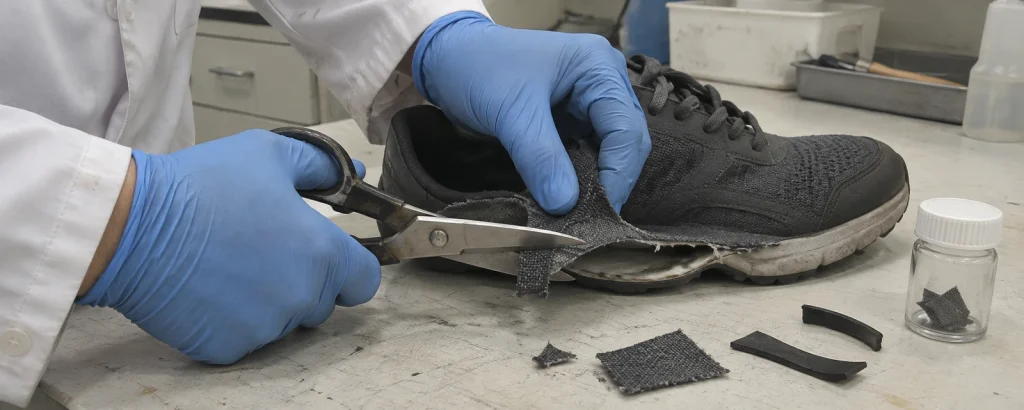
A quote for “REACH testing” needs to tell you which shoe materials, substances, and requirements it covers. Intertek, SGS, Bureau Veritas, Eurofins, TÜV SÜD, SATRA, CTC, Hohenstein, and QIMA are candidates to consider based on their published services. The comparison below gives you a starting list, followed by the questions that help you choose a specific laboratory and prepare a useful request for testing.
Footwear Testing Labs to Consider
These providers publish footwear or relevant chemical testing services. The table highlights what their service descriptions support and a question to raise when you contact them. The order does not indicate a ranking, and the descriptions do not establish the accreditation scope of every location within a laboratory network.
Lab |
Publicly Listed Footwear and Chemical Services |
What to Confirm for Your Project |
|---|---|---|
Intertek |
Footwear testing covers materials and finished shoes, including chemical analysis. Its separate services for substances of very high concern (SVHCs) describe screening products and components against standard or customized substance lists. |
Ask which REACH restrictions, SVHC list version, and customer restricted substances list (RSL) the proposed shoe testing covers, and which laboratory will perform the tests and which will issue the report. |
SGS |
Its footwear and leather services include testing and support for REACH and other market requirements. The service portfolio also includes inspection, auditing, and certification. |
Confirm the receiving and testing locations and request the accreditation scope relevant to your materials and methods. Identify any additional services included in the quote. |
Bureau Veritas |
Its footwear services describe restricted substance testing, including REACH, SVHCs, Annex XVII requirements, and brand RSLs, alongside physical testing and supply chain services. |
Request the substance list, applicable requirements, methods, and list versions behind the proposed package. Ask whether any chemical tests will be subcontracted. |
Eurofins |
Its footwear offering includes chemical and physical testing, with chemical services addressing requirements such as REACH and other destination-market rules. It also describes performance and failure-analysis services. |
Identify the responsible laboratory entity and ask for chemical tests to be itemized separately from performance testing or investigative work. |
TÜV SÜD |
Its footwear and leather testing services include chemical testing related to REACH and restricted substance lists. Its published information discusses testing across different footwear materials. |
Check whether the proposed methods suit your actual materials and whether the resulting report will meet your customer's required scope and format. |
SATRA |
Its chemical analysis services include testing against customer RSLs, investigating the presence of Candidate List SVHCs in products and materials, and bespoke chemical analysis. |
Confirm which requested substances and materials it can test for this project, where to send the samples, and how the results will be reported. |
CTC |
Its footwear chemical analysis services organize testing around materials such as leather, textiles, polymers, and metals, with requirements informed by destination markets and customer RSLs. |
Ask how the proposed plan maps tests to shoe components, colors, and finishes, and how the report will identify materials tested separately or together. |
Hohenstein |
Its footwear services include chemical testing of shoe materials and components. The wider offering also includes certification, which has its own scope and application requirements. |
Specify whether you need a chemical test report, an assessment against a customer RSL, or a certification service. Ask for those deliverables to be distinguished in the proposal. |
QIMA |
Its footwear laboratory testing services address chemical compliance, including REACH and other market requirements. Footwear inspection and physical testing are also presented within its broader offering. |
Ask which laboratory will handle the chemical tests and have testing, inspection, and any additional services identified separately in the scope and quote. |
Use the table to prepare a shortlist, then send each candidate the same product information and requirements. A broad service portfolio can be useful when you have several needs, but each quoted service should have a defined purpose. Confirm who receives the samples, who performs the analysis, and whose name appears on the report before shipping.
Define Your Chemical Testing Scope
REACH Restrictions, SVHCs, and Brand RSLs
The REACH regulation addresses chemical risks in the EU. If your footwear is intended for several markets, identify the requirements for each destination when requesting a testing plan. An EU-focused package does not, by itself, establish compliance elsewhere.
Within that plan, distinguish three requirements:
- REACH Annex XVII restrictions: restrictions on particular substances, subject to the conditions and product scope of each entry.
- Candidate List SVHC obligations: information and other obligations that may apply when substances of very high concern are present in articles. Candidate List inclusion is not a blanket ban on every use.
- A brand's restricted substances list: customer requirements that may include additional substances or stricter limits. Confirm the version your customer expects.
Ask the laboratory to identify which of these the quote addresses. “REACH compliant” on a package description leaves too much unclear unless the applicable substance list, methods, and assessment criteria are specified.
Match the Scope to Your Materials
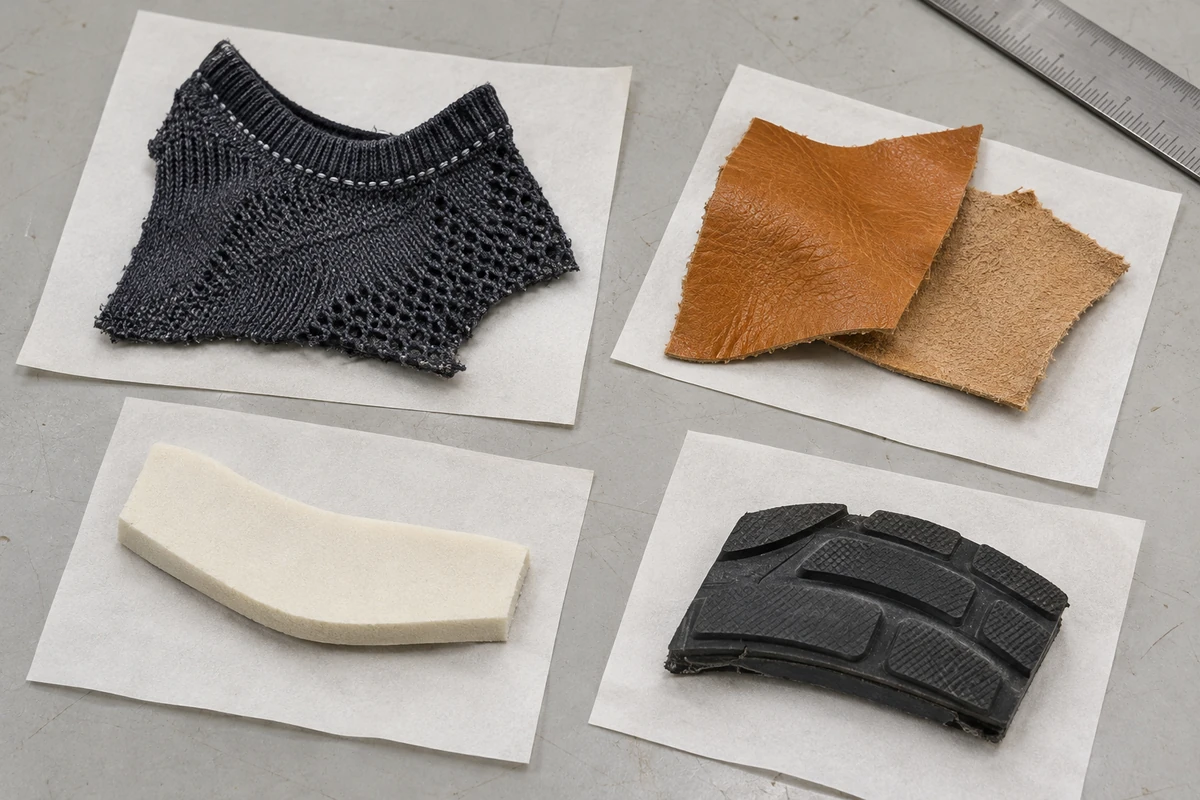
A shoe may combine textile uppers, leather panels, foam, rubber, adhesives, coatings, and metal trim. Give the laboratory enough detail to assess each relevant material and component.
Published footwear services include examples such as chromium VI, restricted azo colorants, phthalates, and heavy metals. Their relevance depends on the material, product use, and applicable requirements; they are not a universal checklist for every shoe. Colors and surface treatments also belong in the material description.
For California-bound footwear, OEHHA’s DEHP and Proposition 65 guidance explains how this plasticizer is used in some plastic products, including shoes.
Keep chemical compliance and physical performance requirements distinct. If you also need abrasion, flexing, or bond-strength testing, request that scope separately so the chemical testing proposal remains clear.
Compare the Lab and the Test Plan
Confirm the Location and Accreditation Scope
Ask for the specific testing location, accreditation number, and current ISO/IEC 17025 scope. Verify the details in the accrediting body’s online directory, where available, or confirm them directly with that body. Check whether the relevant materials and test methods fall within that scope. A group-level statement about accreditation does not establish coverage for every test at every branch.
AFIRM's laboratory capabilities assessment follows this practical approach: it asks about the specific location, substances, materials, methods, and subcontracting. Use those categories to organize your questions. Also confirm whether your customer accepts reports from that laboratory and whether any tests will be sent elsewhere.
Check What the Report Will Show
Request a sample report format or a description of the fields you will receive. You should be able to connect each result to an identified sample or component, the substance tested, the method, the unit, and the applicable assessment criterion.
Check the reporting limit as well. This describes the level above which the laboratory reports a result under its procedure; it is different from the limit used to judge compliance. Ask how this differs from the method’s detection limit and what ‘not detected’ means on the report. Ask whether the method can support the required assessment. A result marked “not detected” does not mean the substance is absolutely absent.
If the report will include a pass/fail statement, ask which decision rule the laboratory will use and how measurement uncertainty is treated where relevant. This helps you understand what the conclusion actually covers.
Compare Quotes on the Same Basis
The useful cost comparison is between equivalent scopes. Have each quote identify the materials or components, substance groups, methods, and report deliverables included. Then check the terms for subcontracted work, additional samples, expedited service, retesting, and report revisions.
Ask when the quoted turnaround begins: on receipt of the shipment, after sample identification, or after the laboratory has all required information and authorization. Confirm whether the promised date covers the complete report.
A lower total may reflect fewer tested components or a narrower substance list. Resolve those differences before choosing on price. Keep the accepted scope with the quote so later changes can be reviewed against the same starting point.
Prepare Your Samples and Quote Request
Share the Product and Material Details
Send the style reference, clear product photos, intended use, age group, sales destinations, and the applicable customer requirements with their versions. Include a bill of materials or a simple component list that connects each part to its material, color, finish, and supplier reference.
The following table can help you organize those details. It is a preparation guide; the laboratory should confirm the testing and sampling plan.
Shoe Component |
Information to Provide |
Question to Resolve |
|---|---|---|
Upper, lining, and insole |
Material composition, colors, prints, coatings, treatments, and component photos. |
Which materials need separate identification and testing? |
Actual material type, supplier reference, and traceable formulation or batch information where available. |
Should you submit finished shoes, material samples, or both? |
|
Adhesives and surface treatments |
Where each is used, its condition in the finished shoe, and available supplier documentation. |
How will adhesive residue or inseparable layers be recorded? |
Laces, trims, and metal parts |
Material, coating, location, and expected contact during use. |
Which components need separate assessment under the requested requirements? |
Agree on Sampling and Follow-Up
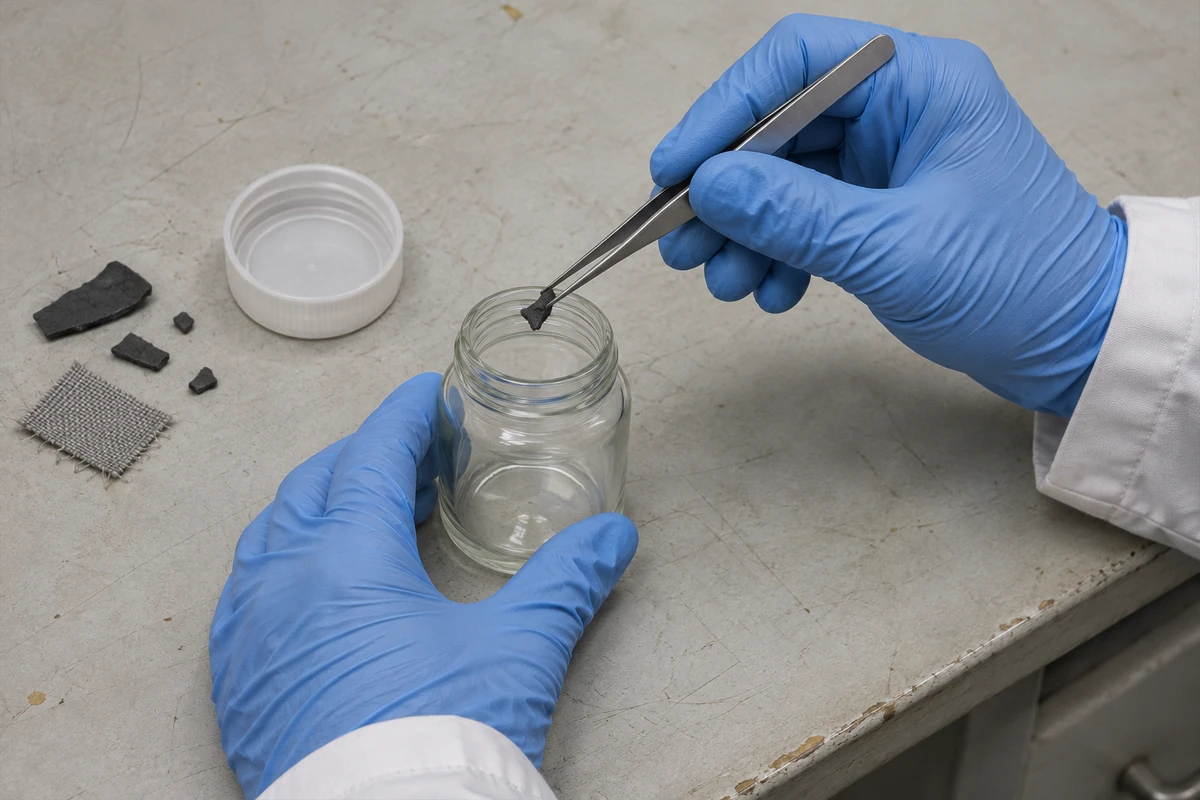
Let the laboratory confirm the required sample amount for the agreed methods and components. Sending a complete shoe does not mean all its materials should be combined for one chemical result.
Agree on who will separate and label the parts, how photographs or component codes will appear in the report, and how residual adhesive or inseparable layers will affect sample identification. If composite testing is proposed, ask whether the method and customer rules allow it, how the result will be interpreted, and what happens if individual materials need follow-up testing.
Before dispatch, also ask who will explain an unexpected result, whether sufficient material can be retained for necessary confirmation, and what retesting or report changes would cost. Keep your submitted material list, sample identifiers, accepted scope, and final report together. Those records make it easier to identify the affected component and discuss a result with the laboratory or material supplier.
FAQ
Can I use a supplier's material test report for finished footwear?
Possibly, if the tested material and the requirements match your application and the report is accepted by the recipient. Check the material identity, color or treatment, tested substances, methods, and limits. Processing after the original test may also affect the finished product. Share the report and production details with your customer and laboratory to determine what evidence is usable and whether additional testing is needed. A material report should not automatically be treated as coverage for the entire shoe.
How long can I use a footwear chemical test report?
Check the recipient's policy and whether the report still represents the product and applicable requirements. Avoid assuming a standard one-year or two-year validity period. A change in material, supplier, finish, production process, or required substance list can prompt a review of its relevance. Review what has changed and which evidence needs updating. The laboratory and customer can then help determine whether the existing report remains acceptable or whether targeted or broader testing is required.
Conclusion
Start with a shortlist, define the requirements for your materials and destinations, and compare the specific laboratories on the same scope. Before sending samples, agree on component identification, reporting, and follow-up arrangements. If you are developing athletic footwear with HEVA, share your design, material preferences, and target markets during OEM/ODM discussions. Establishing clear product specifications gives you a better starting point for the information your testing laboratory will need.