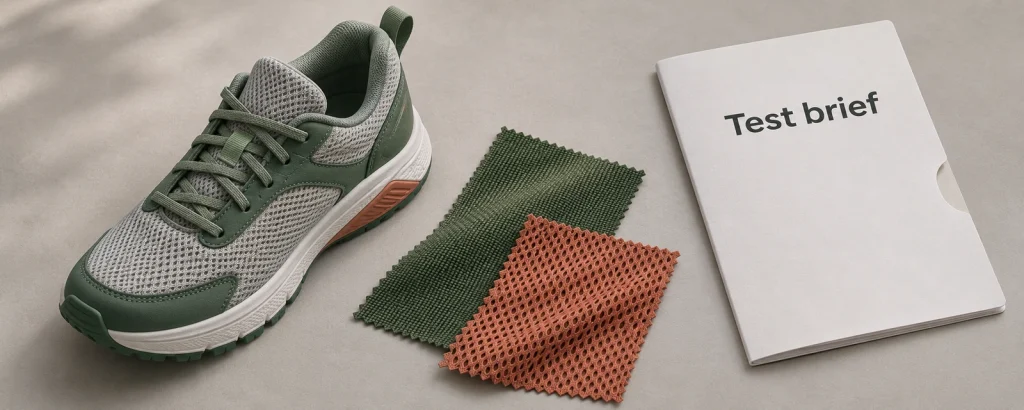
Intertek, Hohenstein, Bureau Veritas, SGS, QIMA, and CTC are worth considering when you need REACH testing providers for textiles and footwear. Their published services offer starting points for projects involving fabrics, leather, and other shoe materials, although the scope you need must be confirmed with the provider.
Choosing a lab starts with knowing what you want the results to establish. This guide compares the providers’ published services, explains what to check before sending samples, and helps you request quotes you can meaningfully compare for an EU project.
REACH Testing Providers to Consider
The table summarizes the providers’ published services and offers an unranked shortlist for further evaluation. Use the questions as starting points with any provider, and confirm the details with the laboratory that would perform your tests.
| Provider | Publicly Described Scope | What to Confirm |
|---|---|---|
| Intertek | Textile chemical testing addressing REACH and restricted substance lists, alongside chemical testing for footwear. | Which location will test your fabrics, components, or finished shoes, and how those samples will be covered in the proposed scope. |
| Hohenstein | REACH compliance support for textiles and restricted substance and regulatory testing for footwear. | How the proposed plan accounts for your materials, required methods, and any additional brand specifications. |
| Bureau Veritas | Apparel restricted substance testing and footwear chemical testing that includes REACH-related services. | Whether the proposal separates applicable EU requirements from additional brand RSL requirements. |
| SGS | Textile and clothing services, plus footwear and leather services that describe REACH and chemical testing. | The actual testing location and its coverage of the materials and methods in your project. |
| QIMA | REACH-related footwear chemical testing. Its separate Restricted Substances Screening service is described as qualitative. | Whether your quote covers screening or the quantitative tests you need, and what follow-up work may be required. |
| CTC | Footwear REACH and specification support, including restricted substance test matrices and chemical analysis. | Coverage of your particular footwear materials. Confirm the scope separately if your project concerns standalone textile products. |
For a project spanning textile materials and finished footwear, review both product areas when making inquiries. A page describing fabric testing does not, by itself, establish how a provider will handle a completed shoe with bonded components. Likewise, a footwear service description does not establish coverage for every textile product.
CTC’s published footwear offering discusses building a test matrix around materials and project requirements. That provides a useful basis for asking about a shoe-specific plan. For QIMA, the separate description of qualitative screening makes the intended output an especially useful question to raise. These are differences in the published descriptions, not evidence that other providers cannot offer similar support.
Once you have a shortlist, send each provider the same project brief. Ask for the proposed tests, samples, testing location, and deliverables in writing. The comparison above does not verify individual laboratories’ accreditation scopes, customer acceptance, current prices, or turnaround times. Those details belong in your project-specific evaluation before you place an order.
Define the REACH Testing Scope for Your Materials
Separate REACH Restrictions, SVHC Information, and Brand RSLs
“REACH testing” needs a more precise scope before you can compare proposals. Annex XVII restrictions address particular substances and uses under specified conditions. Candidate List substances of very high concern, or SVHCs, can trigger separate information obligations. A brand’s restricted substances list, or RSL, may add requirements beyond the applicable legislation.
For example, under Article 33, a Candidate List substance present in an article above 0.1% by weight triggers supply-chain information duties concerning safe use, including at least the substance’s name. That concentration is not a universal pass/fail limit for every chemical. Ask the lab which requirements its proposed tests address and which criteria it will use.
A manufacturing restricted substances list, or MRSL, concerns chemical use during manufacturing. Keep that scope distinct from the requirements you are assessing in the finished product.
Map the Materials and Components Before Choosing Tests
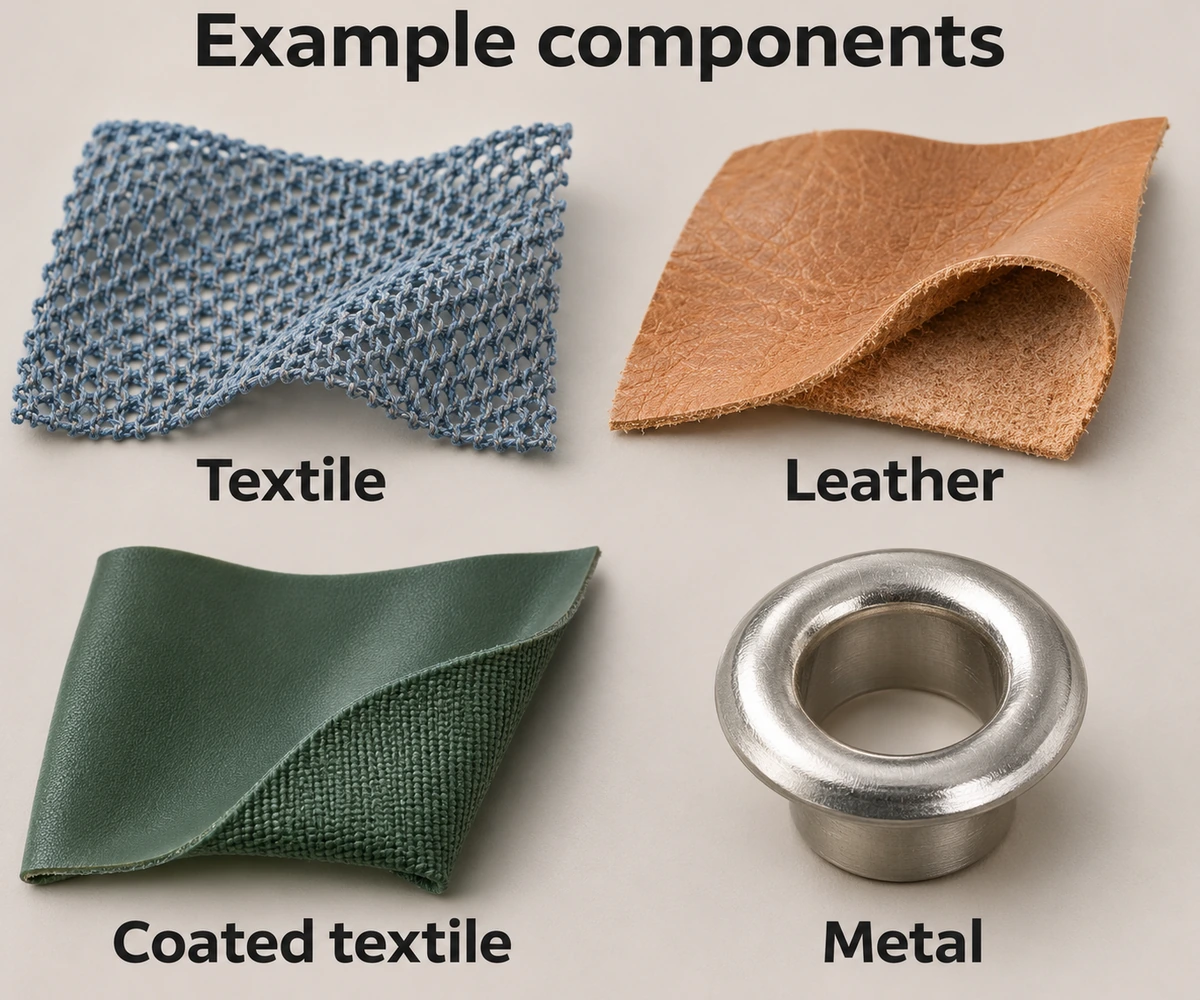
Give the lab a material and component list, including colors and known finishes or treatments. Textile uppers, leather panels, plastic details, coatings, and metal fittings can raise different chemical questions.
Depending on the material and its use, you might discuss dye-related substances in textiles, chromium VI in leather, relevant phthalates in plastics or coatings, or nickel release from metal parts with relevant skin contact. These are examples for scoping a discussion, not a mandatory test list for every shoe.
Agree on what will be sampled and how the results will be used. Sending a whole shoe does not automatically mean every component or relevant substance is covered. Ask the lab to confirm sample separation, any proposed composite testing, and required quantities against the project’s requirements. Do not assume that grouping components for testing determines how a legal threshold applies.
How to Compare Testing Providers
Check the Testing Site and Its Accreditation Scope
Ask for the name and address of the laboratory that will perform the work, its accreditation certificate, and the relevant scope. Check whether the materials and methods you need are covered. If the status or scope is unclear, seek confirmation from the accreditation body.
Also ask whether any tests will be subcontracted and where they will go. ISO/IEC 17025 accreditation concerns laboratory competence within an accredited scope; it is not a certificate that your shoe complies with every requirement. Confirm any laboratory or report acceptance conditions with the brand or other party receiving the results.
Clarify Screening, Quantitative Testing, and Report Details
Establish what kind of answer the service will provide. QIMA, for example, describes its Restricted Substances Screening as qualitative and distinguishes it from full quantitative testing. A screening result may prompt further investigation. Ask whether follow-up testing is needed for the decision you must make, rather than comparing services only by the number of substances advertised.
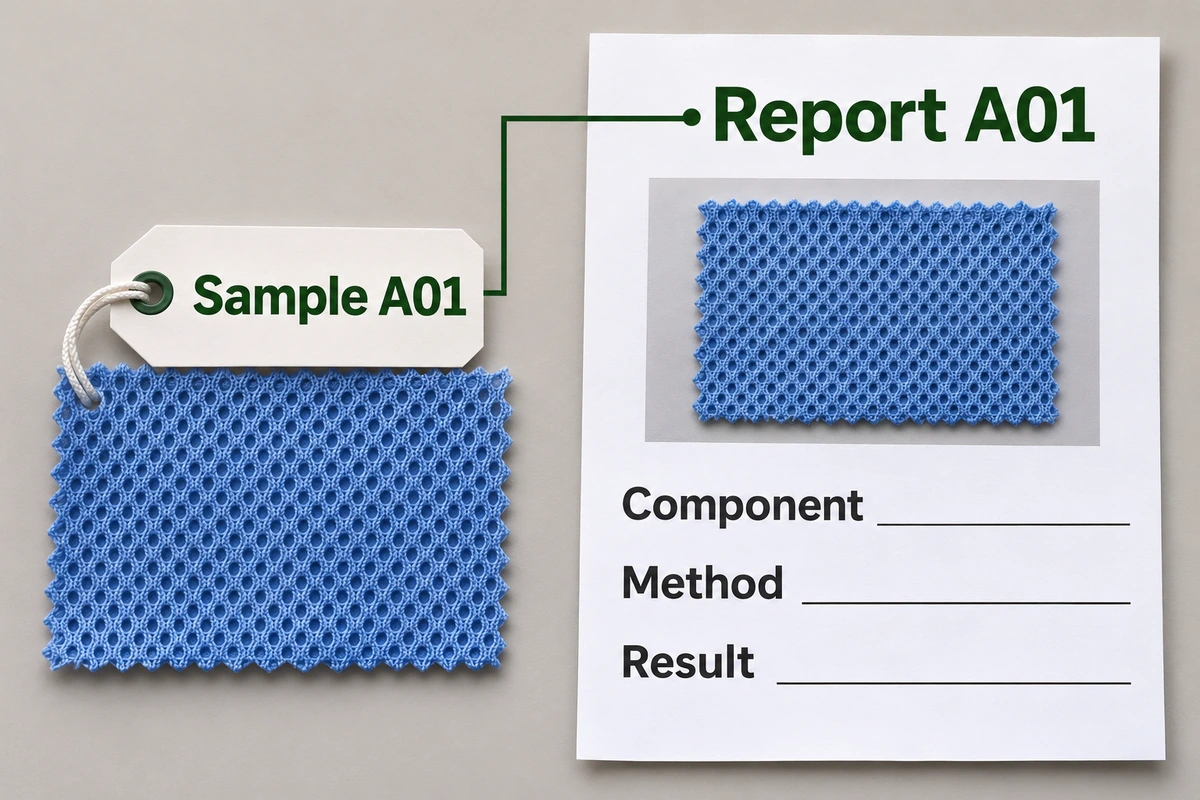
Request an explanation of the report format. You should be able to connect results to the submitted sample and tested components, and identify the test date, methods, units, results, and any agreed assessment criteria. If a report uses “not detected” or “ND,” ask how the lab defines it and what detection or reporting limit applies. Do not read the abbreviation as proof of absolute absence.
Compare Price and Turnaround on the Same Scope
A lower total price is hard to interpret when proposals cover different sample groups, substances, or methods. Put those items alongside each other before comparing the totals. Ask providers to explain differences rather than assuming their packages are interchangeable.
Check what the quoted fee includes: sample preparation, testing, reporting, shipping arrangements, and any optional rush work. Ask how additional tests or retests would be charged. For turnaround, establish when the clock starts and whether sample review or missing information can affect the schedule. Obtain a written scope and timing estimate for your project; a general service page cannot establish either for your samples.
What to Send for a Comparable Quote
Prepare one brief for the laboratories you are considering. Include the following information, and identify anything you do not yet know:
- Market and purpose: Explain that the project concerns products for the EU, describe their intended use, and identify who will receive the report.
- Product and material details: Supply style or material references, labeled component photos, colors, material descriptions, and known finishes or processing steps. Make it clear which details apply to which samples.
- Requirements and existing records: Attach the relevant brand RSL or testing specification with its version. Include available supplier information and previous reports for review. For SVHC work, ask the lab to identify the Candidate List version or date covered by its proposal.
- Sample and timing information: State where samples are located, whether they are materials or finished products, and when you need the results. Ask the lab to confirm the quantities and grouping it requires.
- Requested proposal: Ask for the recommended tests and methods, testing location, report content, itemized costs, and the assumptions behind the turnaround estimate.
Keep the original brief with each response. If one lab proposes a different scope, ask what question the extra test answers or why an item was omitted. Resolve that difference before selecting on price. This also gives your team a clear record of what was agreed when the samples were submitted.
FAQ
Does a U.S. Company Need REACH Testing for Products Sold in the EU?
You may need testing evidence for an EU project even if your team is based in the United States. Whether new testing is needed depends on the product, available information, and applicable requirements. Legal duties depend on the entities and roles involved in the supply chain; a U.S. business is not automatically the EU importer. Clarify responsibilities with your EU counterpart and determine what evidence is missing. Commissioning a test does not transfer those responsibilities to the laboratory.
Can You Use an Existing Supplier Test Report?
Possibly. Check that the report covers the same material and that the requirements, test methods, and limits it uses match those for your current project. Confirm acceptance with the brand or other report recipient. Subsequent treatments or material changes may introduce risks the original report did not assess. A supplier report does not automatically cover every style, color, or finished shoe. Avoid assuming either a universal one-year expiry or indefinite validity; establish whether the report still supports the specific product and requirements under review.
Does REACH Testing Cover Footwear Durability and Workmanship?
A chemical test report does not establish how a shoe performs or whether its workmanship meets your specification. A laboratory may offer both chemical and physical testing, but the work included depends on what you commission. Durability testing and checks of construction, appearance, dimensions, or packaging answer different questions. Keep those requirements visible in your quality plan and confirm their separate scope. A successful result for the specified chemicals should not be read as approval of every aspect of the shoe.
Conclusion
Start with providers whose published services match your materials, then confirm the work at the laboratory that will actually test them. Define the applicable requirements and the decision your report needs to support before comparing costs.
Your next step is to prepare a material list and a shared testing brief for your shortlist. Compare the resulting proposals by scope, methods, reporting, and timing, and resolve differences before sending samples. Confirm any laboratory or report acceptance conditions with the party receiving the results. Together, these checks give you a clearer basis for choosing a REACH testing provider for your textile or footwear project.