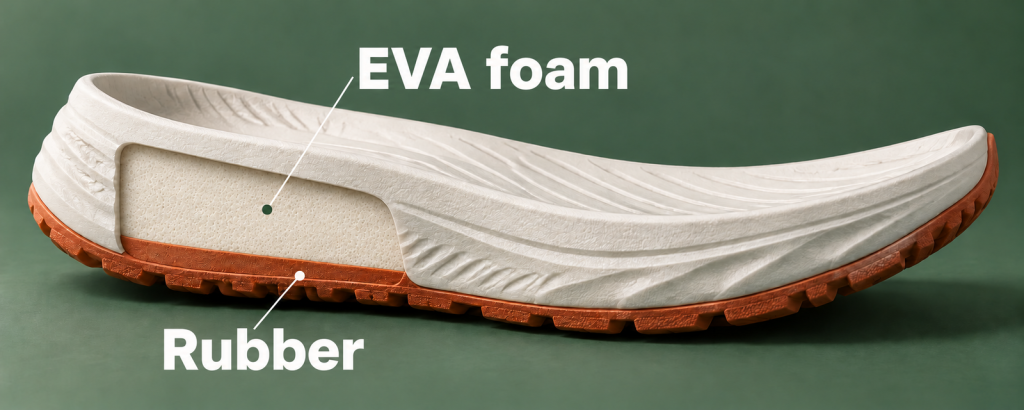
EVA foam is commonly used for lightweight cushioning, while rubber compounds are widely used in ground-contact outsoles. Many shoes combine an EVA midsole with rubber underneath, so choosing between them starts with identifying the part of the shoe you want to change.
For your project, compare the proposed sole construction for its intended use. Weight, underfoot feel, wear, grip, flexibility, and cost all matter, but they need to be assessed on clearly identified samples.
What Do EVA and Rubber Mean in a Shoe Sole?
EVA stands for ethylene-vinyl acetate. In footwear, you will often encounter it as a foam used in midsoles and underfoot inserts. Its formulation and foam structure help determine how a component feels and responds under load.
Rubber is a broader material description. A sole compound may contain natural rubber, synthetic rubber, or a combination, along with other ingredients chosen for the application. Two rubber outsoles can therefore have different properties.
Keep the component names separate from the material names. The midsole provides cushioning in many athletic shoes; the outsole is the part that contacts the ground. A complete sole unit may contain both. Some constructions also use EVA-based foam directly against the ground, but the formulation needs to suit that role. If a specification says only “EVA sole,” ask which component it describes and what actually touches the surface.
EVA vs Rubber Soles: Key Differences
Use this comparison to identify a starting point, then check the actual materials and construction.
| What matters | EVA foam | Rubber outsole compound | What to compare |
|---|---|---|---|
| Weight | Low-density foam is a useful starting point for lightweight cushioning. | Weight depends on compound and coverage. | Same size and geometry; record density, thickness, coverage, and sample weight. |
| Cushioning and underfoot feel | Compresses under load to provide cushioning. | Usually serves a different, ground-contact role. | Softness, cushioning, rebound, and whole-shoe feel. |
| Wear and lasting performance | Assess surface wear and changes after compression. | Can protect ground-contact areas when suitably specified. | Abrasion, compression, flexing, and bonds separately. |
| Grip | Depends on the contact formulation and tread. | Depends on compound, tread, and surface. | Defined floors, dry/wet conditions, and contaminants. |
| Flexibility | Firmness and geometry affect bending. | Layer thickness and construction affect bending. | Bending and twisting of the finished shoe. |
| Cost | Depends on the component and production scope. | Compound, coverage, and assembly affect the quote. | Equivalent specifications, quantity, tooling, and work. |
Weight, Cushioning, and Flexibility
Weigh samples in the same size and record their construction. A lighter sole may have less material or less rubber coverage, so the difference cannot automatically be credited to EVA alone. Also note whether you are weighing a bare midsole, a finished sole unit, or a complete shoe. A component weight and a whole-shoe weight answer different questions.
Softness describes one part of the feel. Cushioning concerns the response under load; rebound concerns energy returned as the material recovers. A quick thumb press cannot establish all three. Thickness and geometry also affect how the shoe bends and feels underfoot. Review the complete shoe as well as the material measurements.
Wear and Grip
Separate surface abrasion from changes caused by compression. Compression set describes deformation remaining after specified compression and recovery conditions. Repeated loading raises another question: how well does the construction retain its cushioning response? Creasing alone cannot answer that. Flex cracking and separation between components are further concerns.
Grip needs its own assessment. Identify the contact material, tread, surface, and dry or wet conditions. A rubber label does not guarantee slip resistance on wet pavement, oily floors, or a particular court.
Cost
Compare quotations for equivalent specifications. Confirm the sole components, coverage, tooling charges, processing work, and quantity included. If one quote covers a different design or additional assembly, the price gap cannot be attributed to the material name alone. There is no universal EVA-versus-rubber saving that applies to every project.
Why EVA and Rubber Are Often Used Together
An EVA midsole with rubber underneath gives the materials different jobs. The foam contributes cushioning, while the rubber compound and tread help address ground-contact wear and grip. The amount and placement of rubber become part of the design decision.
- Exposed foam: some areas of the foam remain in direct ground contact. Confirm that the specified foam suits the expected contact wear.
- Rubber patches: selected areas receive separate coverage. Review the placement against the intended use and the wear patterns you need to assess.
- More extensive rubber coverage: a larger contact area is covered. Consider the added material alongside weight, bending, wear, and grip requirements.
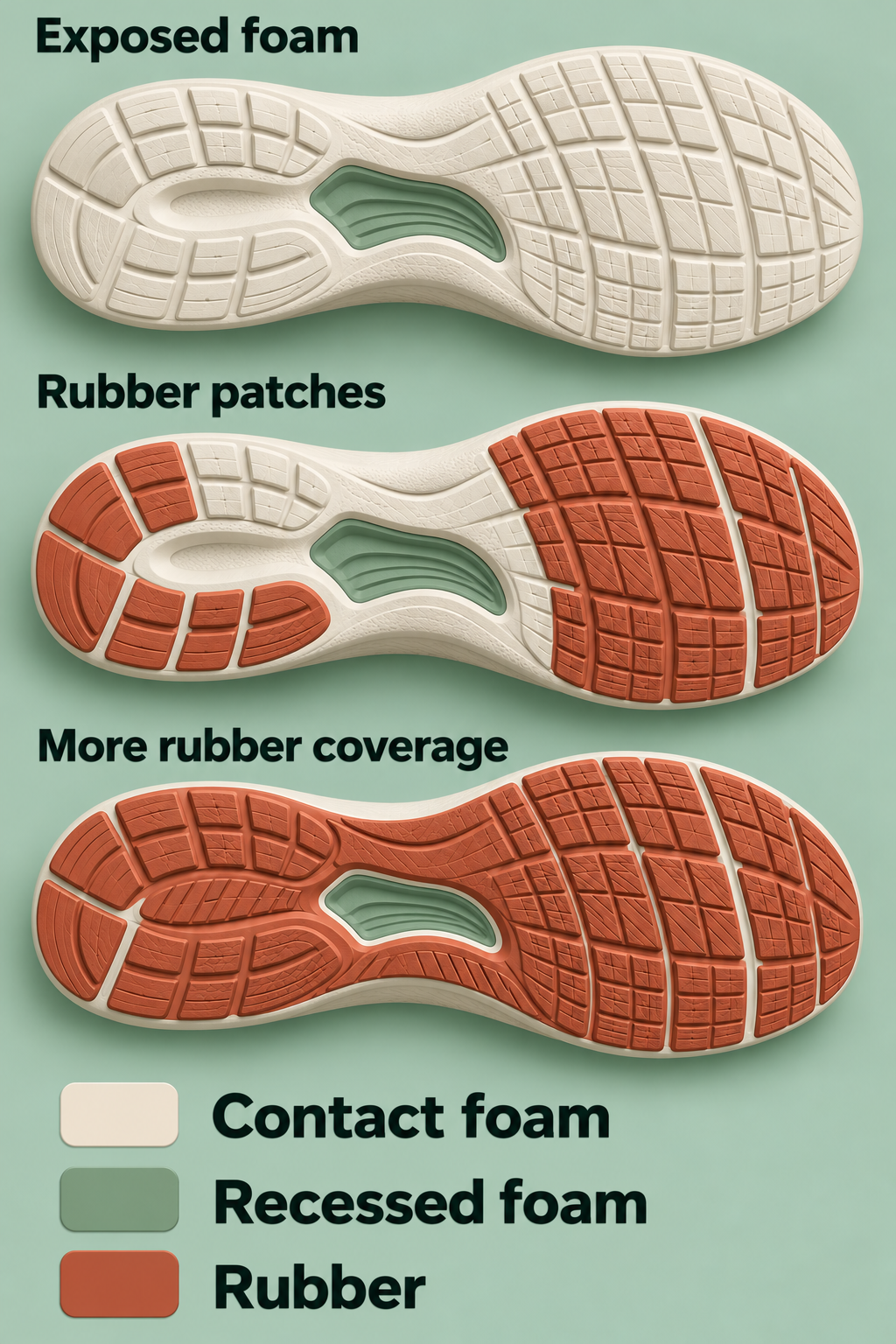
A drawing should show which zones touch the ground and which are recessed. Two samples described as “partial rubber” may distribute contact quite differently. EVA and rubber can also appear together in a blended foam formulation. Ask whether a combined label describes separate layers or a mixture, because these are different constructions.
For a layered sole, check the connections as well as the individual materials. Rubber that resists abrasion will not resolve a weak connection to the foam. Identify where separation or tearing occurs during assessment, rather than treating every failure as an outsole-material problem.
Which Sole Construction Fits Your Intended Use?
Start with the surfaces and activities the shoe needs to handle. If low weight is your priority, a suitable ground-contact foam may be worth evaluating. Where contact wear is a greater concern, consider how an appropriate rubber compound and coverage could address it. For a balanced walking or running design, evaluate a cushioning midsole with a separate contact layer.
| Intended use | A useful starting point | What to check |
|---|---|---|
| Everyday walking | An EVA cushioning structure with ground-contact protection matched to expected wear. | Weight, sustained underfoot feel, contact wear, and expected surfaces. |
| Road running | A cushioning midsole paired with an outsole layout suited to the intended road use. | Dynamic feel, flexibility, stability requirements, and contact coverage. |
| Indoor training or court use | A contact compound and tread selected for the floor and intended movements. | Grip, bending and twisting, and any separate non-marking requirement. |
| Rougher outdoor surfaces | An outsole construction with tread and wear protection suited to the expected terrain. | Specific terrain, dry or wet conditions, and protection of exposed foam. |
These choices still need to work in the complete shoe. A material label does not establish suitability for rapid direction changes, demanding trails, or protective use.
What Should You Confirm Before Sampling?
Put the comparison into a short brief before approving materials or comparing quotes. Include:
- Materials and positions: identify the foam, rubber compound, contact layer, and proposed coverage.
- Comparable samples: agree on the size, geometry, thickness, and underfoot feel you want to assess.
- Assessment conditions: define the properties, methods, conditions, and acceptance criteria for the intended use, including whether you will assess a material, component, or complete shoe.
- Quotation scope: separate the component price from tooling, processing, assembly, and other agreed charges at the stated quantity.
- Sample version: record the construction being reviewed. If the foam, geometry, or rubber coverage changes, check which earlier results still apply.
Keep material results tied to the material tested and whole-shoe observations tied to the identified shoe sample. That distinction makes it easier to discuss a problem, compare a revised option, and approve a construction with a clear record of what was assessed.
FAQ
Are Rubber Soles Always Non-Marking?
No. A rubber description, gum-colored appearance, or good grip result does not establish non-marking performance. Non-marking performance concerns whether the actual contact material leaves marks on a particular floor under relevant conditions. If your shoe is intended for indoor flooring, specify the requirement separately. Evidence of abrasion resistance or slip resistance does not answer the marking question.
Does an EVA or Rubber Sole Make a Shoe Waterproof?
No. Water resistance of a sole material does not establish waterproof performance for the finished shoe. Water can enter through other parts of the construction, including the upper, seams, and connections. If waterproofing is required, define the expected conditions and assess the complete shoe for water entry. An EVA or rubber label is insufficient evidence.
Can I Compare EVA and Rubber Hardness Numbers Directly?
Only after checking the scale, specimen, and test conditions. An Asker C reading and a Shore A reading are not directly comparable numbers. Even results on the same scale need suitable specimen conditions to support a useful comparison. Hardness also cannot stand in for cushioning, rebound, or comfort testing in the finished shoe.
Conclusion
Start with EVA foam for lightweight cushioning and a suitable rubber compound for ground contact; many shoes combine both. Then compare actual samples for the intended surfaces, feel, wear, and cost.
To discuss your shoe project with HEVA, share the intended use, a reference design or sample, and the sole requirements you want to evaluate. Those details provide a clearer basis for reviewing construction options and planning the next sampling steps.